Empire Total War - Guide to Unit Types
Introduction
Armour and Shields
Protective gear in this game is primarily effective against melee and non-gunpowder missiles. As such, it is mainly equipped by units whose primary role is to be in melee. In game, the armour and shield values are aggregated into a single defence value, however it can be seen if there is a large difference between two otherwise comparable units or there is visual evidence. Armour cannot be upgraded.
Speed and Mass
An important factor in battles is the speed of the units as positioning is critical and artillery has a very long effective range. It is more relevant to cavalry who play more of a supporting role to infantry in this era, and are more melee oriented. Mass determines the impact of charges on the receiving unit.
The Light category typically includes light infantry, riflemen, light dragoons, skirmishers, irregulars and peasant mobs. The Heavy category typically includes elite infantry, grenadiers and melee infantry. All other infantry units are Medium.
Heavy cavalry and elephants have a significant mass which helps with charge impact compared to infantry. However they tire easily and should not run except when needed.
Light cavalry is ideal for flanking and attacking artillery or light infantry, but generally does not have the mass to do much damage to regular infantry units. Light cavalry often has Good Stamina which means it can do a lot of running and not get exhausted.
Camels low speed means that they do not do as well on the charge as medium cavalry and are typically best used as anti-cavalry units rather than anti-infantry.
Discipline and Training
The majority of units are trained, well trained or elite. Irregulars, militia and mobs tend to be in the lower bands of discipline.
Stamina and Fatigue Resistance
Formations
Some units have the ability to operate in different formations, many of which are unlocked by technology research.
Wedge and Diamond have two main effects: a) tightening up the formation so stragglers are less likely and the unit maintains cohesion and b) makes the unit push further into an enemy unit before stopping. The trade off is reduced speed and less contact on the charge.
They allow the cavalry unit to pierce through an infantry unit, splitting it in half and being able to continue through without getting caught due to fewer cavalrymen making contact with the enemy. Not as effective in terms of straight up damage as a line formation, it can weaken the morale of the enemy (who tend to suffer flank/rear attack penalties due to the split) and allows cavalry to get to rear units (generals and artillery) more quickly than flanking.
In terms of handling, these two formations seem to leave fewer stragglers behind after impact and therefore provide more reliable control during combat including follow on charges. Stuck horsemen tend to bring the whole unit back and this is less likely to occur when in these formations. Due to the speed reduction, these formations should only be engaged when near to the enemy.
Diamond narrows the formation more than Wedge and is therefore more effective at getting through without excessive contact, and seems to maintain tightness of formation better during maneuvre as the wide tail of the wedge is quite unwieldy. Diamond also seems to allow for better charges at off angles to the current facing.
These formations are available to the vast majority of cavalry; missile cavalry do not have access to them as a rule.
This can allow units to be placed in front of regular units who shoot standing up, as the crouching pose means they are unlikely to suffer friendly fire. Be aware that they stand up to move they can be hit, which can be an issue if skirmish mode is enabled.
Abilities
Psychology
Hiding, Spotting, Stalking and Sniping
Visibility is a key element of the battlefield. There are two sides to this aspect: hiding and spotting.
Most battlefields are covered by long grass, so stealthy units can play a factor in most battles. The ability to hide in long grass is limited to light infantry, irregulars and skirmishers plus a handful of native units. A handful of cavalry and most elite infantry, grenadiers and melee infantry can hide in light scrub, while only the heavy cavalry and generals cannot hide in woodland. Typically units where the stealth is driven by wilderness familiarity cannot hide in buildings - most skirmishers and a few local irregulars or melee units.
It is worth noting that light units with long range muskets or rifles will out range the sight range of most normal units when hidden. Of course, firing reveals the hidden unit so it only has an impact to the first volley. Also, spotting units hidden in woodland is hard for all units so even Line Infantry can use it to tactical effect.
Firing Drills
Across the various unit types, differences in the way they fire provides tactical variations that must be kept in mind. This has the greatest impact for Line Infantry, Dragoons, Grenadiers and Elite Infantry, who by default only fire from the first rank. In this case the width of the formation has a big impact on fire output. The following drills apply to these units. One behaviour to note, when firing on cavalry, regardless of the level of drill available the units will revert to only the front rank firing.
Missile cavalry, Irregulars, Light Infantry, Light Dragoons and Skirmishers fire as a group, with all members of the unit firing regardless of the formation. These units do not obtain (or need) fire drills.
Its purpose is to provide some means for line infantry to counter the light infantry and skirmishers of the late game, by minimising losses while closing with them to charge range before driving them off. This works because the reload times for light infantry muskets and rifles is considerably longer than flintlocks so by closing while firing, the long reload time can be used to charge from a closer distance.
Campaign Abilities
While these abilities do not help on the battle, they drive the recruitment of some units and so will be covered for completeness.
Combat Attributes
Each unit has a set of attributes that determine its performance in combat. Some of these are self-explanatory but some are poorly explained.
As an example, if a unit's weapon has a base reload time of 20 seconds, and that unit has a reloading skill of 25, the actual reloading time for that unit will be 15 seconds: 20 x (1 - 0.25).
As it increases linearly, the impact on rate of fire is exponential (see table below):
- Skill 0 = 20 seconds (3 shots per minute)
- Skill 25 = 15 seconds (4 shots per minute)
- Skill 50 = 10 seconds (6 shots per minute)
- Skill 75 = 5 seconds (12 shots per minute)
Unit Experience
Infantry: Bow
The simple bow is used by a handful of units: Armenian Archers, Bhumiya Bowmen, Bowmen/Native Bowmen Auxiliary. It is an inaccurate weapon with fast reload times that is used in a skirmishing style.
- Very fast reload: 8s
- Medium range: 70
- Poor: 20 Accuracy and 0 Reload skill (8s)
- Good: 30 Accuracy and 10 Reload skill (7.2s)
- Excellent: 40 Accuracy and 15 Reload skill (6.8s)
Infantry: Line Firing Gunpowder
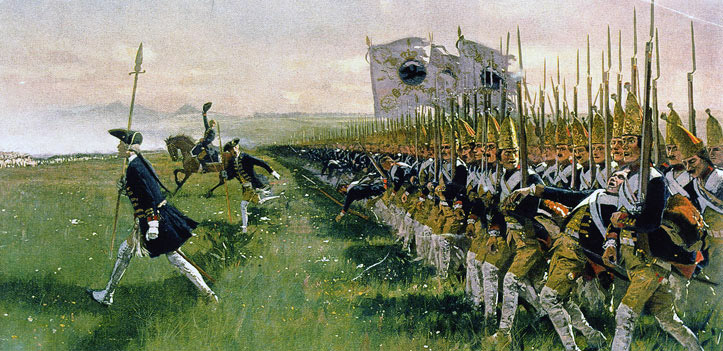 These weapons are those for which the ability of individual men in the unit to fire is dictated by position and the level of firing drill available. Formation depth and facing plays a big role in their usage. These tend used to be core units. The category includes: Matchlocks, Flintlocks and Carbines.
- Matchlocks: used by militia and eastern troops - base reload time of 24s, range of 70, strongly affected by wet weather
- Flintlocks: used by line, grenadiers and elite troops - base reload time of 20s, range of 70
- Light Carbine: used by dragoons - base reload time of 20s, range of 70
Without Fire by Rank or Platoon Fire, they will deliver more firepower in a wider formation, but will be quite cumbersome to manoeuvre and be more vulnerable to a cavalry charge. With the arrival of those drills, 3 ranks can become the norm.
The key factor with this category is output of fire, and at the level of elite infantry they will reload in around 8 seconds compared to around 20 seconds for militia. Combined with firing drills and increased accuracy the amount of hits high quality infantry can inflict per minute is huge. It is for this reason that guard infantry are the most expensive units in the game.
There are three broad groupings of units in this category: militia, regular line and elites. Militia may get bayonets, but generally won't have fire drills or square formation, so must be used in thin lines to maximise firepower. When Line Infantry receive the Fire by Rank drill, these units become a poor choice economically as they are not dramatically cheaper.
Regular line infantry includes line infantry, some unique units (e.g. Irish Brigade) and dragoons and these units will generally have bayonets, square formation and Fire by Rank and Fire and Advance (but not Platoon Fire). They form the core of the line of battle and can be deployed in 3 ranks once FBR is researched. Units tends towards either better firing or better melee stats, so be careful of the head-to-head matchups, for example Russian Line is strong in melee, British Line is shooting.
Elites include grenadiers and elite/guard infantry who have all the drills including Platoon Fire combined with strong melee skills. Their high training and shooting stats allow them to be used more nimbly in battle, breaking through the opposing line or destroying a flank. With Platoon Fire they can be deployed in 2 ranks for best effect. Elite units can output significantly more fire than militia or regulars.
Light troops are the bane of these units with longer range, faster foot speed and more spread out formations. Fire and Advance can be used to counter this somewhat, but cavalry support is the best counter.
Cavalry hitting the flank and rear of engaged lines is also to be expected. Against cavalry only the first rank shoots regardless of the drill level. These weapons are the only ones that can form Square, so they will be important defence against cavalry. Note that in standard formation only the first rank will fire at cavalry, regardless of the drills available; in square both ranks will fire.
Dense formations and medium to slow foot speed make these units good targets for artillery, especially expensive guards. Use cover to advance where possible.
- Militia (Poor): 25 Accuracy / 10 Reload (21.6s). Cost range 500 - 700.
- Line (Average): 40 Accuracy / 25 Reload (15s). Cost range 750 - 1450.
- Grenadiers (Good): 45 Accuracy / 35 Reload (13s). Cost range 810 - 1200
- Guards (Excellent): 50 Accuracy / 55 Reload (9s). Cost range 1140 - 1700
Infantry: Mass Fire Gunpowder
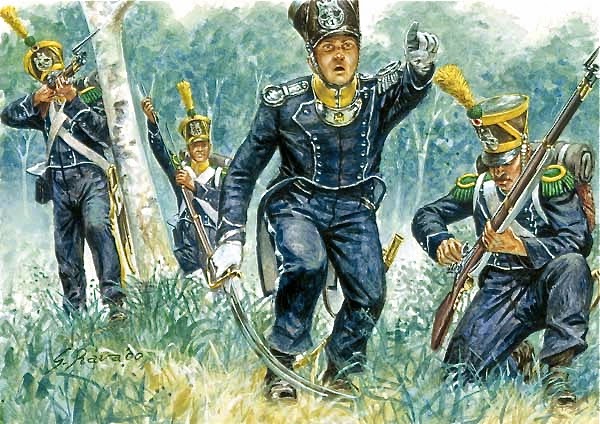 These weapons are those where every man in the unit fires regardless of position. As a result they have no need for firing drills. These tend to used by sharpshooter units and the later units represent a transition from lines of battle to more modern battle tactics. They can start to form large proportions of late game armies. The category includes: Light Carbines, Light Infantry Flintlocks, Rifles.
- Light Carbine: used by Light Dragoons - base reload time of 20s, range of 70
- Light Infantry Flintlock: used by light infantry, skirmishers and irregulars - base reload time of 25s, range of 90
- Rifle: used by riflemen and skirmishers - base reload time of 40s, range of 125
Some of these units can stand in close order and placed between line infantry adding a decent effectiveness but bear in mind that their reload rate is lower than elites and grenadiers. In deep formations, the rear ranks will not all be able to fire due to the men in front obstructing.
Light Dragoons shoot at the same range as line infantry, but mass firing allows them to unleash a full volley and retire before full retaliation.
Light Infantry Tactics can be used to place these units in front of line infantry adding an extra layer of firepower against enemy units. The crouching reduces the instances of friendly fire. Otherwise LIT should be used when fighting other light forces to reduce casualties. It also ensures that all members of the unit will fire compared to close formation.
Also, many units in this category have good spotting range and hiding ability as well as decent stamina. They're suited to scouting roles, moving through cover to find enemy units, and quickly moving to new positions.
Rifles have the longest reload times in the game, and therefore become very vulnerable once they have fired a volley. Make sure that they use their volleys on valuable targets.
- Irregulars (Average): 35 Accuracy / 10 Reload (22.5s). Cost range 580 - 990
- Light Infantry (Good): 55 Accuracy / 30 Reload (17.5s). Cost range 720 - 1260
- Riflemen (Excellent): 70 Accuracy / 35 Reload (26s). Cost range 960 - 1040
Infantry: Grenade
Grenades are used by two methods: hand thrown by grenadiers who also wield muskets and fired by the grenade launchers of Russian and Ottoman Hand Mortar units.
- Hand thrown - special reload time, range approx. 40
- Grenade launcher - reload time 20s, range: 70
It also seems that grenade tossing causes the unit to have to reload their musket so it is best to follow up the grenade with a charge into combat if the target did not rout.
Infantry: Unique Missile Weapons
A handful of weapons are only used by one unit available to a single faction, so their tactics are quite specialised.
The Blunderbuss of the Libyan Kuloglu (Ottoman) is unique weapon (range 35) that shoots 8 rounds in one blast. In return it has a high base reload time of 30 seconds, 21s when the unit’s reloading skill is factored in. With such a short range, this weapon needs to operate on the flanks or rear of enemy units, or against artillery crews.
The Double Flintlock of the Grenzers (Austria) is a light infantry flintlock (range 90) which shoots two barrels at once. The base reload time is higher at 30 seconds, 18s when the unit’s reloading skill is factored in. Use this unit as you would any light infantry.
The Breechloading Rifle of Ferguson’s Rifles (England) is a rifle (range 125) with a base reloading time of 13 seconds, 8.5s when the unit’s skill is factored in. This is very fast, as fast as elite infantry with the shorter range muskets and means this unit can be used much more aggressively than normal slow-reloading rifles.
The Airgun of the Windbüchse Jaegers (Austria) is a silent rifle (range 125) with an extremely fast base reloading time of 7 seconds, 4.5s when the unit’s skill is factored in. They have the stalk and snipe skills which means they can shoot hidden, even in long grass. A smaller unit size than normal rifles, the fast reload speed means that they can quickly run out of ammunition.
Infantry: Melee
Generally speaking the melee performance of units is governed by the stats rather than the specific weapon. However, there is some correlation between weapon type and stats which can be used to give some rules of thumb.
- Melee Attack: 2-8
- Charge Bonus: 2-8
- Melee Defence: 3-8
Generally, units fighting with bayonets have a moderate Melee Attack attribute, high Melee Defence and Charge Bonus. This makes them effective at fending off cavalry attacks, and reasonable as assault troops but not effective killers in sustained melee. These units should be used defensively when up against better melee infantry. When fighting cavalry, use square when available as it gives melee boosts.
As the bayonet is one of the most widely used infantry weapons the statistics vary greatly. Generally speaking, Militia are poor and are best limited to self defence, Line Infantry are decent at defence but generally not strong in attack. Grenadiers and Guards have comparable stats with the former being slightly better in attack and the latter having some of the highest infantry defence values. As Guard units can typically only be recruited in home regions, Grenadiers will be the go to units for the assault role in remote regions.
- Melee Attack: 4-13 (+3)
- Charge Bonus: 8-19 (+3)
- Melee Defence: 7-17
- Melee Attack: 7-15
- Charge Bonus: 7-12
- Melee Defence: 0-10
- Melee Attack: 6-12
- Charge Bonus: 5-12
- Melee Defence: 2-10
Mounted: Bow
Mounted bows are the same weapon used by infantry and are used by a handful of units: Tatars, Kalmuks and Zamindari Horsemen. It is an inaccurate weapon with fast reload times.
- Very fast reload: 8s
- Medium range: 70
- Accuracy: 20-30
- Reload Skill: 5-15 (6.8s - 7.6s)
Mounted: Gunpowder
This covers Carbines, Light Carbines, Camel guns and the Matchlocks and Flintlocks that are carried and fired on horseback. These units fire as a group and can reload while they're moving, even running. Statistics-wise these units never reach the reload rate of elite infantry instead relying on their mobility to move in and fire then retreat to reload.
- Carbine/Light Carbine: used by Light Dragoons, Carabineers and other European light cavalry - base reload time of 20s, range of 70
- Flintlock/Matchlock: used by native American and eastern missile units - base reload time of 20s/24s, range of 70
- Camel Gun: Shaturnal Camel Gunners - base reload time of 28s, range of 90
Most units in this category are light cavalry so they're quick and not that strong on the charge. Use them for typical light cavalry duties like scouting and chasing routers. Skirmishing is available for missile cavalry, at the expense of wedge or diamond formation - this can be useful when facing heavy cavalry.
Camel Gunners have a range advantage against all missile cavalry and many infantry units. The extra height of the camel also means that they can safely shoot over the heads of line infantry adding an extra layer of firepower.
- 35-50 accuracy, 10-30 reload skill (14-22s)
Mounted: Melee
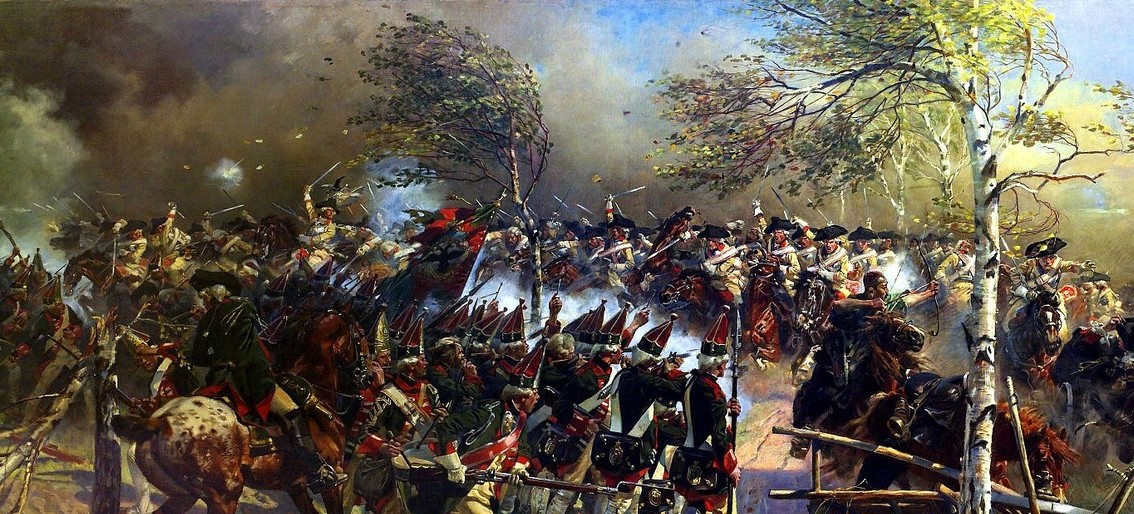 This covers Swords, Sabres, Scimitars, Axes and Tomahawks, the largest category of cavalry units.
- Sword: used by low and high end European cavalry. Tend to have charge oriented stats, geared towards attacking infantry
- Sabre/Scimitar: used by mid-tier European and most eastern cavalry. Tend to have melee oriented stats, geared towards fighting cavalry.
- Axe/Tomahawk: used by native american units and one eastern. Tend to be more general purpose stats, not excelling in any area.
Use from the rear against engaged lines to get extra morale penalties and create a rout, but watch for friendly fire. Charging from an oblique angle in wedge or diamond can reduce friendly fire and bring more horsemen into contact. Light units are good for chasing skirmishers, routers or hunting artillery.
Against cavalry, the charge has less impact due to compactness of the units, and melee statistics dictate the situation. Heavy cavalry (Cuirassiers, Heavy Cavalry, Guards, etc) should dominate lighter cavalry.
On the whole these units are best held in reserve until the infantry lines are depleted and they can achieve a rout.
Many of the lighter units in this category have good spotting range and therefore can serve as fast scouts to find hidden troops.
Heavy cavalry tires quickly and may not have more than one good charge before being tired, so minimise pre-contact running.
Artillery can make a big impact on cavalry formations due to the large size of the horses, beware for sniping.
- Missile Cavalry (Poor): Melee Attack 5-7, Charge 7-10, Melee Defence 2-6
- Light Cav/Prov Cav/RoH (Average): Melee Attack 9-11, Charge 11-15, Melee Defence 3-8
- Heavy Cav (Good): Melee Attack 16, Charge 14, Melee Defence 5-8
- Guards (Excellent): Melee Attack 19-21, Charge 17-19, Melee Defence 10-12
Mounted: Lance
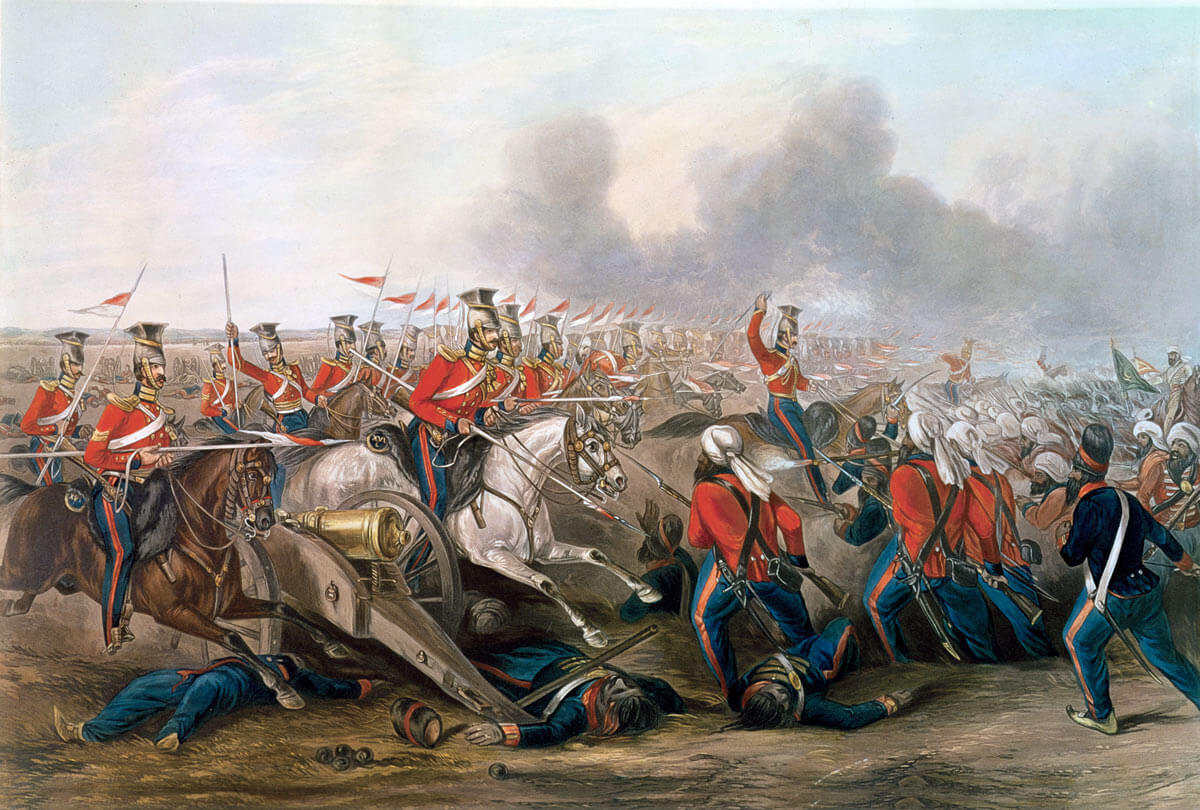 A handful of cavalry units are armed with a lance, and they come in two forms: light (i.e. fast) which can be used for the usual roles like chasing routers or neutralising artillery, or heavy (i.e. decent in melee) who are used to break the main enemy line.
Light lancers need to avoid melee as they can even lose to skirmishers as their melee skills are so low and they have a numerical disadvantage. Used at a critical moment they can break wavering infantry quickly and weaken a flank. These units will take losses quickly so expect to end battles with many casualties.
Heavy lancers have good melee attack but poor defence so they won’t fare well in prolonged melee but they can follow up the initial charge with some muscle. They won’t match up well to good melee cavalry but can stick around longer against infantry after the charge. Slow like other heavy cavalry these are not for flanking, but for deploying to the main line at a critical point to turn a battle.
- Natives (Average): Melee Attack 5, Charge 24, Melee Defence 0
- Lancers (Good): Melee Attack 7-9, Charge 25-29, Melee Defence 2-6
- Sipahis/Winged Hussars/Ahadis (Excellent): Melee Attack 14-16, Charge 23-25, Melee Defence 5-7
Artillery: Cannon
- Fixed (4 guns): Sakers/Guns, Demi-Cannons/Cannons, 64lb Siege Cannon
- Foot (3 guns): Foot: 12lb, 18lb, 24lb, 24lb Guard
- Horse (3 guns): 3lb, 6lb, 18lb Guard
- Shot: range 400, reload 30s, +25 accuracy skill
- Canister: range 125, reload 30s
- Shrapnel: range 350, reload 40s (30s for 3lb & 6lb)
Round shot bounces and therefore can hit multiple units in a line so look for groups of units to target, especially at oblique angles. Round shot is more accurate than the other shot types, so it is better for sniping generals or cavalry units. It also is the only shot type suitable for damaging buildings or walls and does equivalent damage to a howitzer of the same poundage. The larger the cannon, the greater the damage inflicted and the higher the accuracy typically.
Canister is the second shot type, unlocked by technology. It is a short range anti-personnel weapon with the range of rifles (125) that is like a shotgun blast. When you aim the cannons at a unit, they will target the ends of the enemy unit rather than the centre so manually targeting a location can more suitable at close ranges.
Shrapnel is the final shot type, and it is a combination of the first two - a projectile that explodes into shot at long range. Like canister it is anti-personnel but with a longer range. Against infantry it is preferred until the unit reaches canister range due to the slightly longer reload time. On uneven ground it can be less effective than round shot as it doesn’t bounce.
Foot artillery move at the speed of walking infantry, while horse artillery can run and move faster than infantry. When engaged in melee, the horses that pull the artillery will flee meaning that the pieces can not be moved for the rest of the battle. French Guard Artillery has high stats and inspires nearby troops.
Be wary of leaving units on fire at will with canister shot as friendly fire can be dangerous. At this range you probably want to have full control over their firing.
Artillery: Howitzer
There are two types of howitzer, both foot (3 guns): 12lb, 24lb.
- Shot: range 350, reload 30s, +25 accuracy skill
- Carcass: range 350, reload 40s
- Quicklime (replaces Carcass): range 350, reload 40s
- Explosive Shell: range 350, reload 40s, -50 accuracy skill
- Percussive Shell (replaces Explosive): range 350, reload 40s, -50 accuracy skill
- All shot types have a minimum range of 100
Round shot in howitzers bounce less than cannons so are not as effective against massed units. Round shot is more accurate than the other shot types, so it is better for sniping generals, artillery or cavalry units. It also is the only shot type suitable for damaging buildings or walls and does equivalent damage to a cannon of the same poundage. Larger howitzers are less accurate but do more damage.
Carcass Shot and Quicklime Shot (which replaces it) are anti-personnel weapons that are more effective against stationary and emplaced enemies (behind trenches, in buildings or on walls). This is due to the fact that they do not inflict much damage on impact, but unleash an after effect that does all the work. Moving targets will often have moved past the point of impact and not be affected. It can be used by manually targeting the ground in front of advancing enemies but this is more labour intensive.
Explosive Shell and Percussion Shell (which replaces it) are anti-personnel weapons that do more damage in impact and therefore are better against moving targets and less effective against emplaced enemies. Percussion shells can cause damage to lighter structures but the lower accuracy means Round Shot would be better. They are a good all round shot type to utilise.
Howitzers are a bit of an all-round artillery piece, combining the high arc of a mortar with the directness and mobility of a cannon at the cost of a slightly higher price. They won’t be as effective in close as the cannons so it may be worth having both of them in an army. The shorter maximum range of the howitzer means it needs to be used more aggressively than cannons or mortars.
Given that howitzers can be placed behind your infantry line, care needs to be taken to avoid friendly fire when the enemy closes, especially with the anti-personnel weapons.
Artillery: Mortar
There are two mortar units, 4in and 8in, also known as Mortars and Bombardment Mortars. They are fixed and have 4 guns.
- Shot: range 750, reload 45s, +100 accuracy skill
- Carcass: range 750, reload 50s
- Quicklime (replaces Carcass): range 750, reload 50s
- Explosive Shell: range 750, reload 50s
- Percussive Shell (replaces Explosive): range 750, reload 50s
- All shot types have a minimum range of 200/250 for 4in/8in respectively
Round shot in mortars do not bounce so are not as effective against massed units. Round shot is more accurate than the other shot types, so it is better for sniping generals, artillery or cavalry units. It also is the only shot type suitable for damaging buildings or walls and does equivalent damage to a cannon of the same poundage. Larger mortars are less accurate but do more damage, overall more damaging than cannons.
Carcass Shot and Quicklime Shot (which replaces it) are anti-personnel weapons that are more effective against stationary and emplaced enemies (behind trenches, in buildings or on walls). This is due to the fact that they do not inflict much damage on impact, but unleash an after effect that does all the work. Moving targets will often have moved past the point of impact and not be affected. It can be used by manually targeting the ground in front of advancing enemies but this is more labour intensive. There will be less momentum in the spread due to the higher arc travelled. Note that kills due to the effect do not count towards the unit's experience.
Explosive Shell and Percussion Shell (which replaces it) are anti-personnel weapons that do more damage in impact and therefore are better against moving targets and less effective against emplaced enemies. Percussion shells can also be used against structures as effectively as Round Shot. They are a good all round shot type to utilise.
Mortars are effective in defensive sieges due to their high range and trajectory. Placed within the walls they are safe from non-mortar fire, and can be used to counter-attack artillery. In general mortars are good against enemy artillery as they will destroy the guns. They are more expensive than cannons and howitzers.
Given that mortars can be placed behind your infantry line, care needs to be taken to avoid friendly fire when the enemy closes, especially with the anti-personnel weapons.
Artillery: Special
This includes the Puckle Gun, the Organ Gun and the Rocket Troop/Band.
- Puckle Gun: range 150, reload 6s
- Organ Gun: range 400, reload 60s, +75 accuracy skill
- Rockets: range 750 (min 150), reload 40s
Appendix
- The Proper Use of Dragoons★ 5 (722)45k views448 ♥5 minUpdated Jul 4, 2024
- Empire II: Total War: A Pool of Suggestions★ 5 (1k)44k views309 ♥17 minUpdated Mar 12, 2016
- Graphics settings High and Very High★ 5 (391)43k views505 ♥1 minUpdated Apr 12, 2021
- A quick and general Guide To Empire Total War★ 5 (699)43k views1k ♥42 minUpdated Feb 20, 2015
- Why CA should make Empire 2: Total War★ 5 (1k)40k views184 ♥3 min
- Warfare in the 1700s★ 5 (528)31k views662 ♥15 min




- Upgrading to PremiumTeam Fortress 2★ 5 (20k)1441k views11k ♥6 minUpdated May 11, 2022
- No More Room in Hell Official ManualNo More Room in Hell★ 5 (2.8k)569k views2.1k ♥29 minUpdated Apr 22, 2019
- NMRiH Community Hosting GuidesNo More Room in Hell★ 5 (526)351k views653 ♥1 minUpdated Aug 10, 2022
- ULTIMATE GUIDE FOR GAME DEV TYCOONGame Dev Tycoon★ 5 (5.8k)326k views10k ♥4 minUpdated 23 Jan, 2014
- How to 'Git Gud' Soon™MORDHAU★ 5 (2k)318k views3k ♥68 minUpdated Nov 16, 2024
- Лучшие кооперативные игры SteamPAYDAY 2★ 5 (1.5k)315k views2.1k ♥56 minRussianUpdated Apr 27, 2025




This guide was created by its original author on the Steam Community. Are you the author and want it removed? Request removal.