Low tier vehicles according to an arcade-only pleb
USA Air, Rank 1
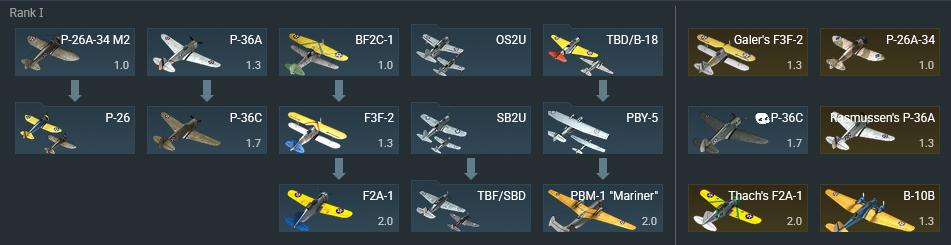
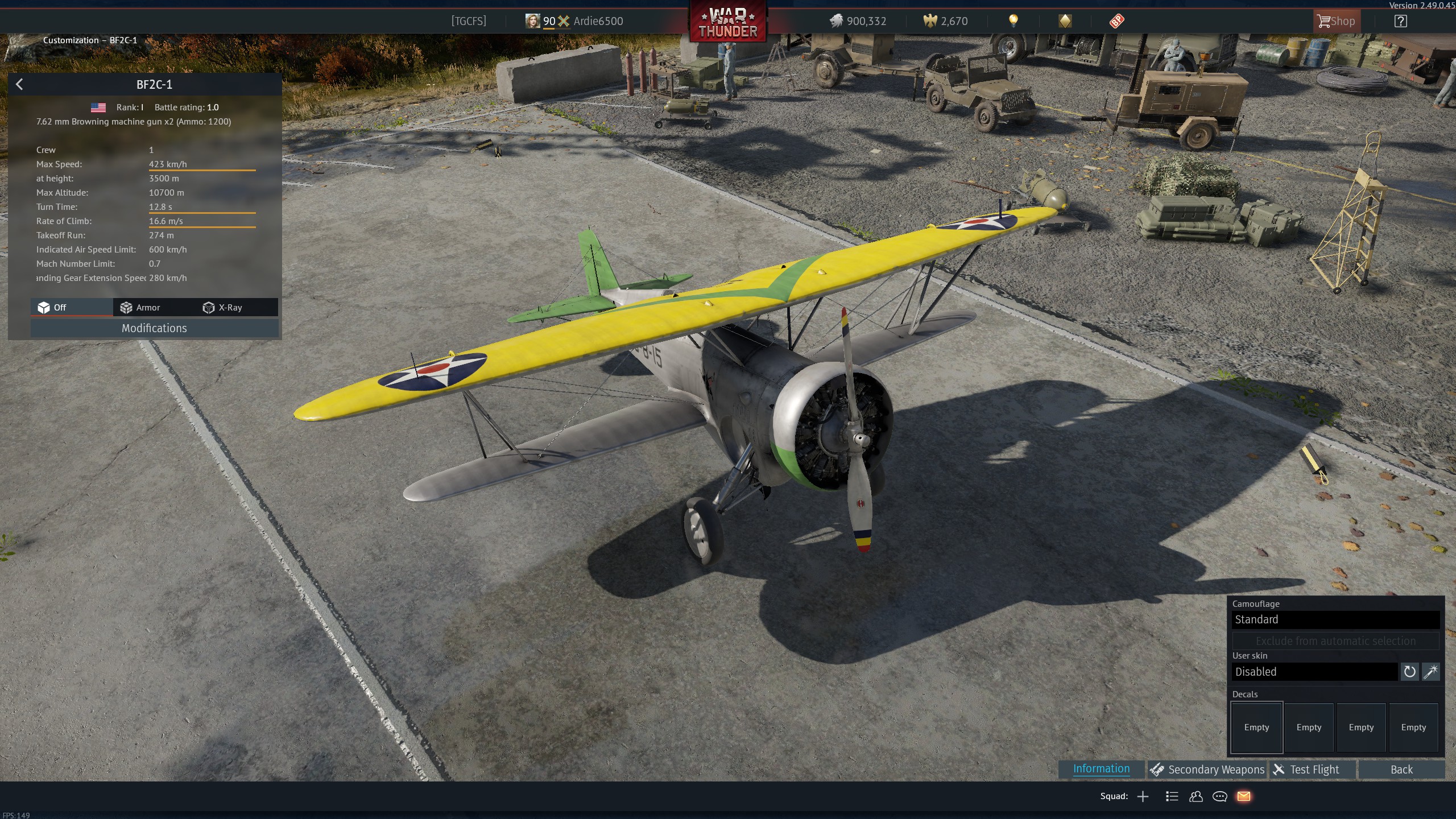
As with most nations, the USA Rank 1 Air lineup is decent. Expect slightly better armament and speed and slightly worse turning than average, but otherwise, there's no real surprises here.
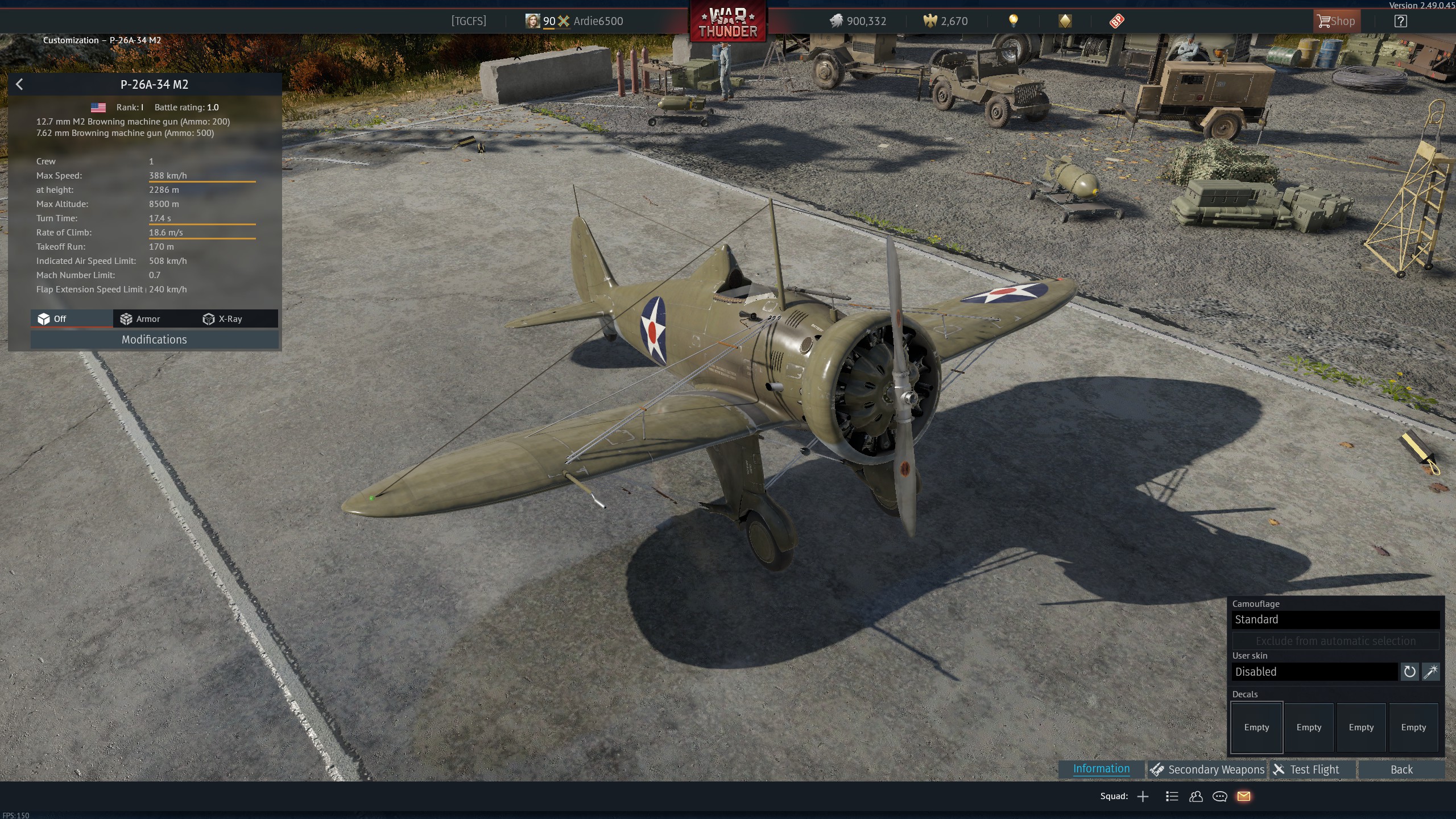
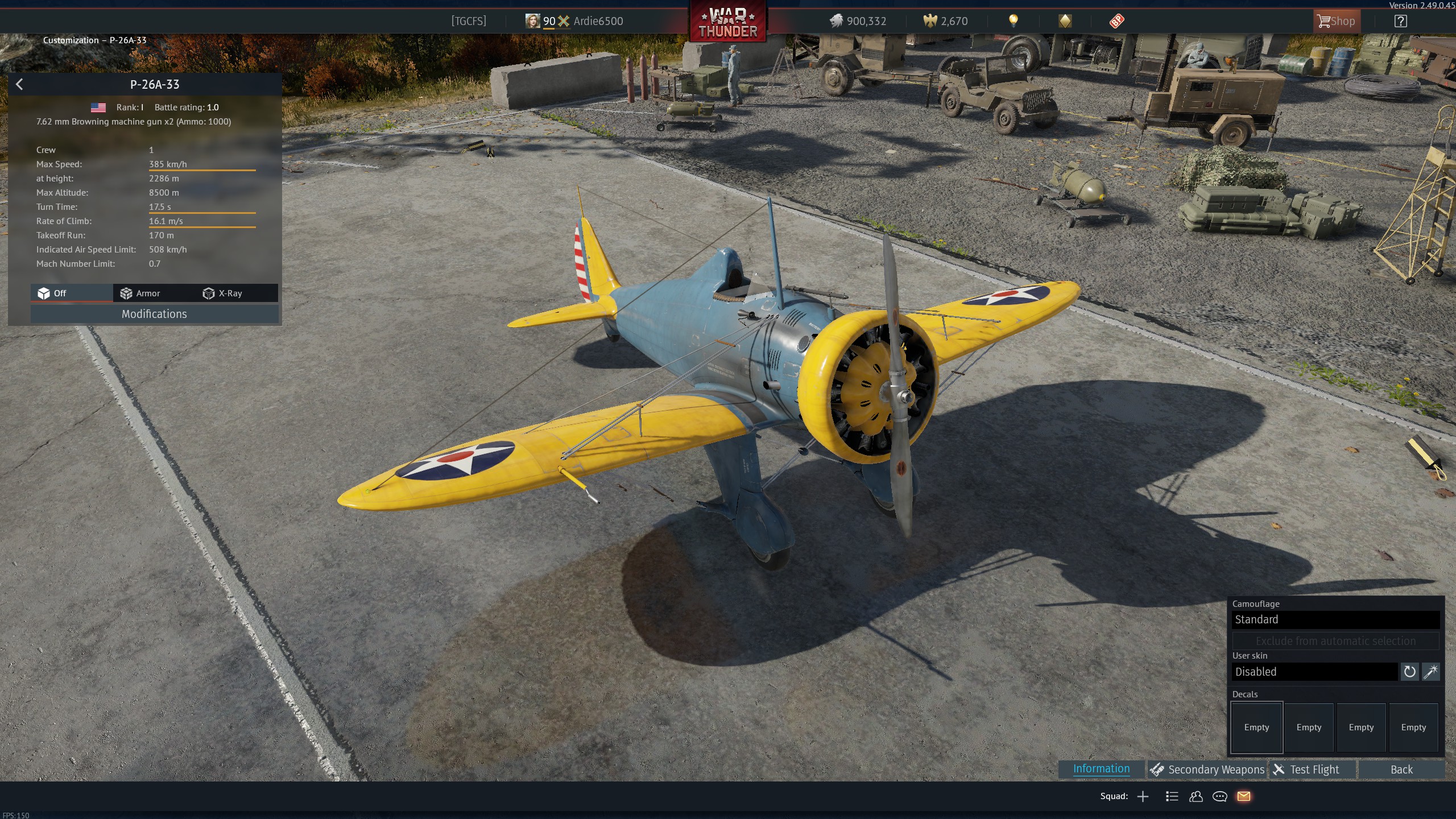
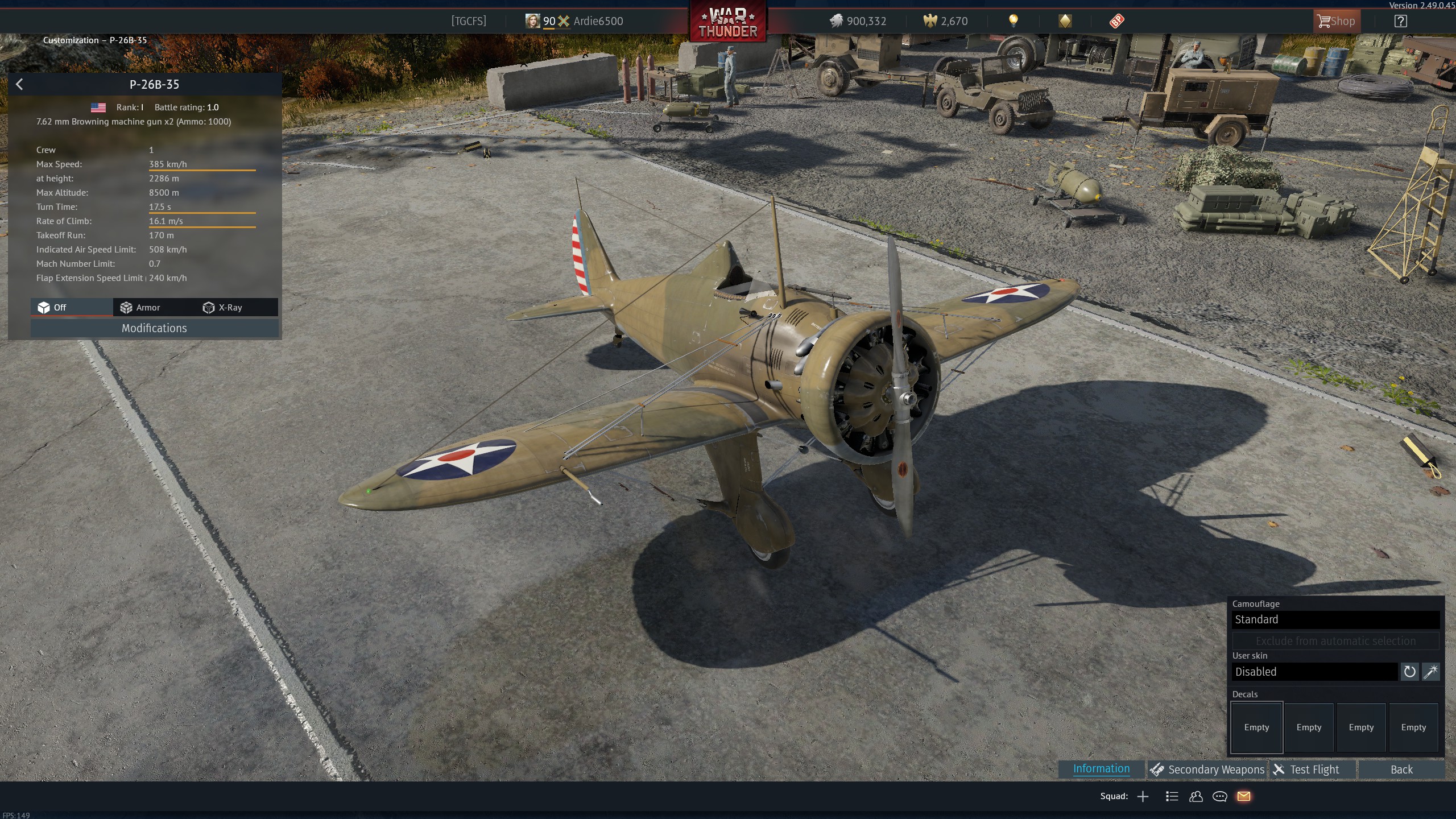
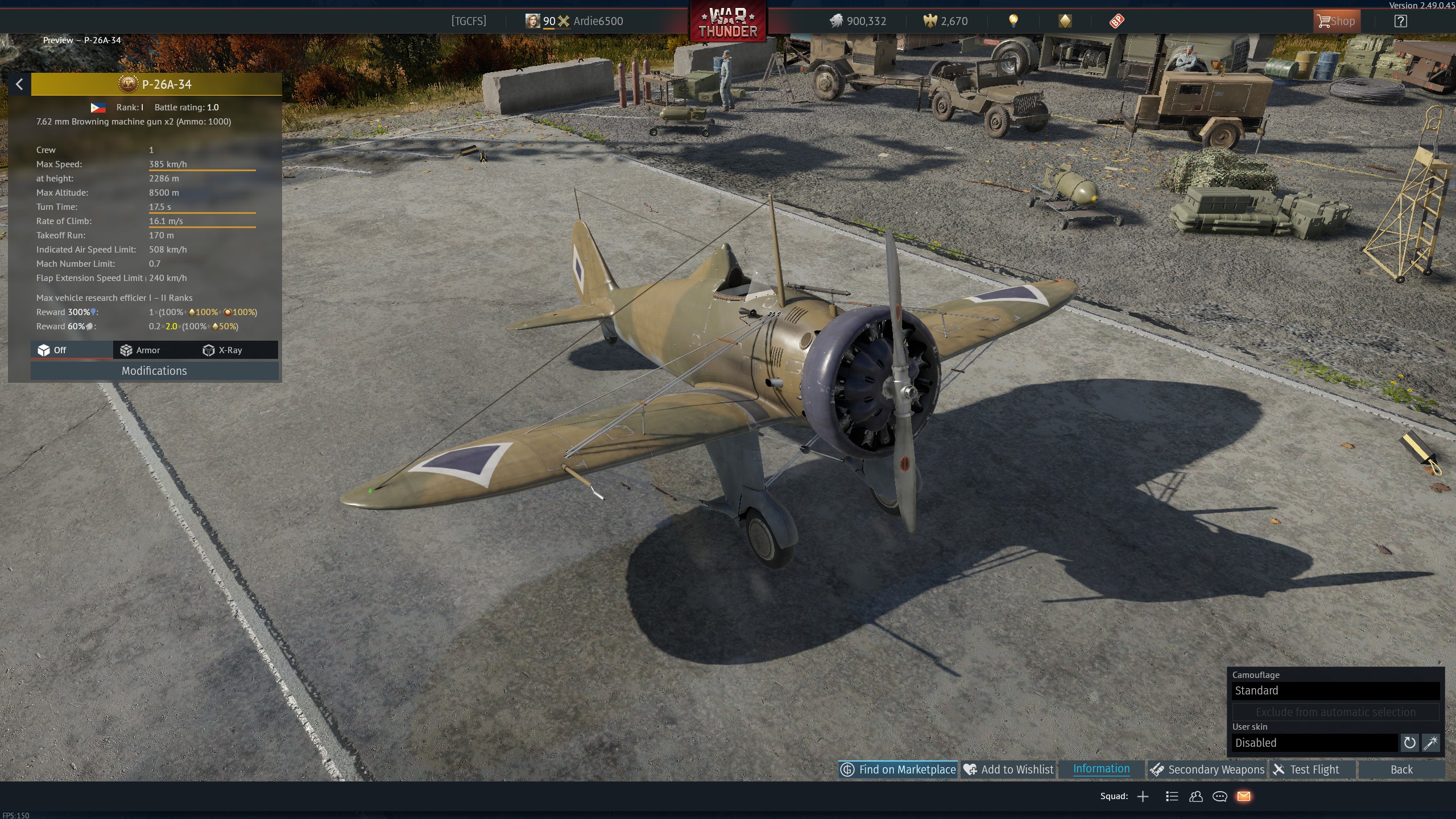
There is a premium variant available, P-26A-34, if you REALLY want a premium version of a reserve vehicle for some reason.
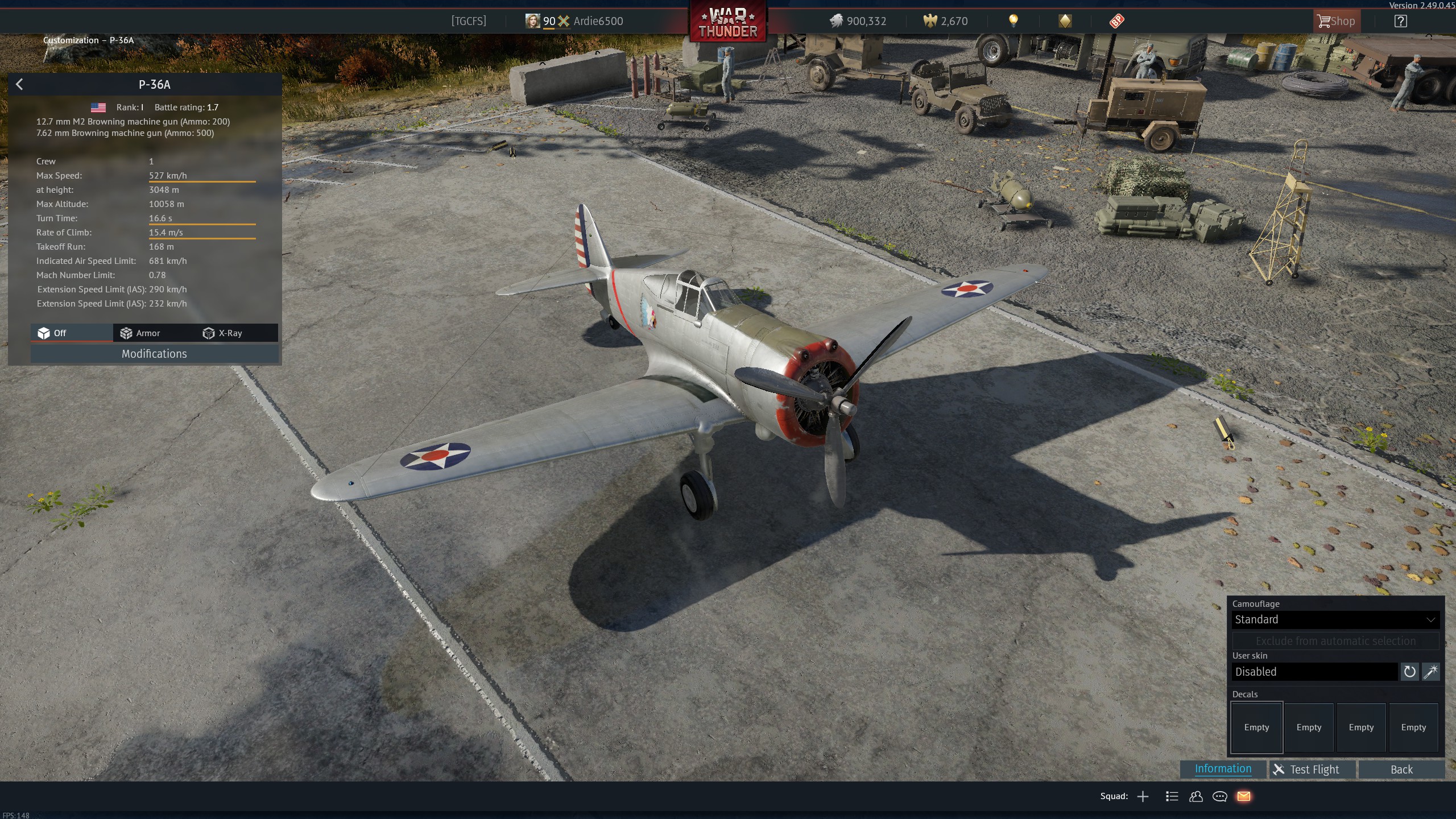
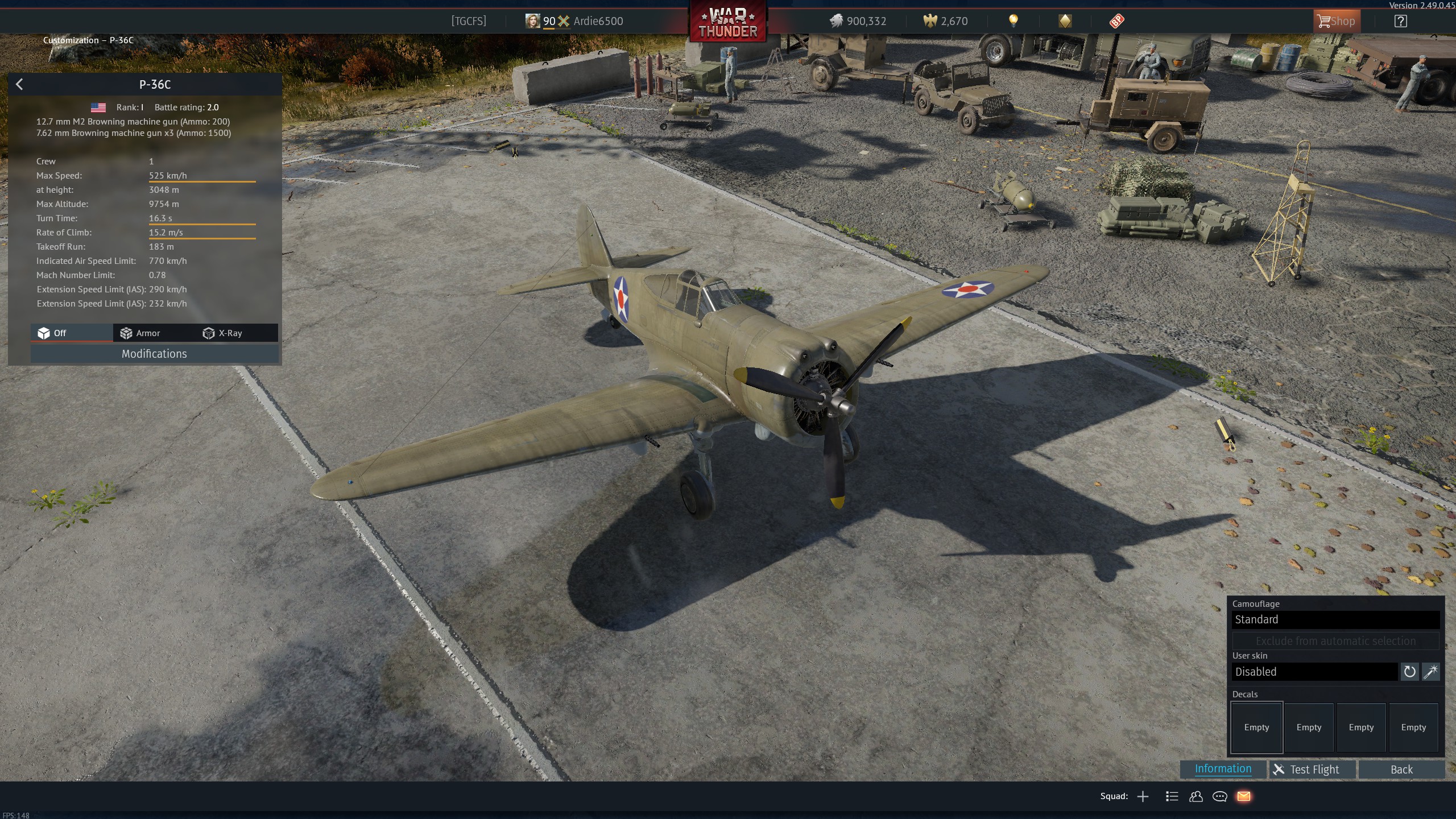
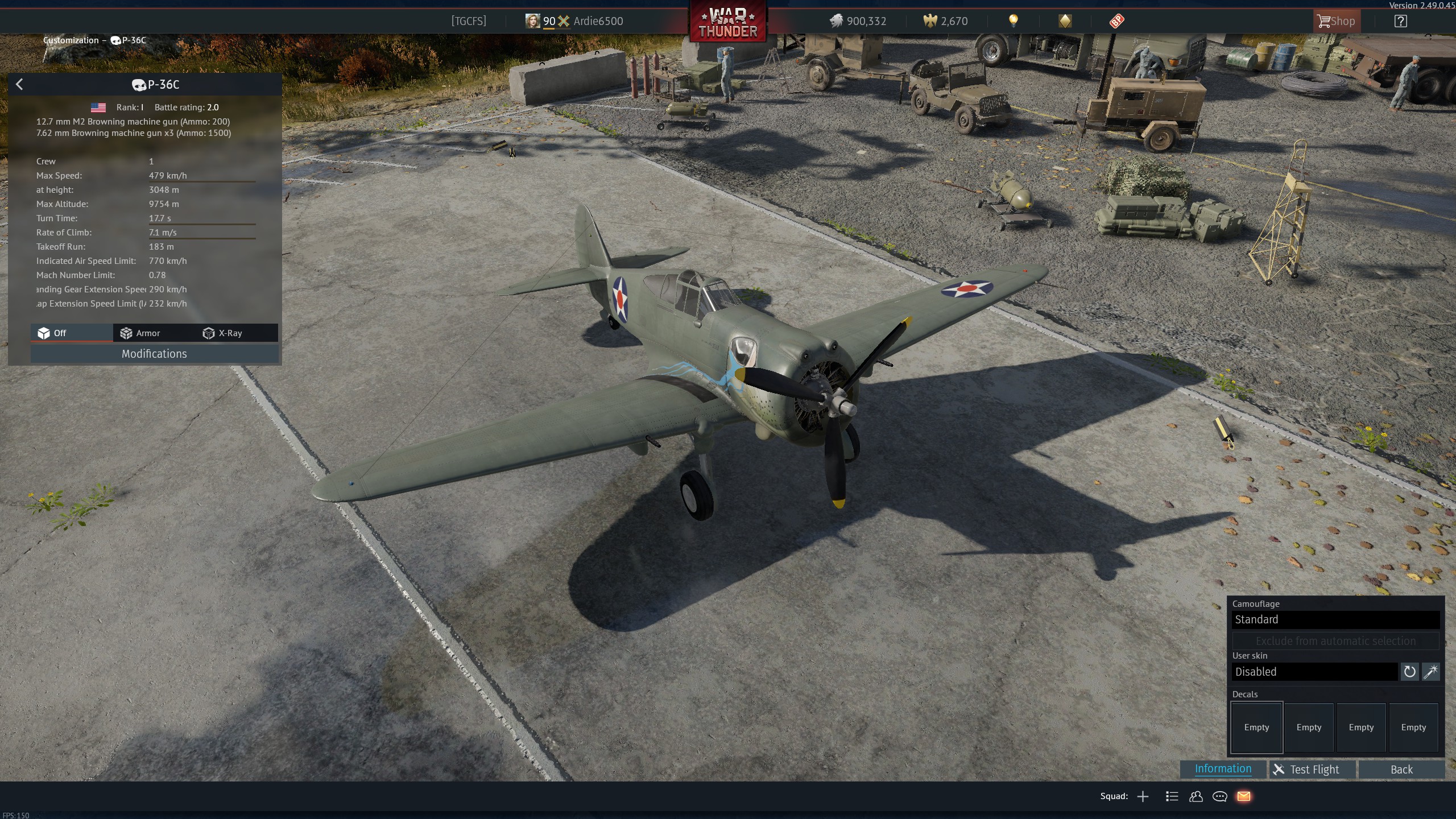
If you log into the War Thunder website from the following affiliate link, you'll receive a P-36C with TheRussianBadger's signature crying seal painted on its nose, as well as a similarly seal-themed LVT(A)(1) and a few other goodies. Note that you don't have to create a new account to receive this freebie - you can log in with an existing account and still receive the stuffs.
The url: https://playwt.link/therussianbadger
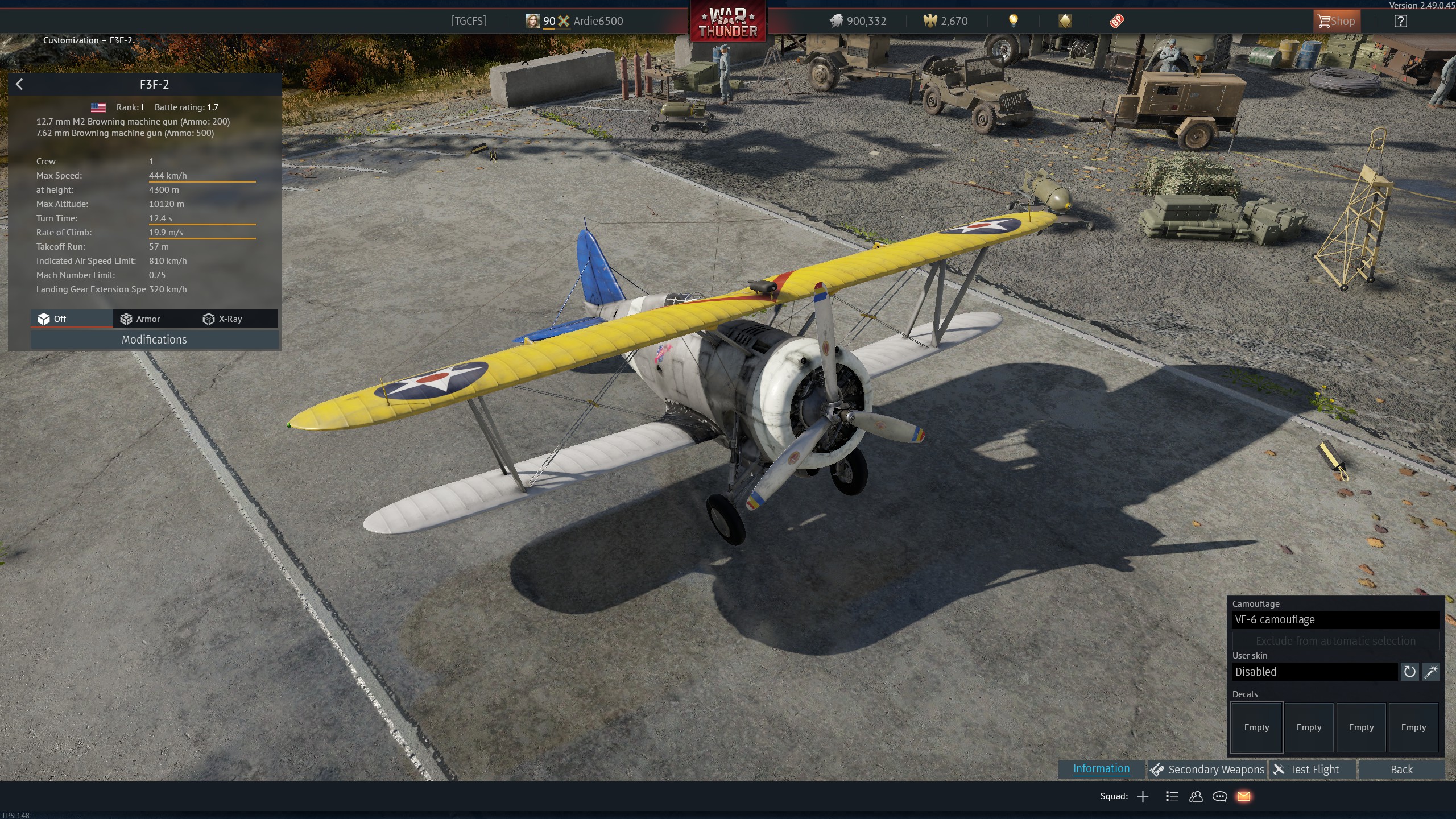
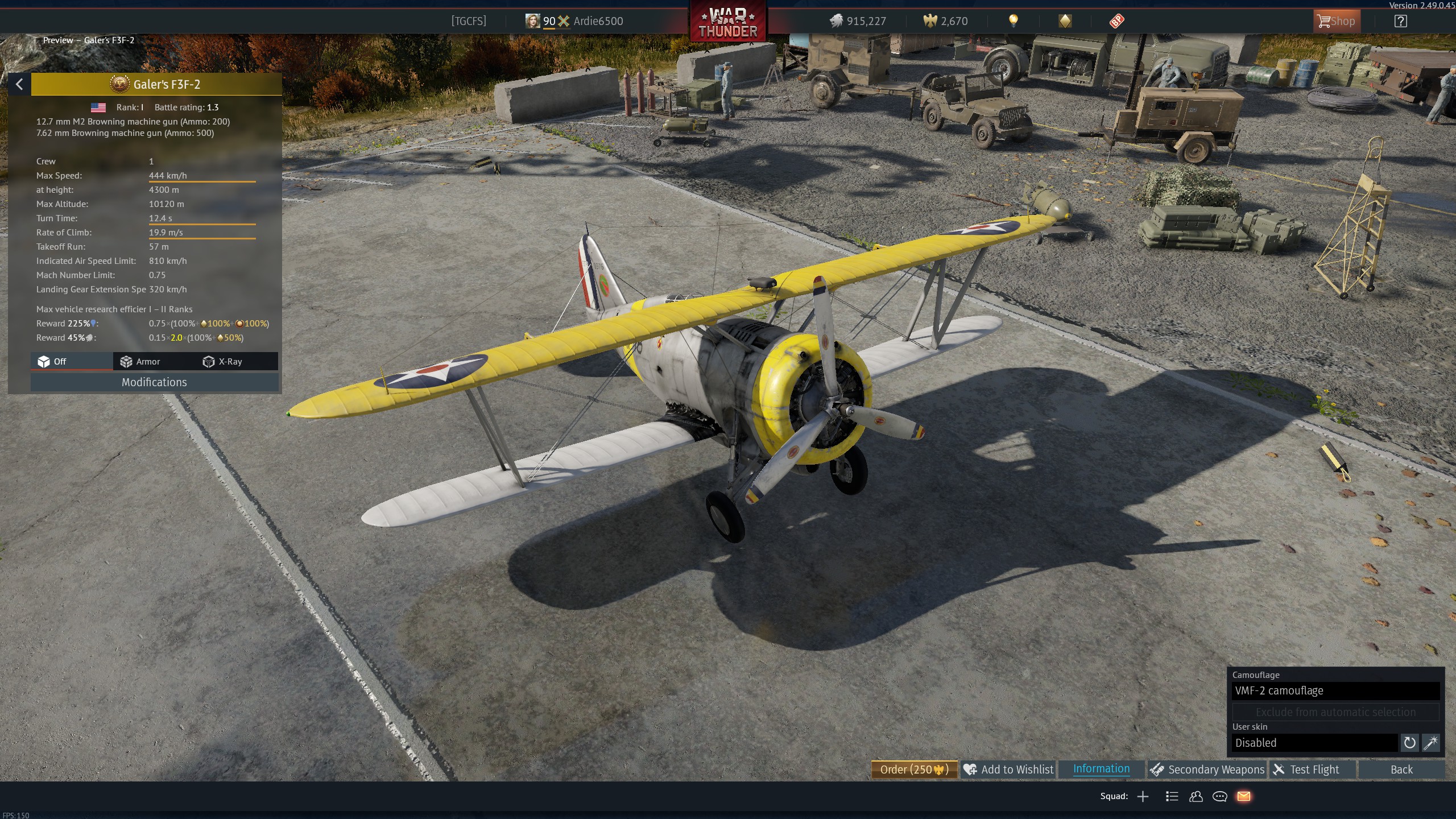
There is also a premium version, Galer's F3F-2.
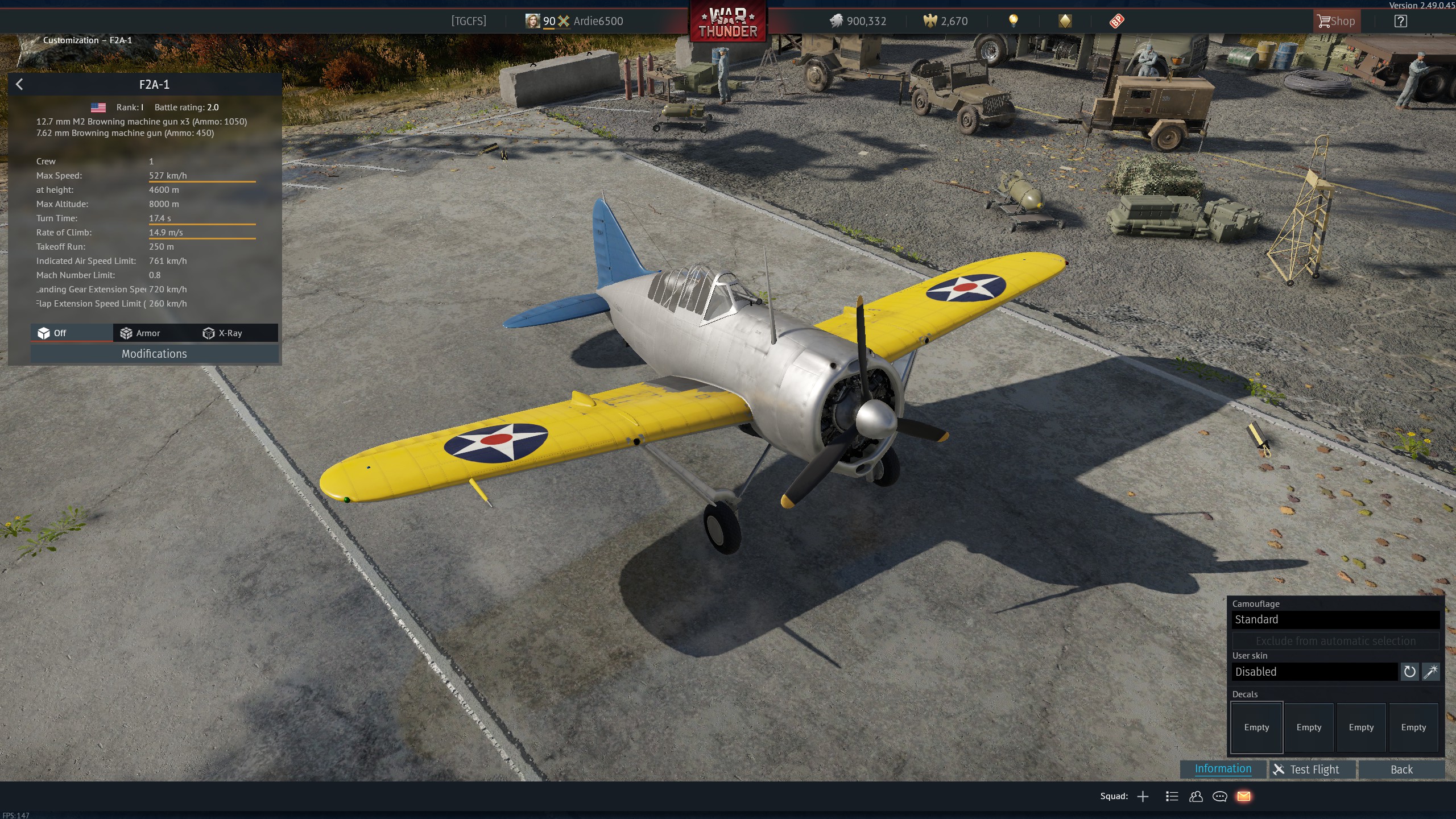
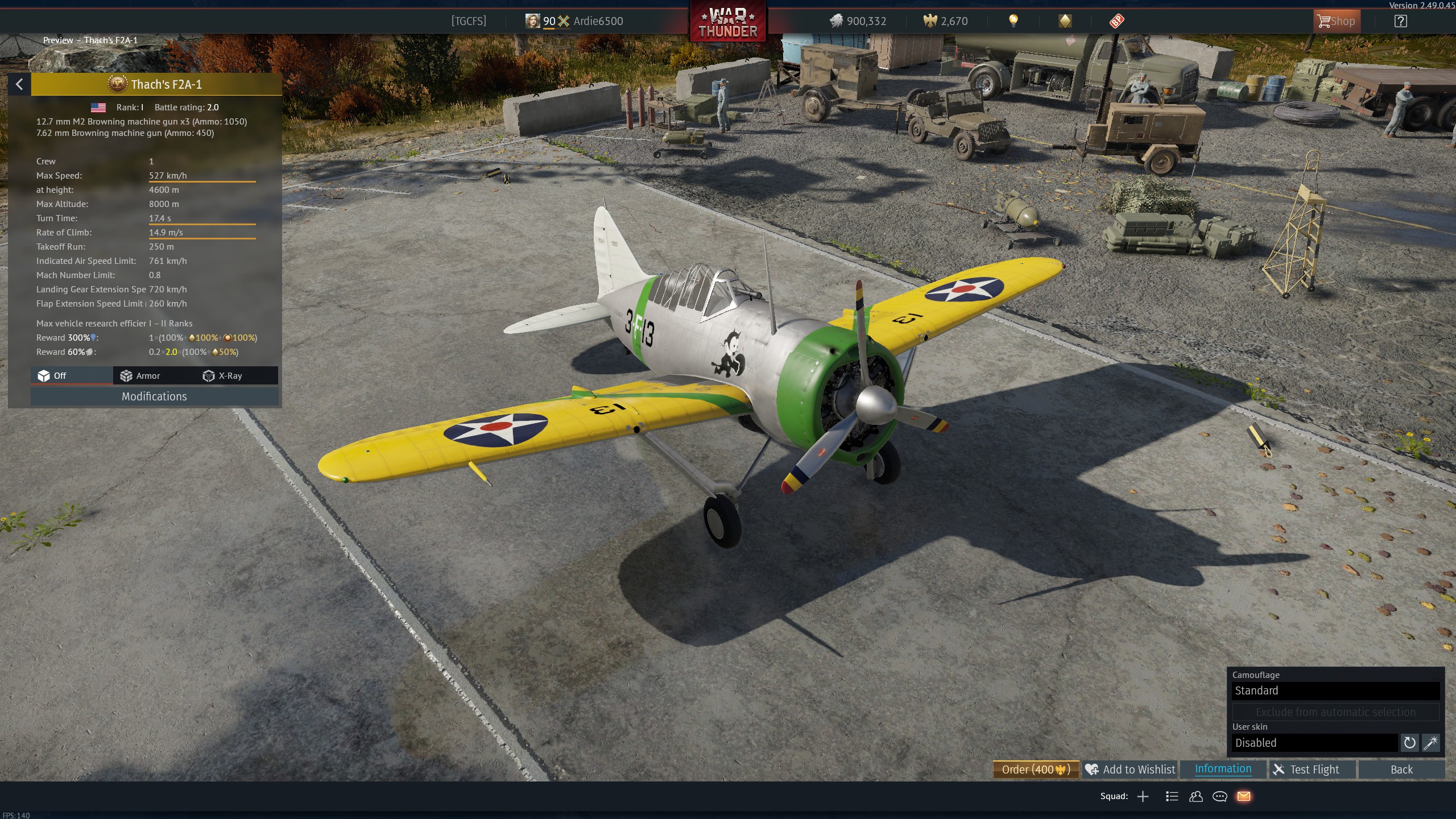
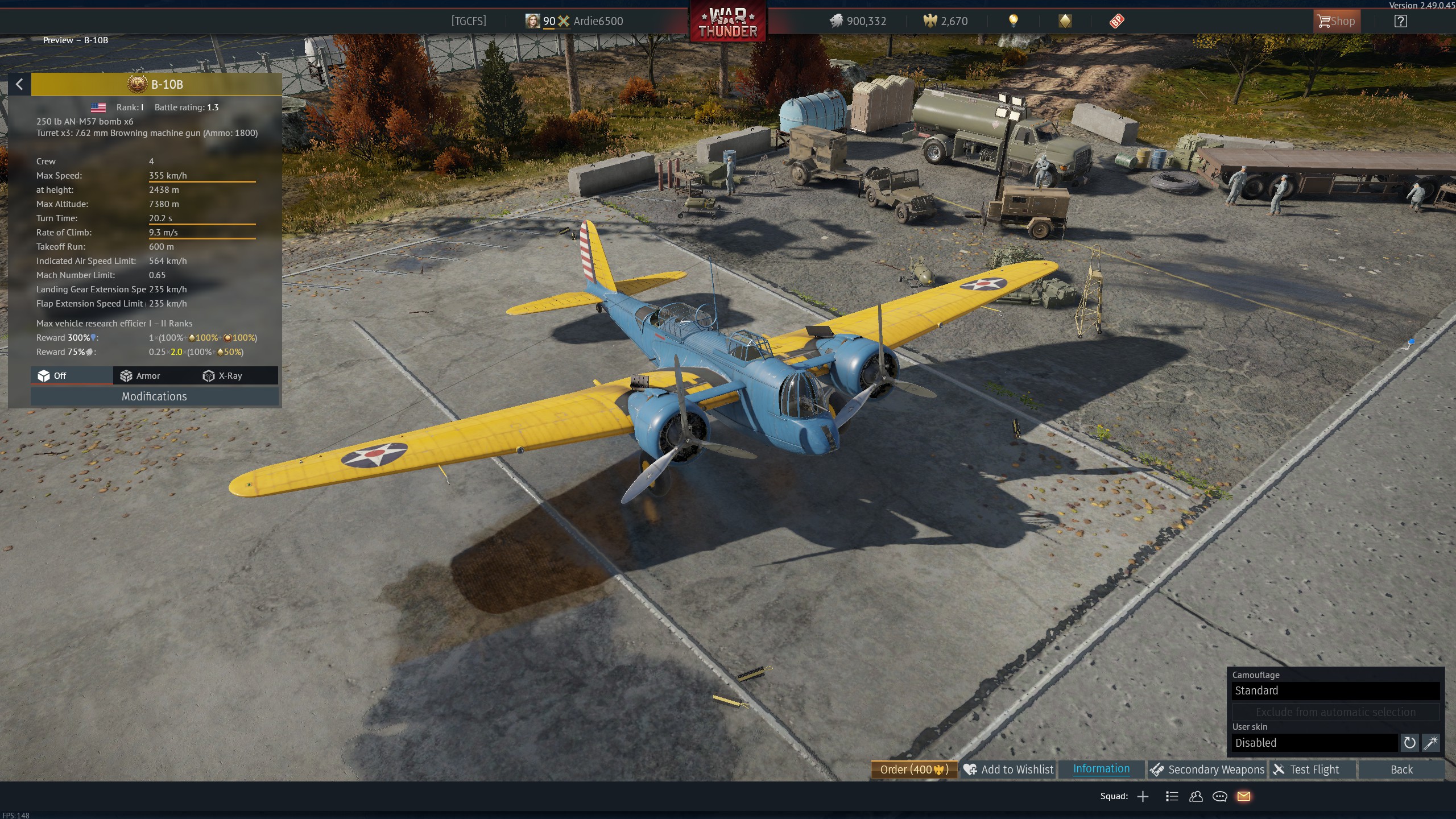
There is also a premium version, John Thatch's F2A-1 Buffalo.
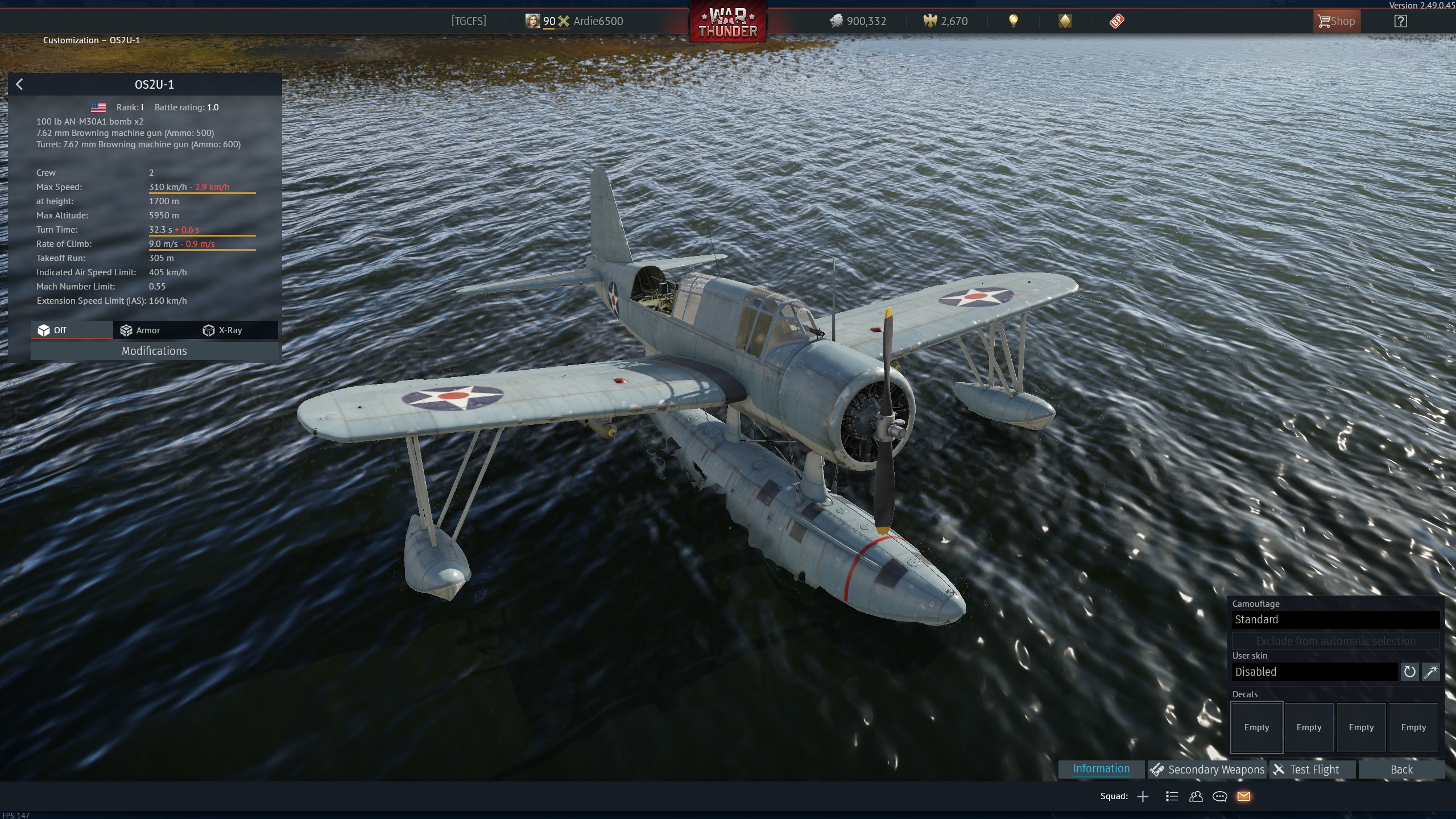
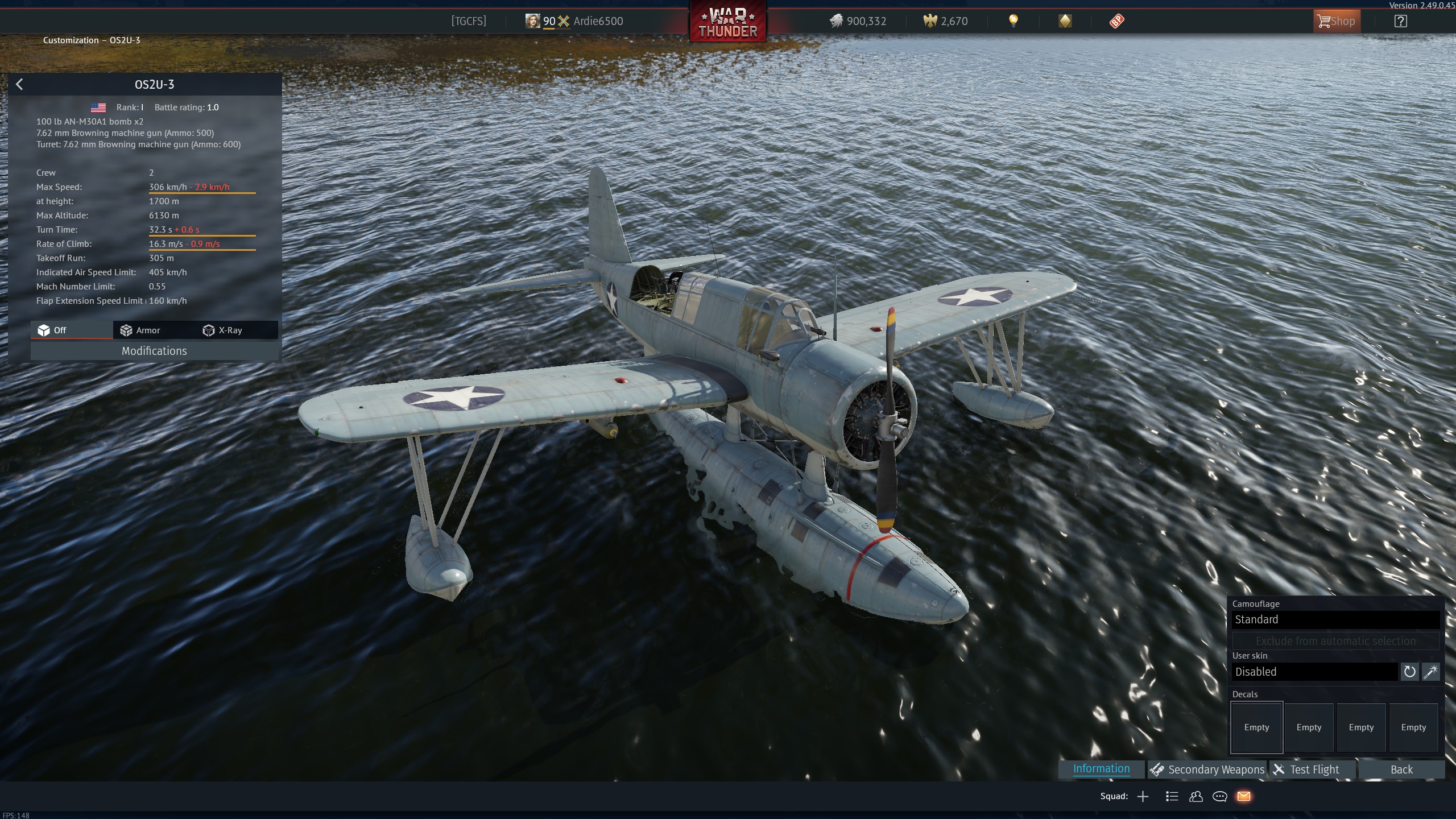
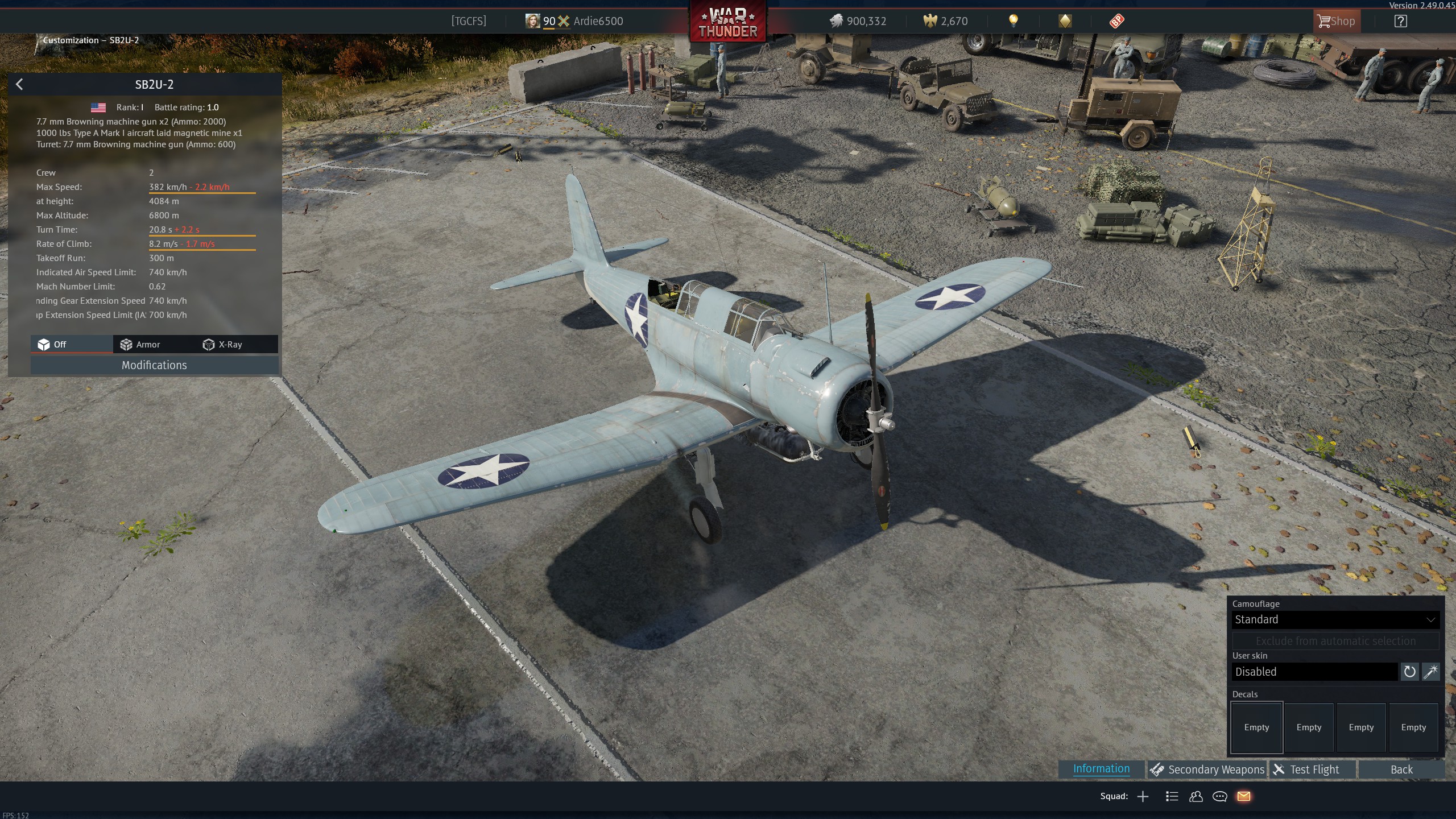
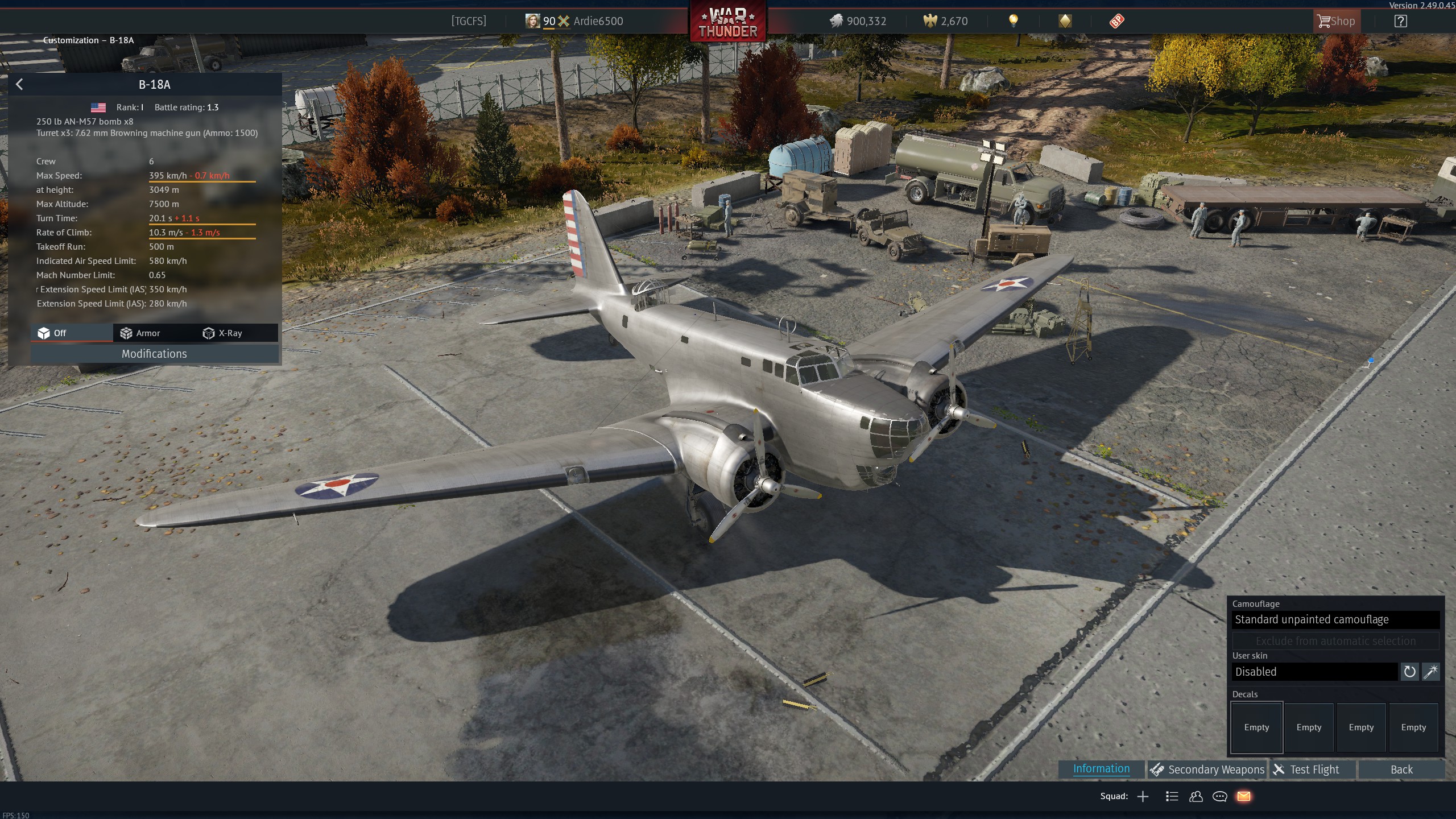
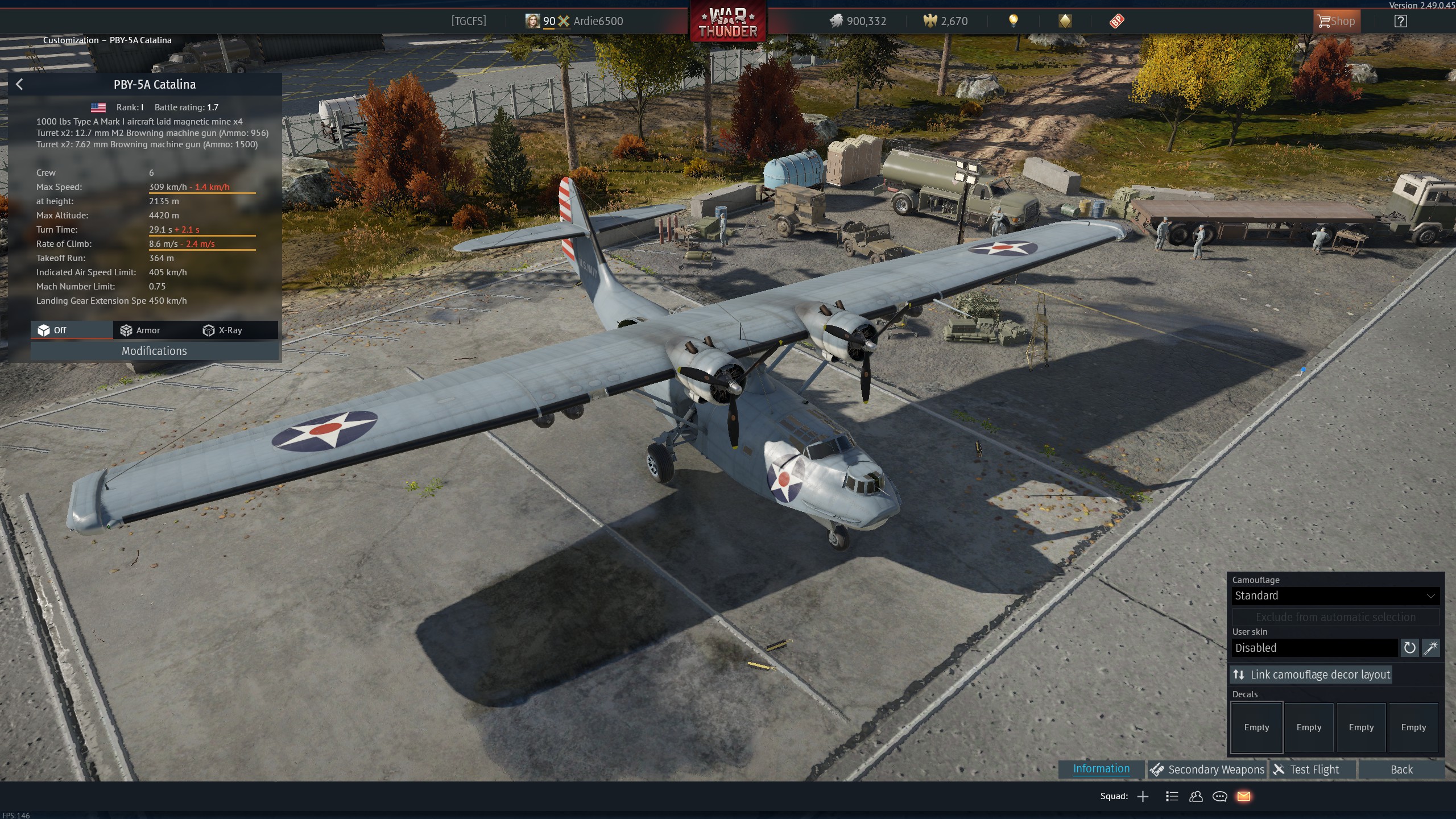
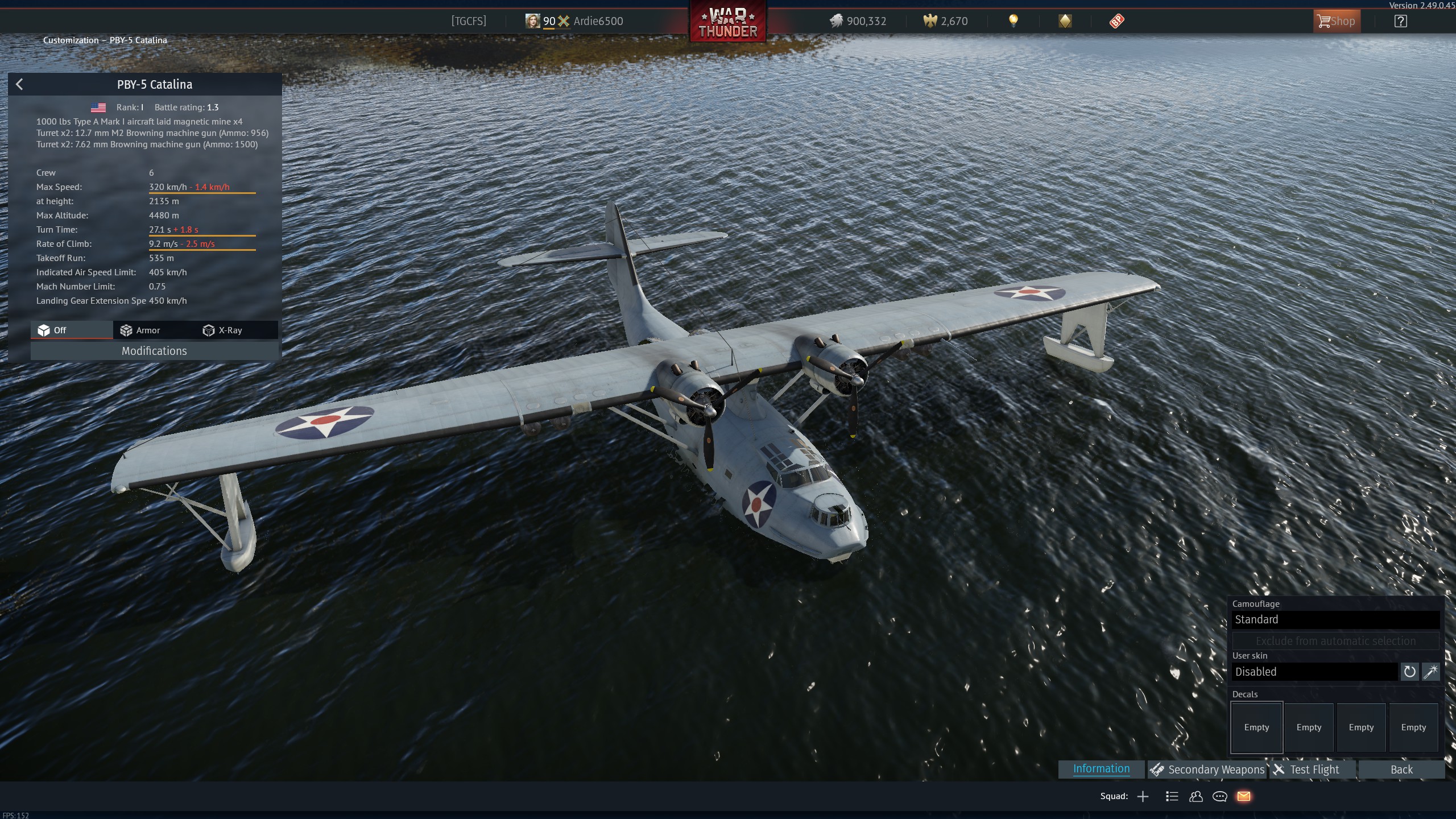
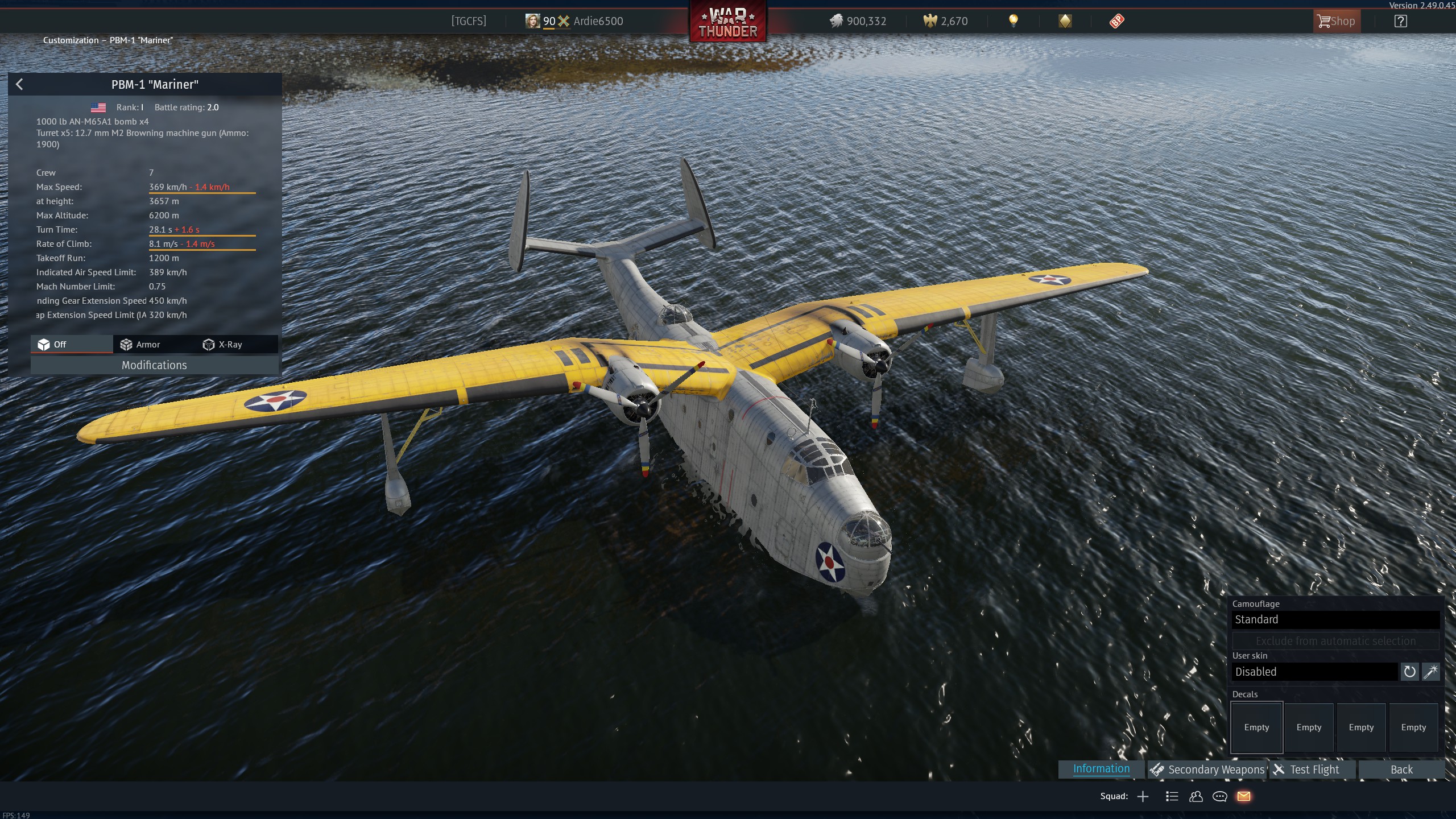
USA Air, Rank 2, Pt. 1
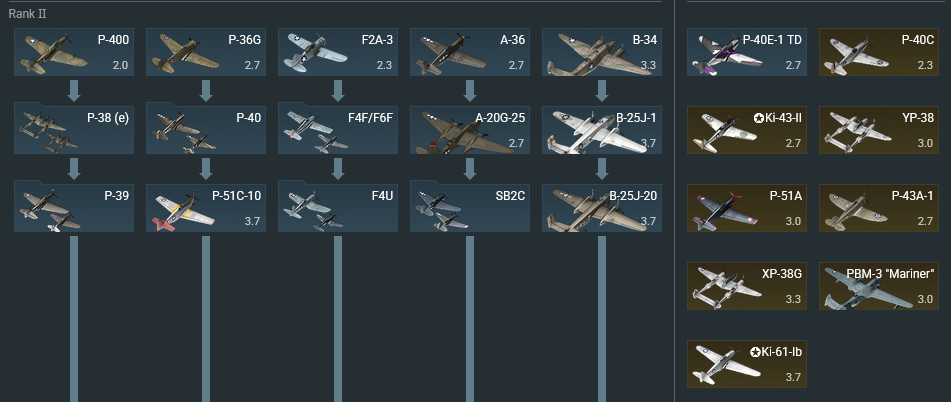 Rank 2 American airplanes start to embody the archetypes that will dominate ranks 3-4, those being
- Strong armament (usually 6x .50 cal. Browning M2)
- Good top speed
- Good energy retention
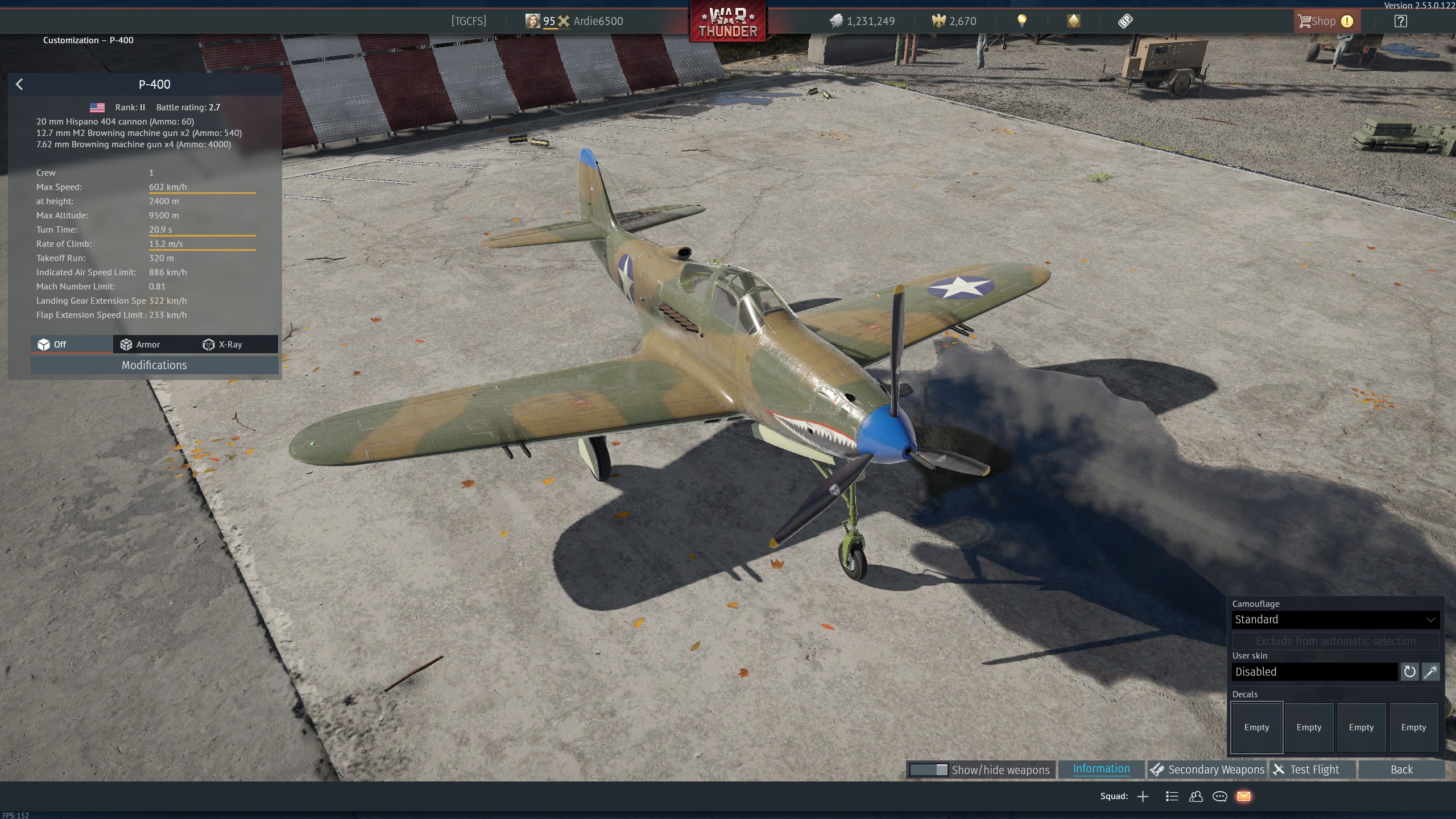 The first vehicle in the -cobra lineup, the P-400 is a good introduction to the Airacobra and Kingcobra aircraft that will follow. Like it's successors, it's quick, well-armed thanks to a center cannon, and performs well at low altitudes, but performance rapidly falls off as you climb. Unlike it's immediate successors (Airacobras), the P-400 also doesn't turn or climb terribly well, even at low altitudes, although performance is certainly adequate. Try to keep this one at low altitude and avoid turn fights.
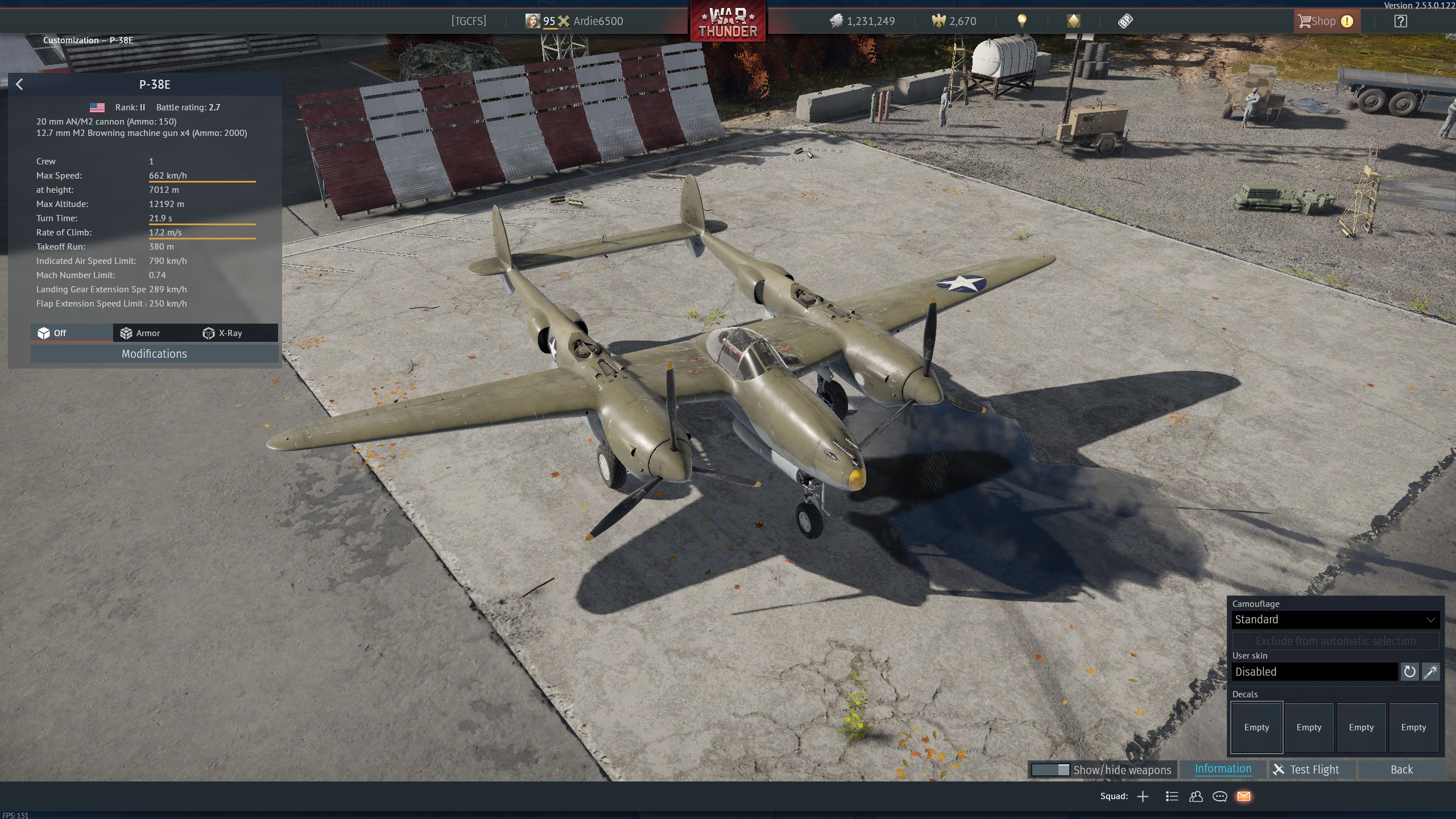
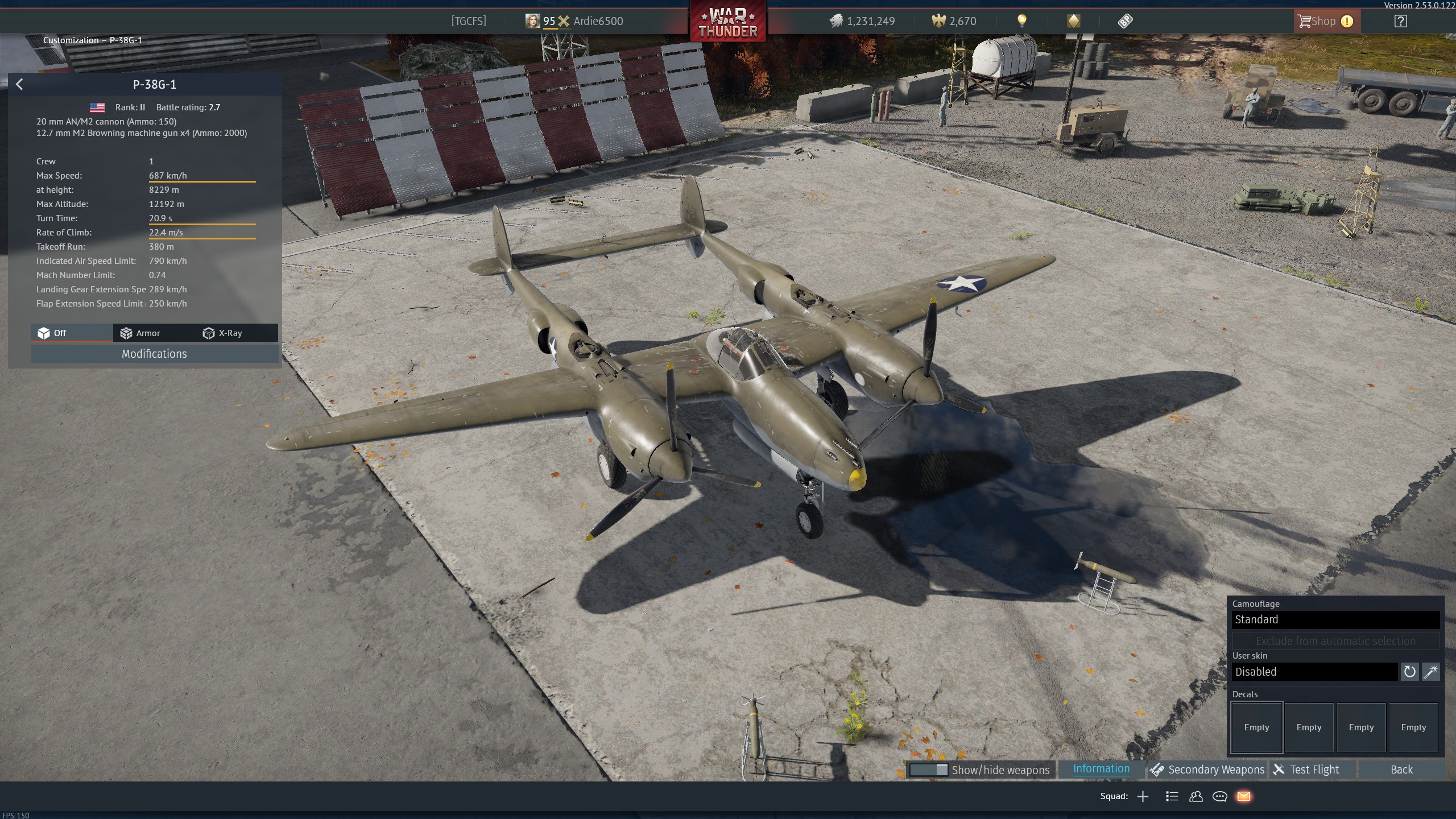 Fast, well-armed, and with excellent high-altitude performance, the Lightning fills the gap left by the contemporary Bell aircraft. Note that turn times aren't great, particularly at high speed due to compression issues with the early P-38 wings, but play to the aircraft's strengths and boom-and-zoom and you'll be fine. The G-1 is better than the E in every way.
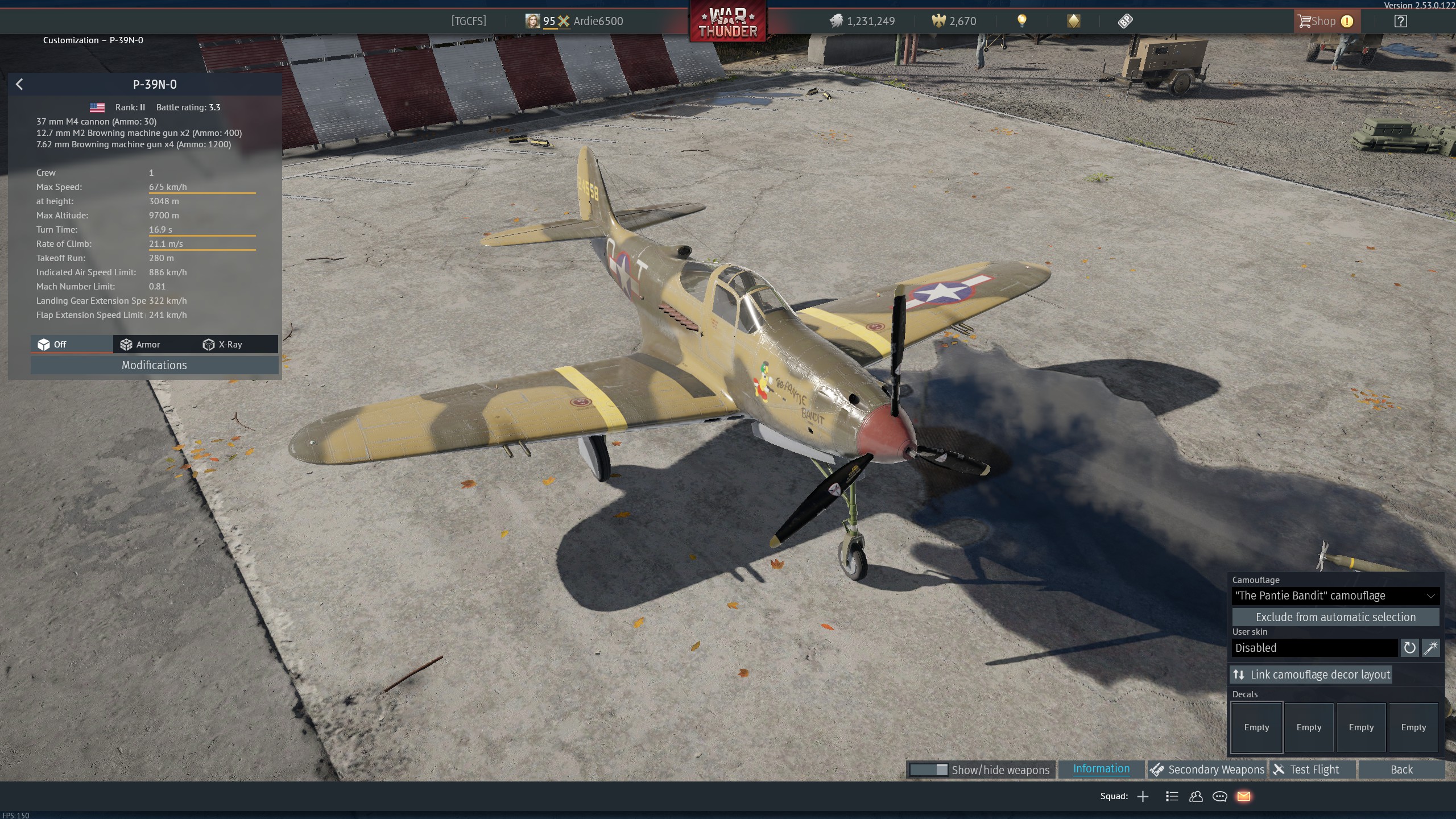
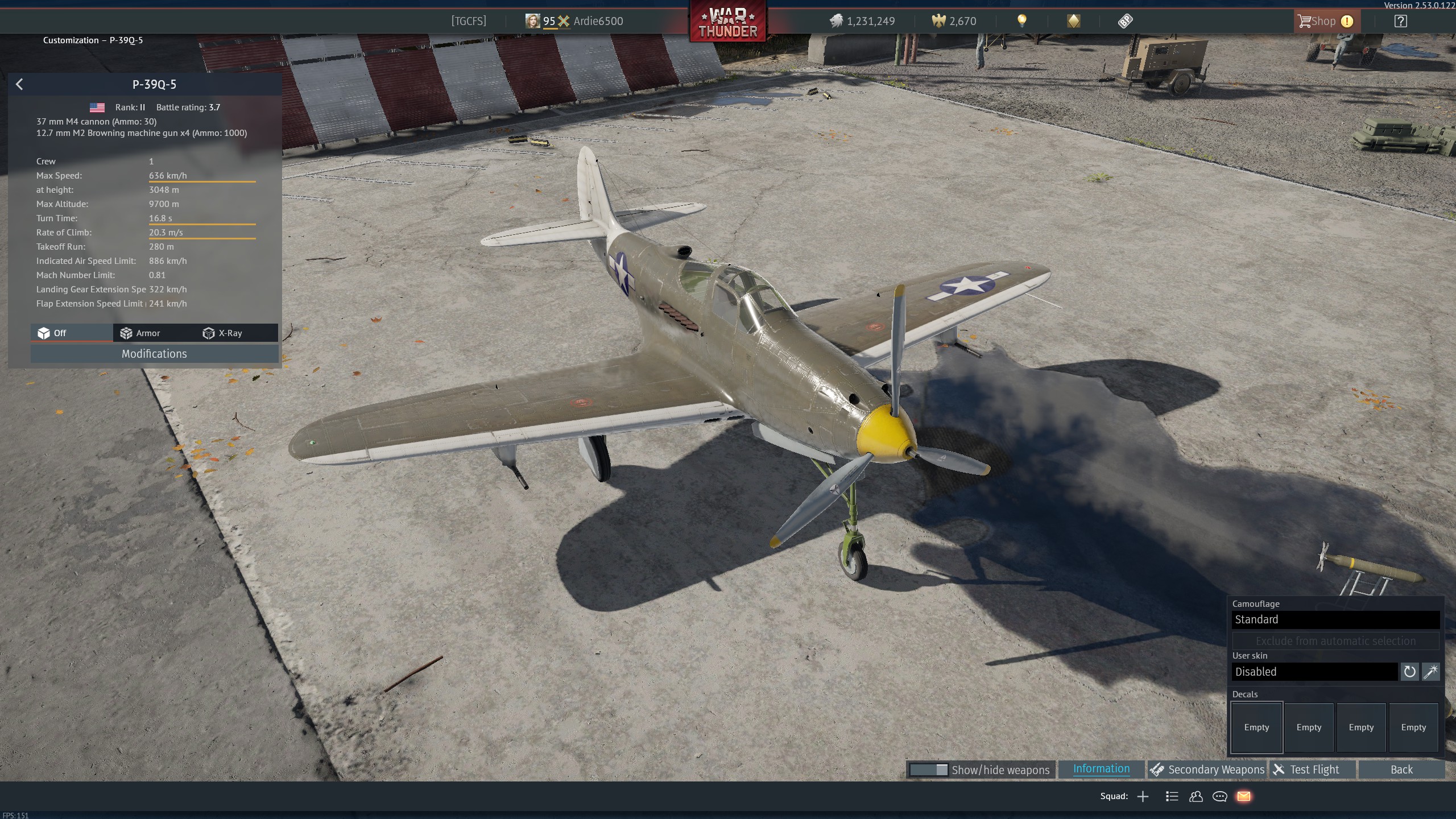 A direct upgrade over the P-400. Faster, better-armed (37mm cannon instead of 20mm), quicker-turning, quicker-climbing, and with very slightly better performance at altitude, the Airacobra is an absolute menace (even at the higher BR). Again, better at low altitudes, but high-altitude dogfights are no longer quite as depressing. The Q-5 trades about 10% max speed and two .30s from the N-0 for two .50s. Both variants will perform admirably in almost any fighter role.
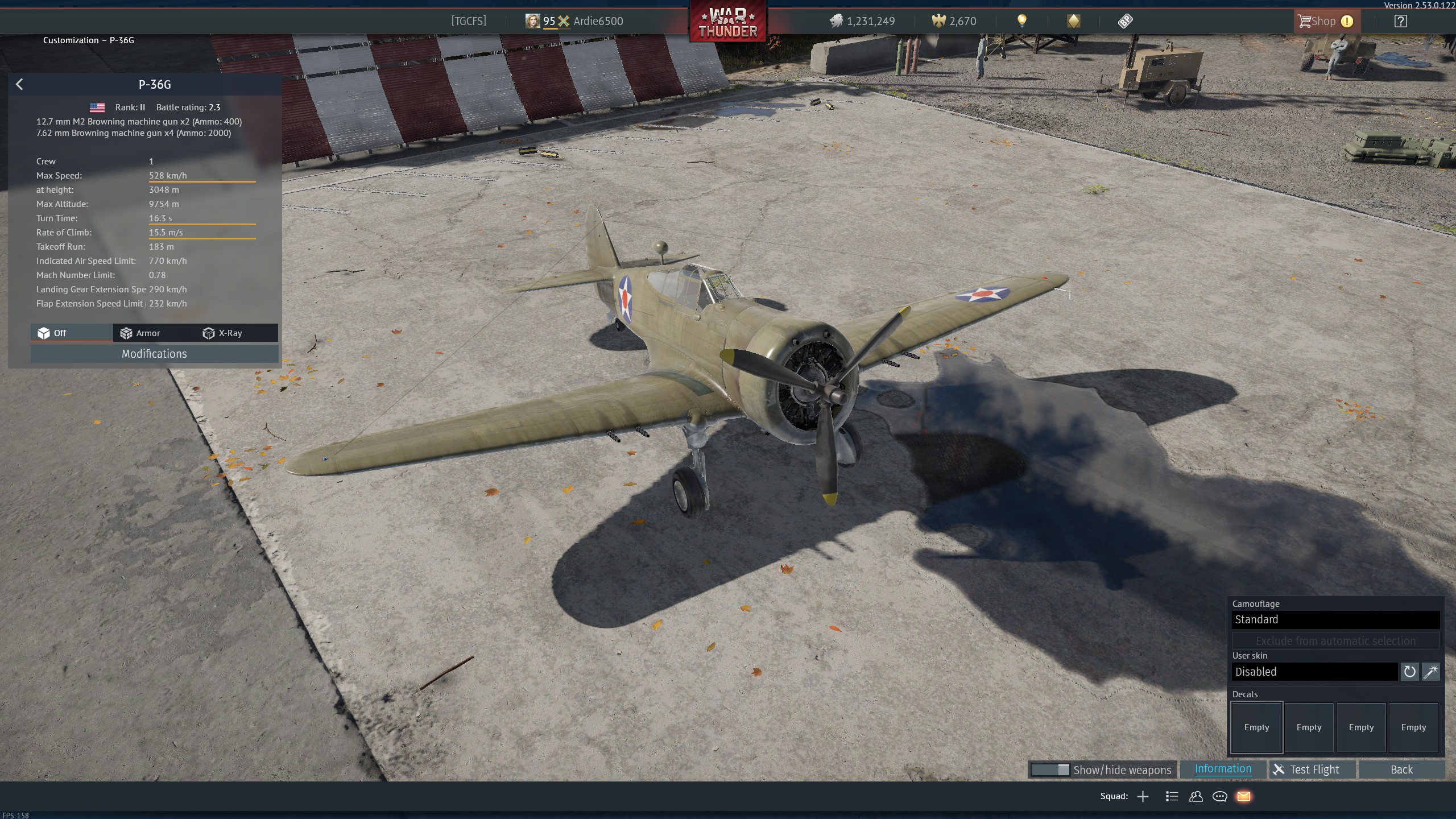 The last Hawk variant in the American tree, the P36G is basically a C with one extra .50- and .30-caliber machine guns. The marginal improvement in armament is much appreciated, but at 2.3 you're starting to run into faster enemies that you can't catch. Stick to turn fighting, and think twice before pursuing fleeing opponents.
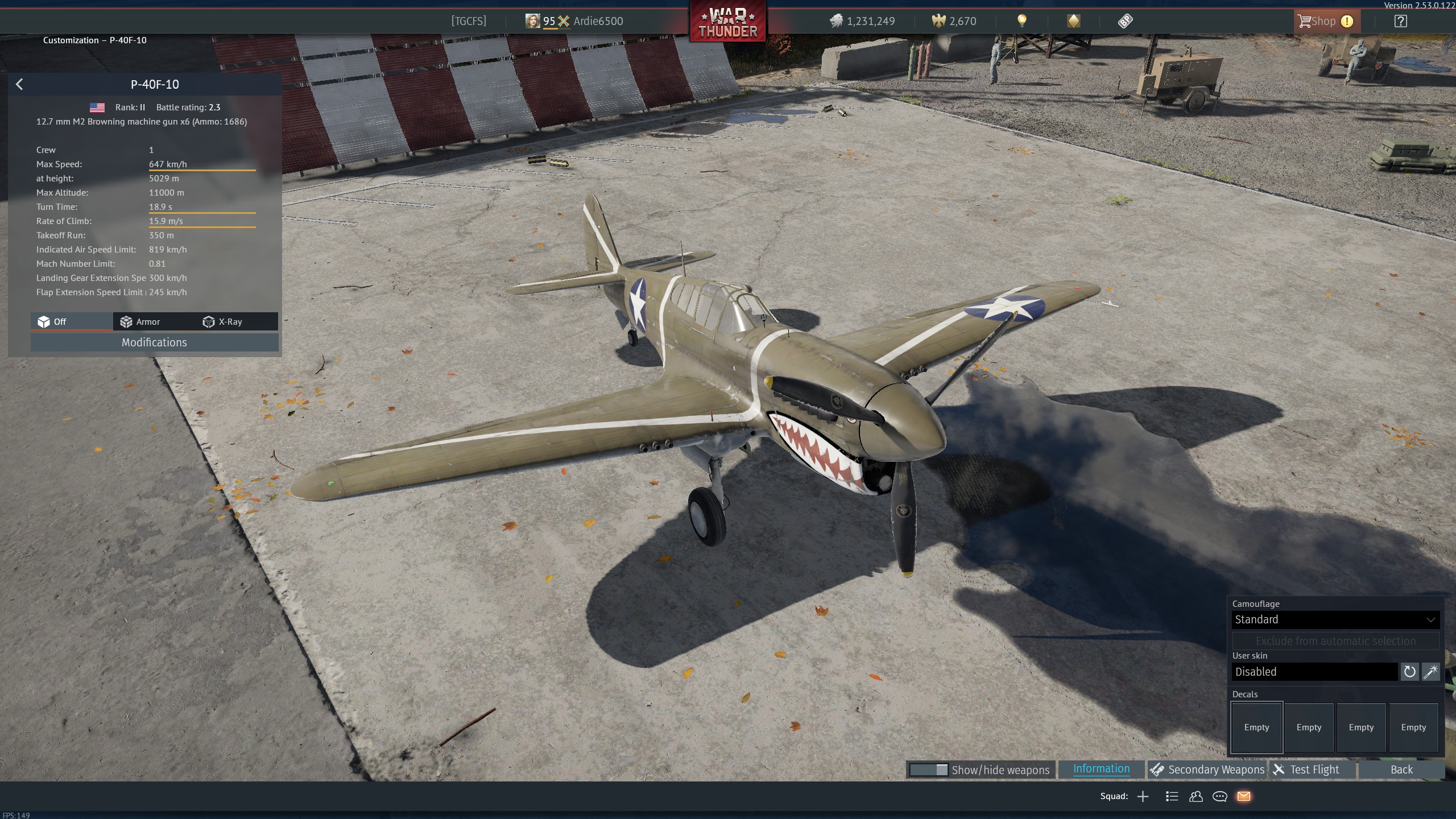
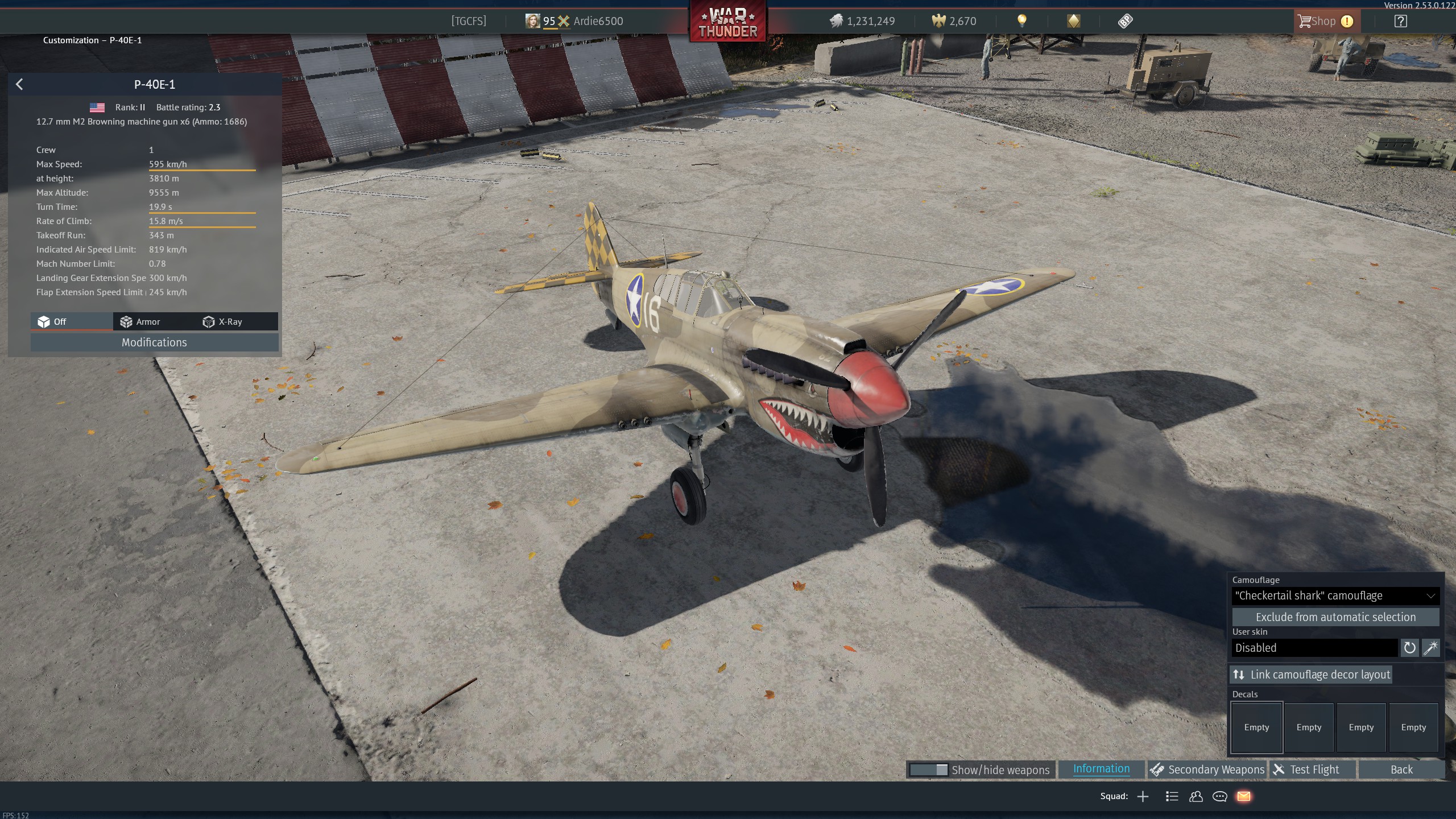
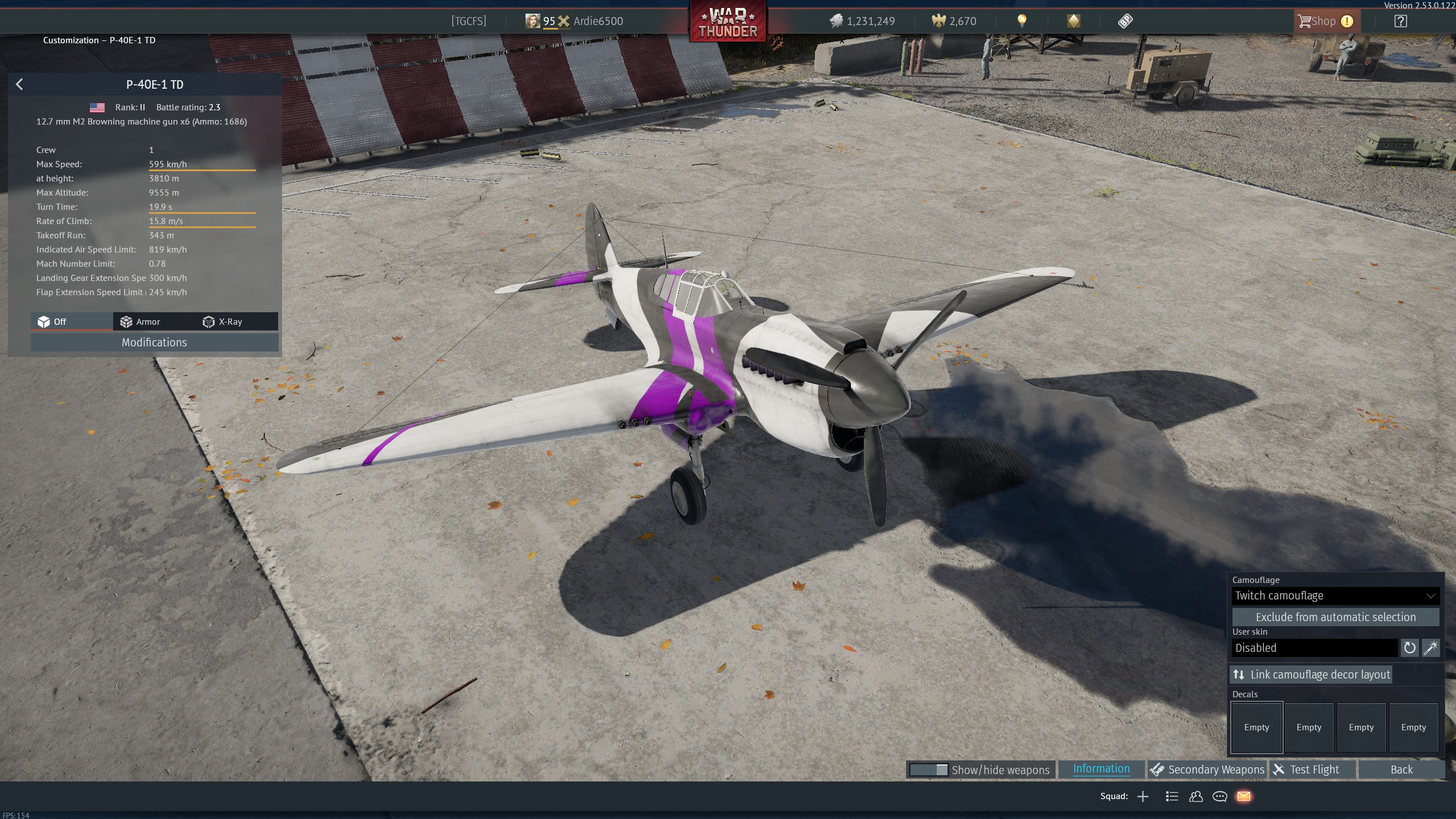 These two late-variant P-40s are delightful. They trade some of the P-36's agility for greater speed and stronger armament, and they use both to great effect. They're the first planes in the American USAAF trees to use the soon-to-be-ubiquitous 6x.50-cal loadout, and although they're not as deadly as the late-war .50s (they unfortunately don't get the absolute flamethrower that is the M8 API-T cartridge) they will still chew through enemies at this tier. However, the planes are a bit sluggish at lower speeds, they will bleed energy like crazy if you try to turn fight, and their engines give up the ghost at high altitudes. Focus on maintaining a good airspeed and you'll come to love these beauties. The F-10 is a direct improvement over the E-1, swapping its middling Allison engine for a more powerful Packard-built Rolls-Royce Merlin engine.
There is also a Twitch Drop variant of the E-1, the P-40E-1 TD.
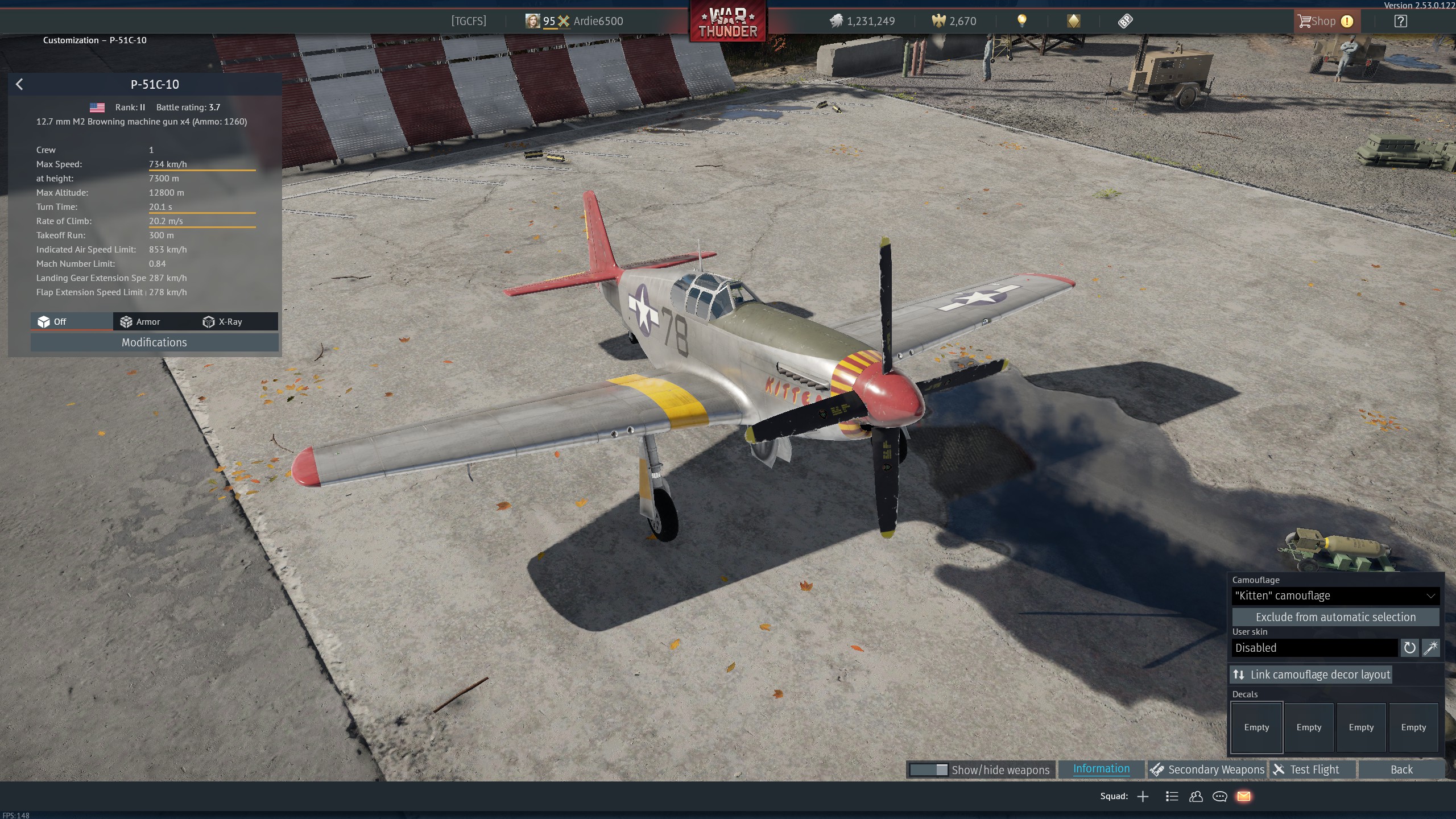 The first of the venerable Mustangs in the American aviation tree (unless you have the rare P-51A premium - see below), the P-51C-10 is a massive improvement in flight performance over the P-40s. It has the same turn time as the P-40E-1, but boasts a top speed almost 100kph faster than the P-40F-10, as well as a climb rate that's 5m/s higher. You do lose two .50s, but you also get access to the glorious M8 API-T round, which I think makes this armament change more of a side-grade than a downgrade. A very fun vehicle and a good introduction to the P-51 family.
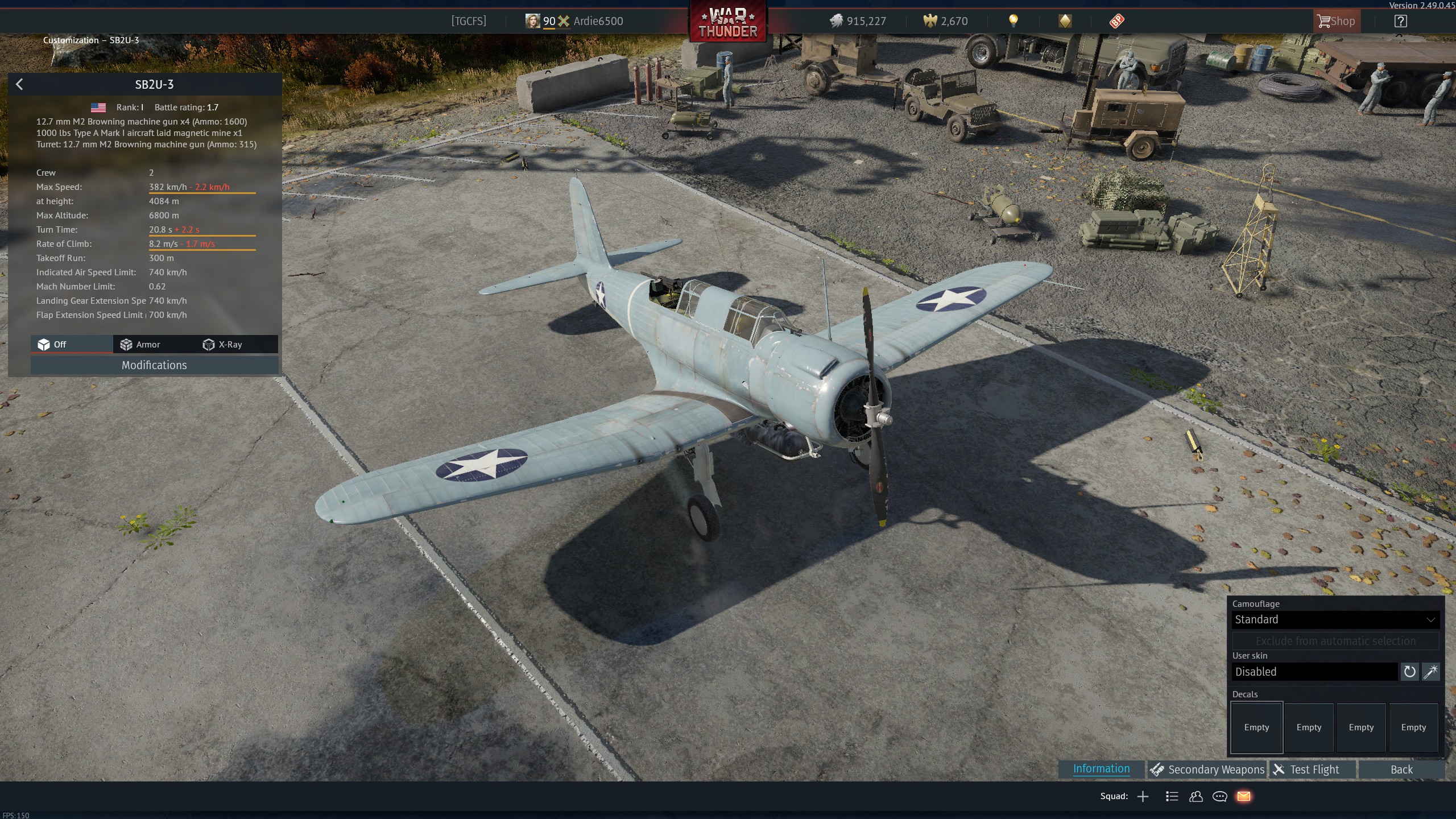
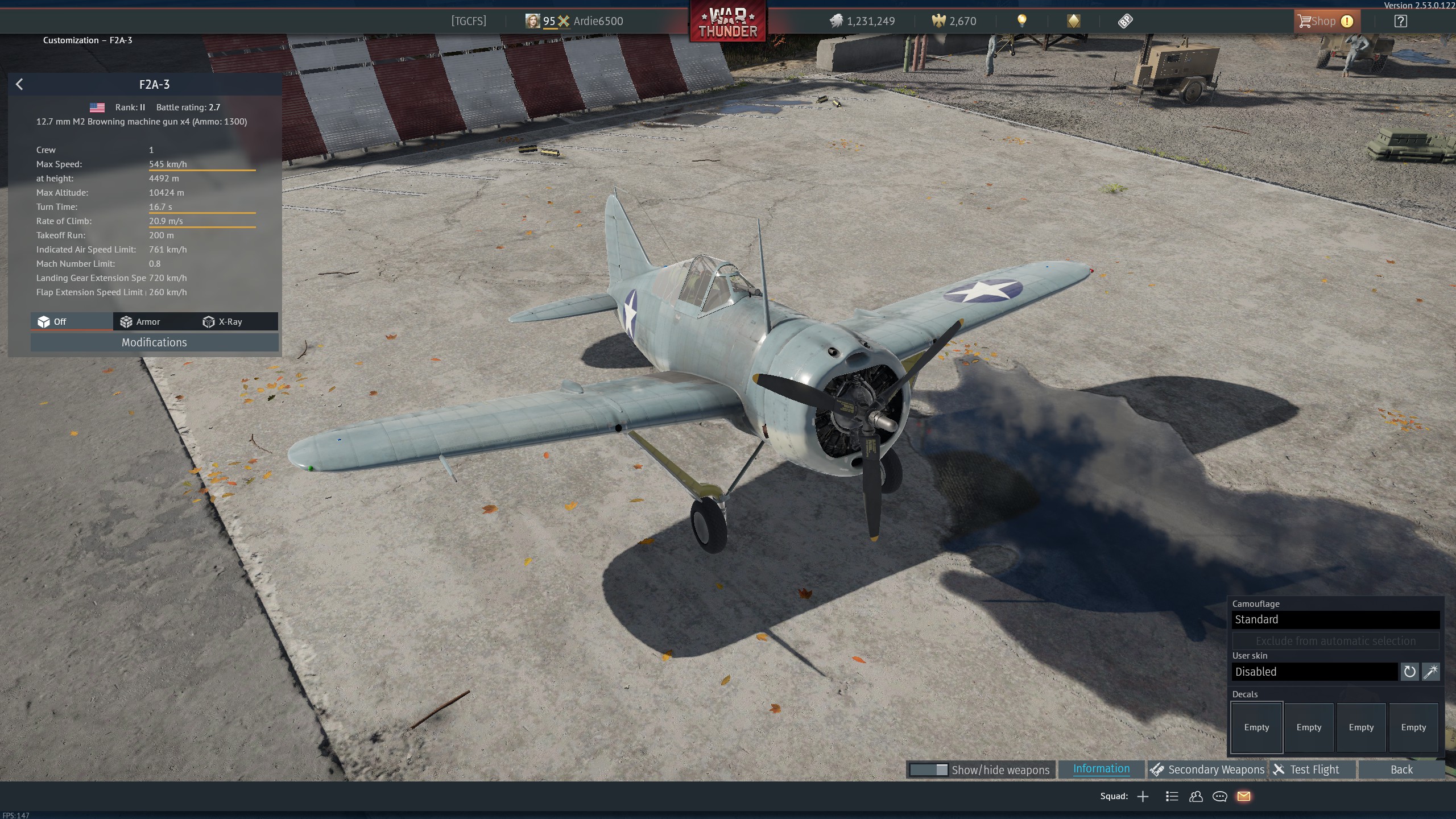 The second and final variant of the Buffalo, the -3 is a direct upgrade over the -1, with slightly improved top speed and turn time, and significantly improved climb rate. It also trades the -1's .30 caliber machine gun for a .50 caliber one, bringing the armament up to a nice 4x.50. While this is all very nice, and makes the aircraft a decent general-purpose fighter, it's not enough to overcome the Buffalo's general sluggishness and make for a "good" vehicle. Overall, the F2A-3 is a bit lackluster, but is still plenty capable if played to its strengths.
(As a side note, Wikipedia claims that the F2A-3 had worse flight characteristics than the F2A-1 - and it's successor, the F4F - but the opposite is true in-game. Huh.)
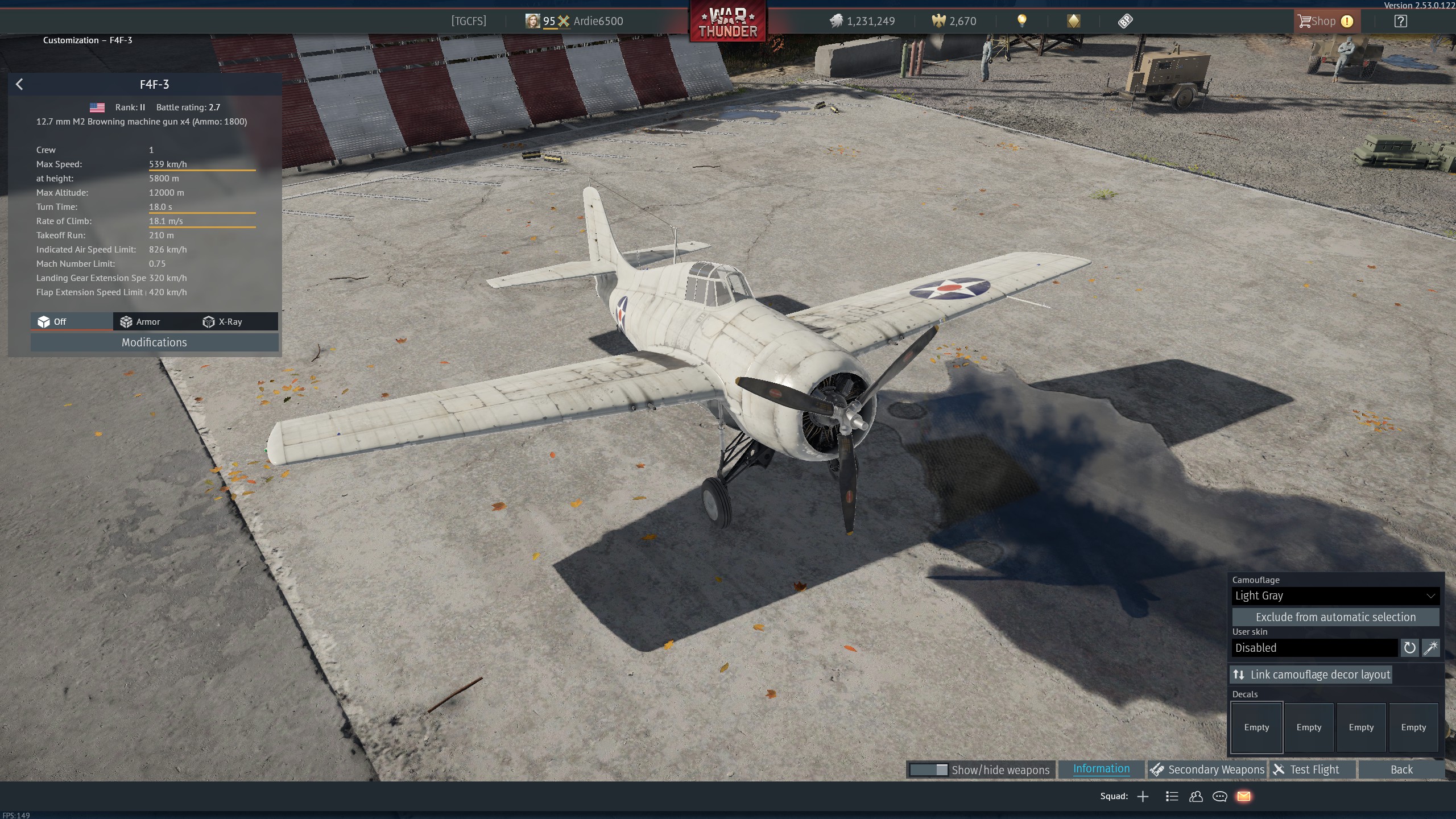
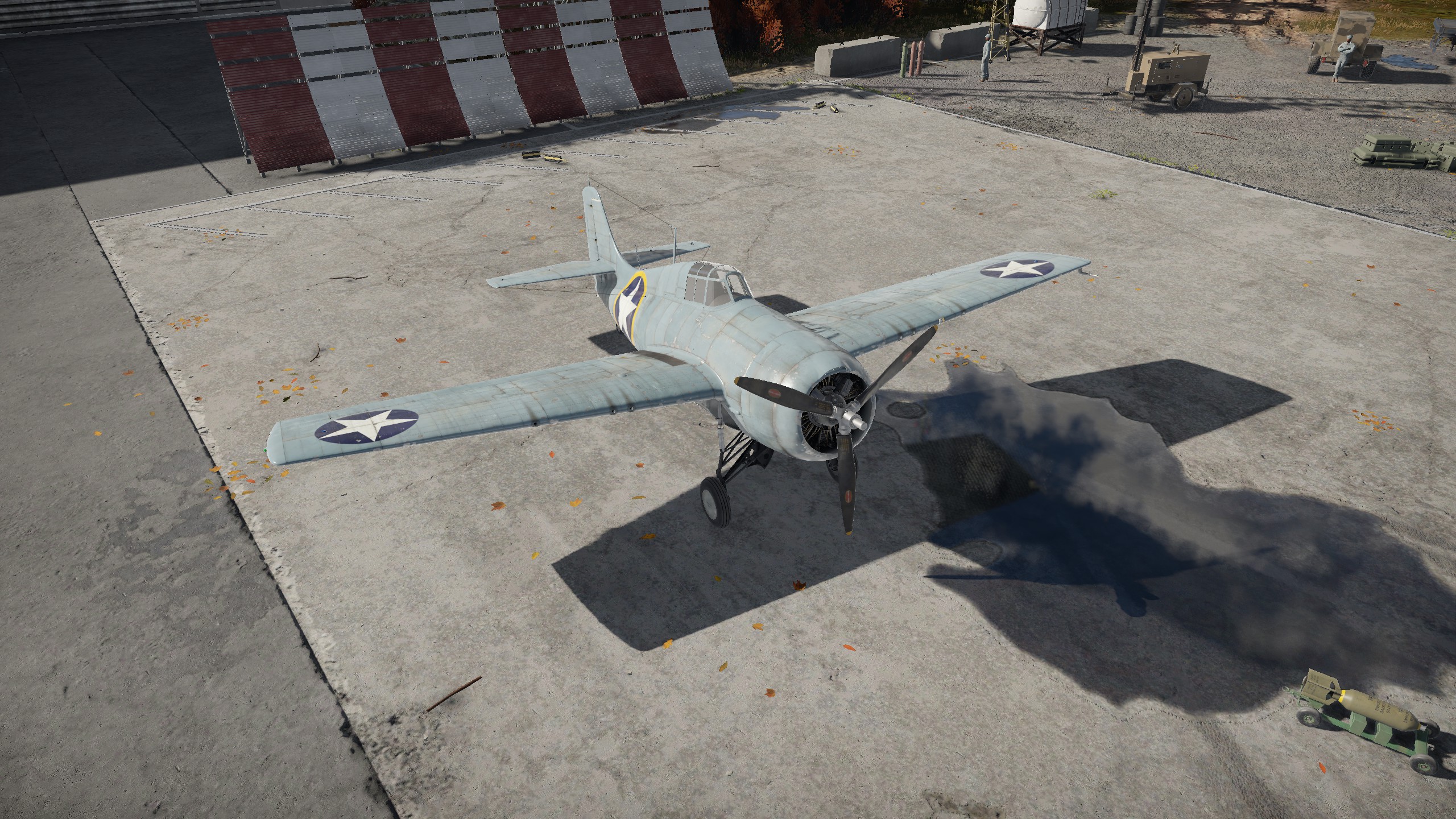 On paper, the F4F is a downgrade from the F2A-3 Buffalo (or at least War Thunder's depiction of it). It has a slightly slower top speed, lower rate of climb, and longer turn time, all while carrying the same armament and armor (or lack thereof). However, these planes are significantly less sluggish than their predecessors, despite the worse overall turn rate, and can be surprisingly nimble. These beauties shine in hairballs, where you can use their agility to get behind enemies and take them out. Note that, even with this notable agility, the stat card is not lying - these planes do not do well in sustained turn fights, especially against more capable turn-fighters, so try to get in and get out. The F4F-4 is slightly heavier and consequentially has slightly worse performance than the F4F-3, but it does gain two additional .50s.
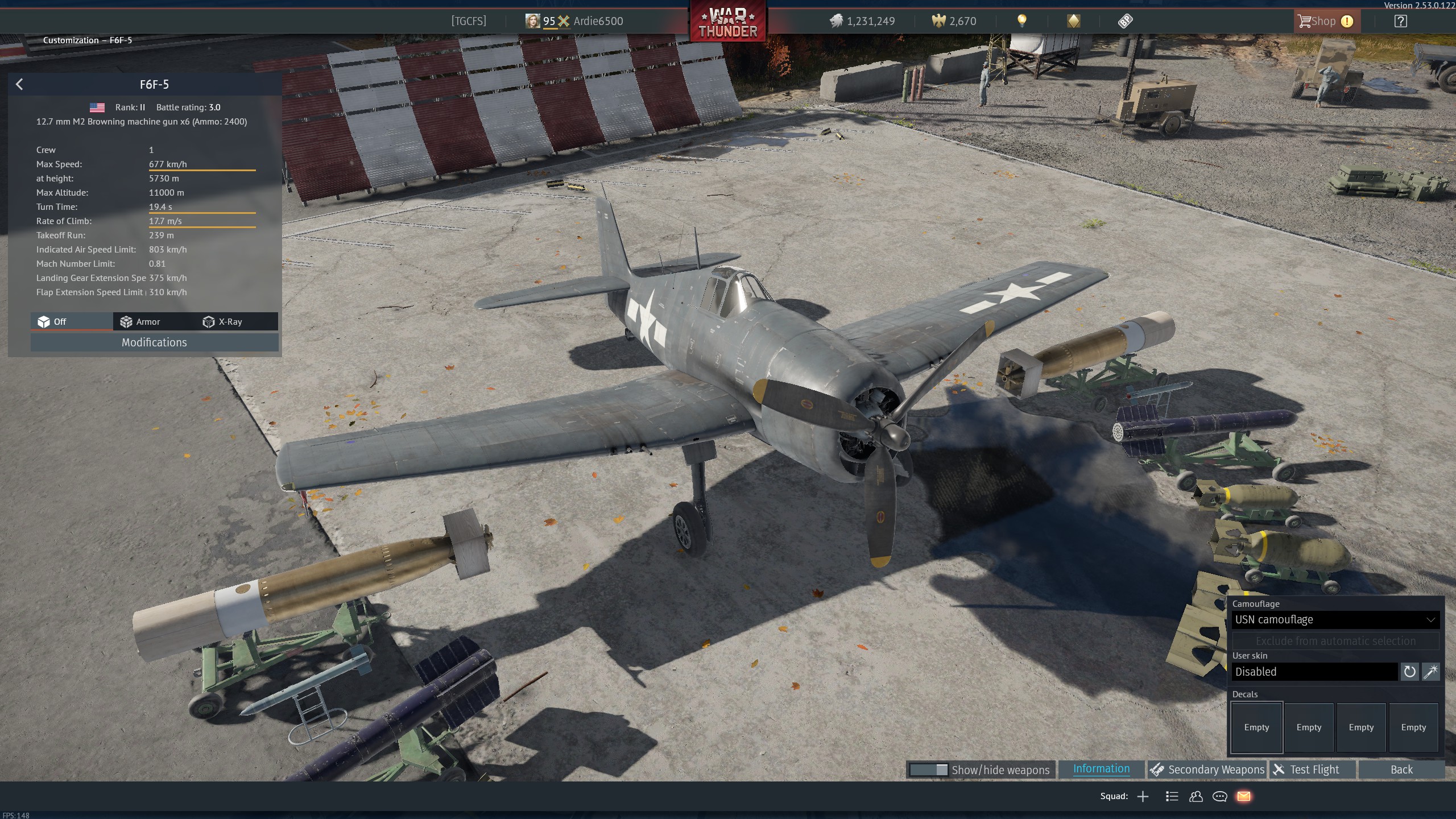 The F4F-4's big brother. Significantly faster in a straight line, with a marginally better climb rate and a marginally worse turn time, and the same strong armament (6x.50). Slightly worse for turn fighting, and more-than-slightly better for everything else. A solid all-rounder.
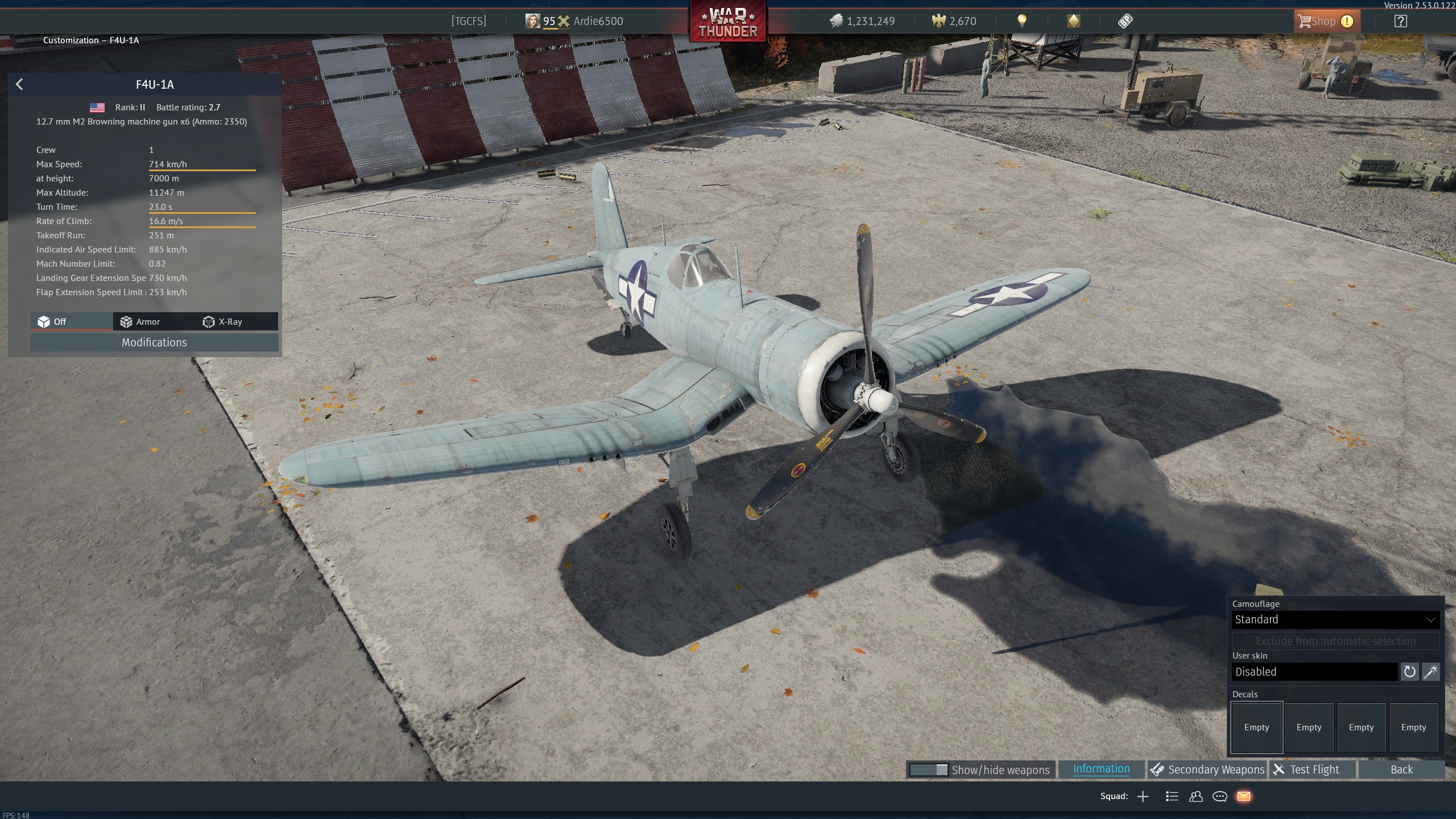
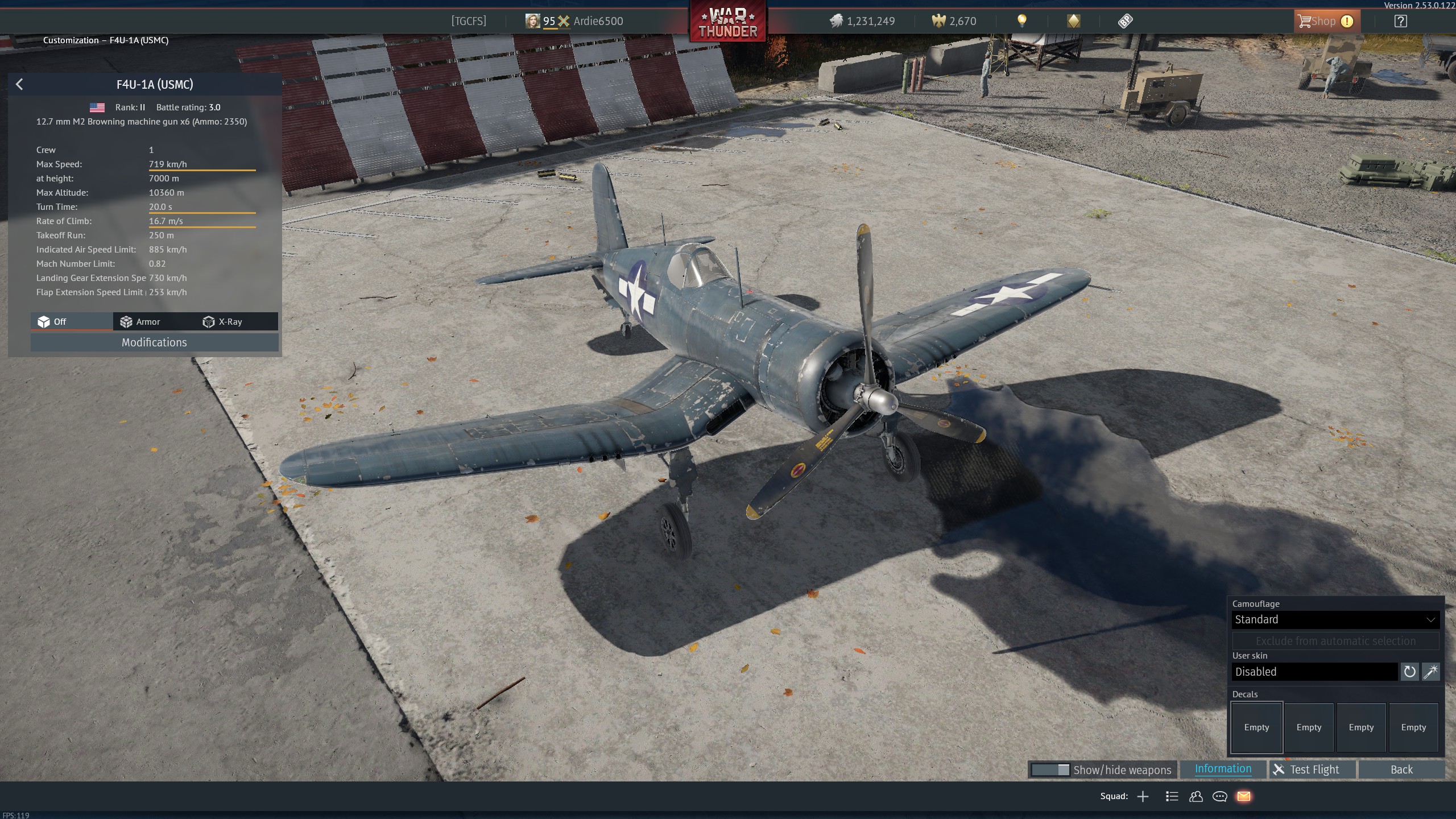
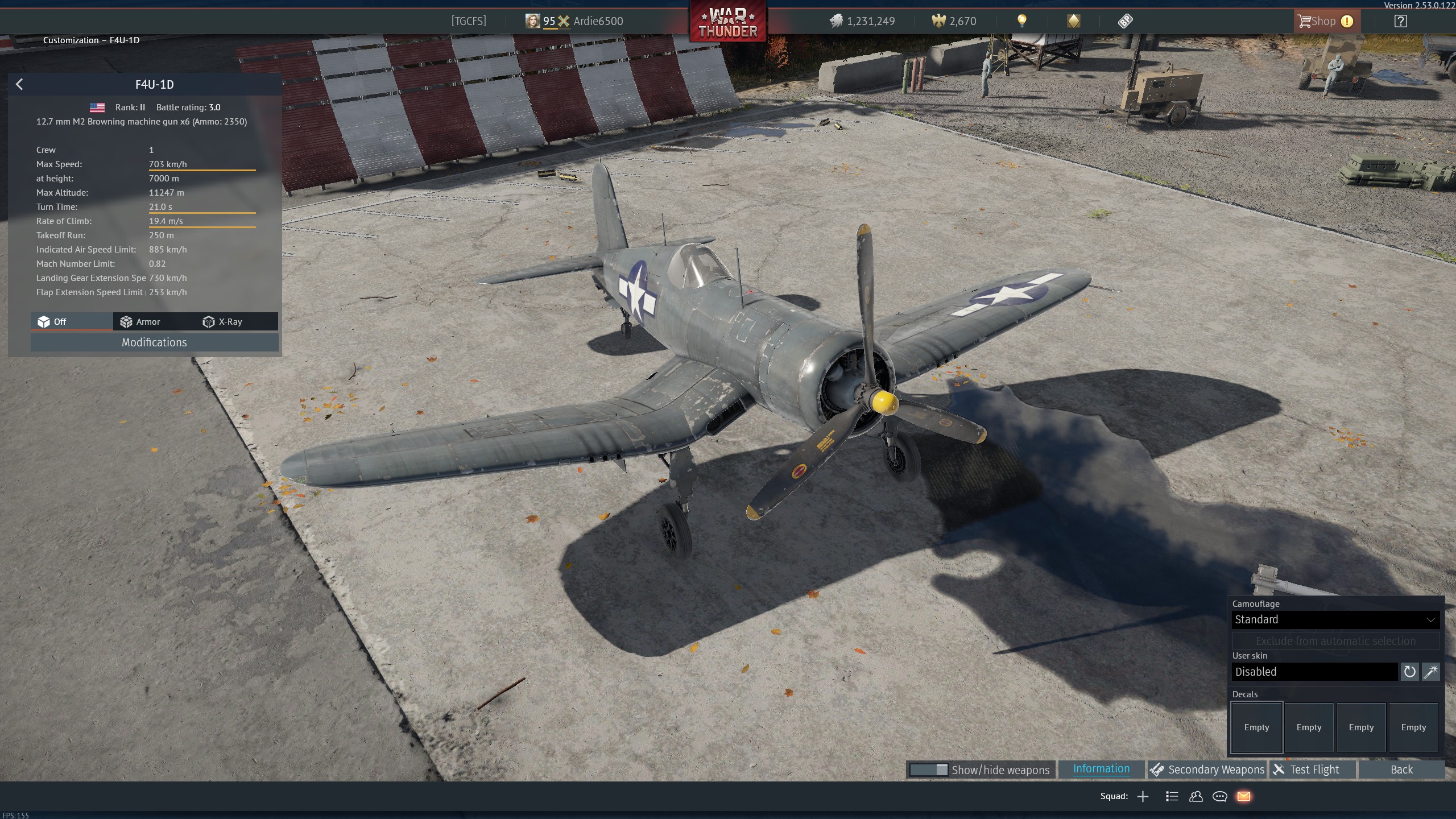 Our first proper boom-and-zoom aircraft in the US Navy line, the Corsair has a high top speed, good roll rate, strong armament (6x.50), a decent climb rate, and decent turn times when at speed; At lower speeds, the aircraft struggles to turn, making turn fights and even some energy-fighting tactics a no-go. Stick to boom-and-zoom, maintaining as much speed as possible. The -1A USMC variant has slightly better performance as a result of deleting the arrestor hook and suspended armament options, and the -1D variant has a stronger engine and more suspended armament options at the cost of very slightly lower top speed. Overall they're quite similar.
USA Air, Rank 2, Pt. 2
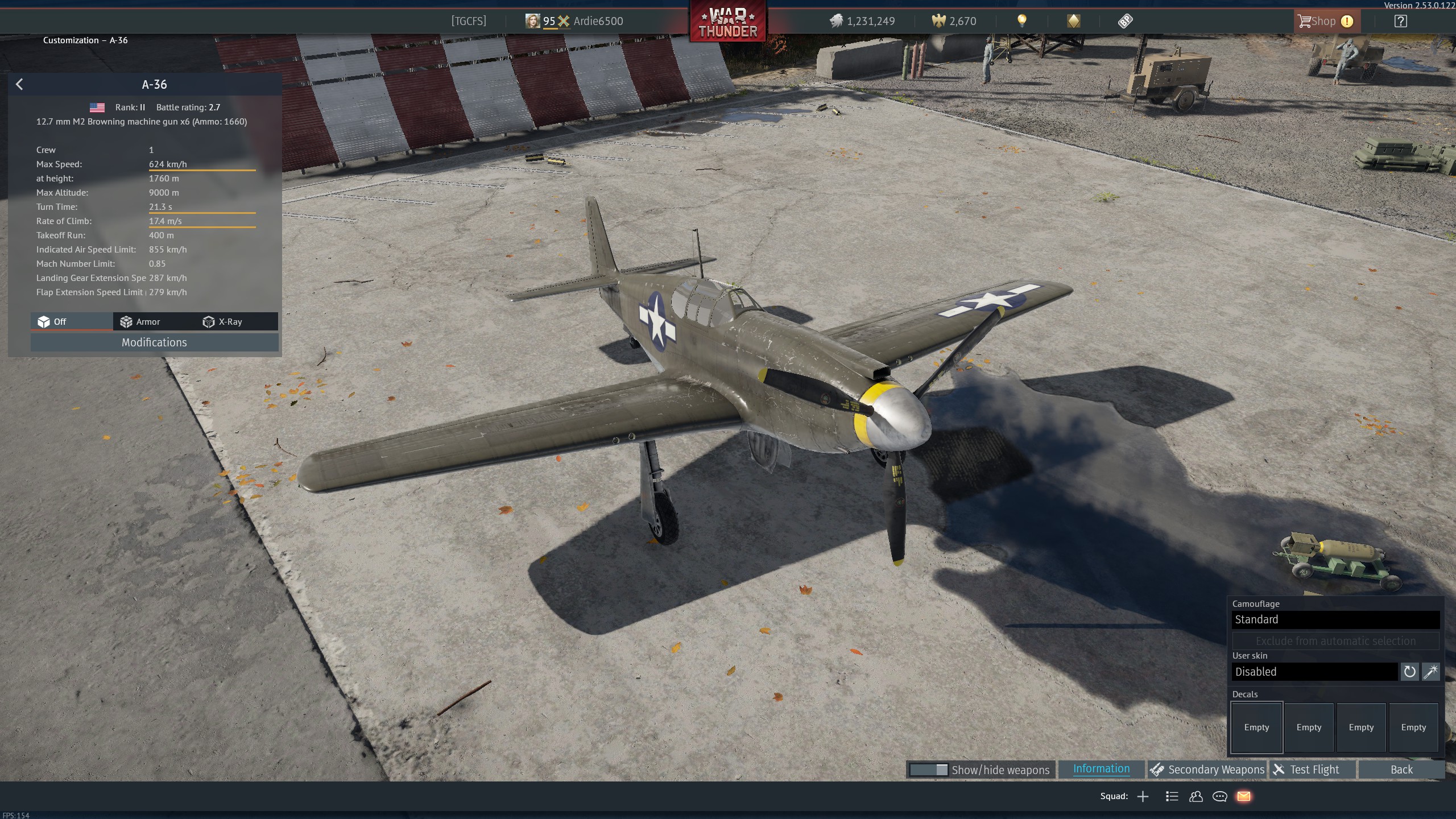 Basically a P-51A with dive brakes and two extra nose .50s, but with no turbocharger, the A-36 is a good all-rounder for low-altitude bombing and fighting. While its flight performance leaves something to be desired, especially at altitude, the overall flexibility of the A-36 makes it a decent choice for almost any mission.
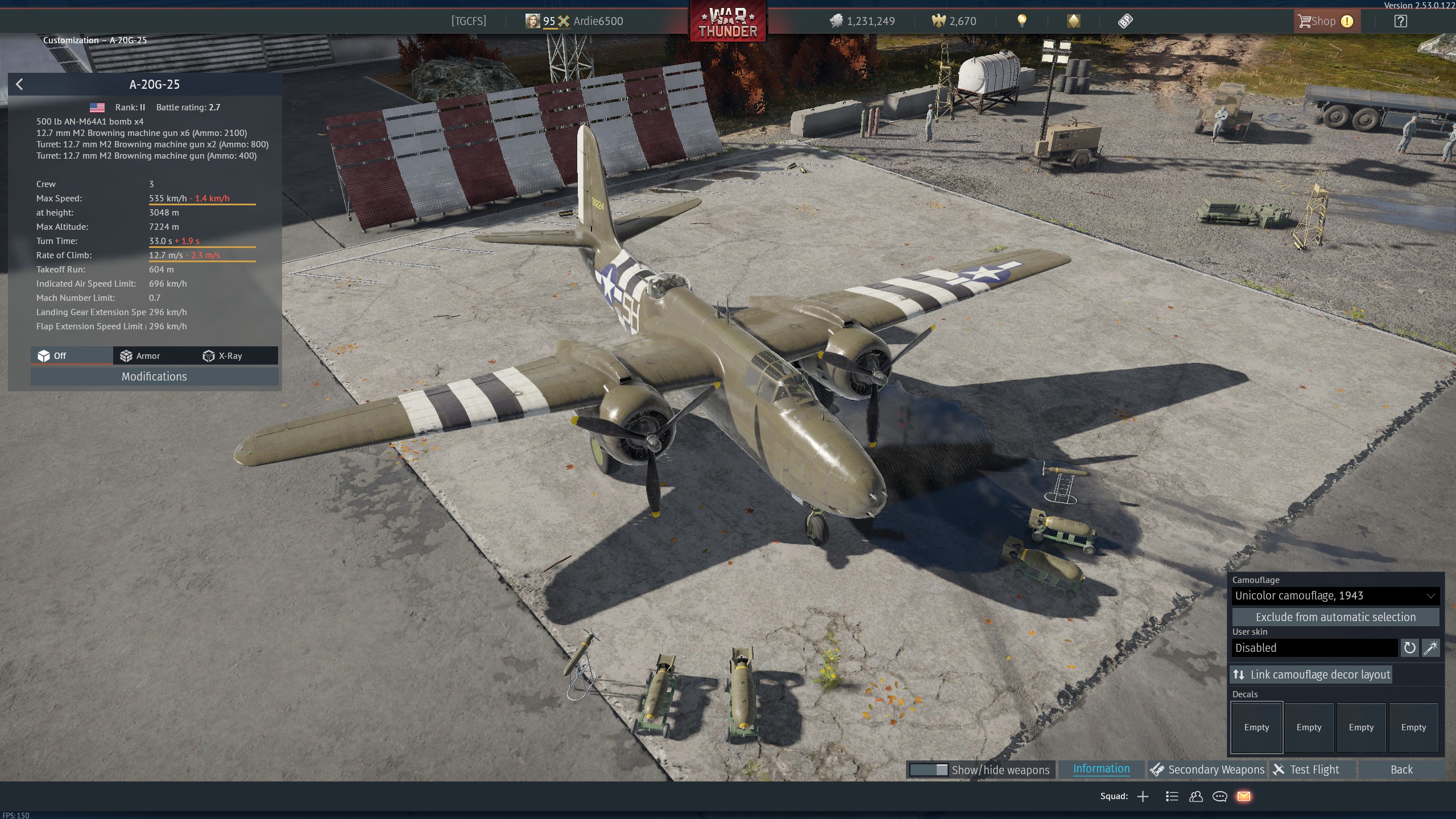 The attacker/night-fighter variant of the Douglas DB-7 (aka Boston), the Havoc is a large and unwieldy aircraft, and one that I'm not in love with. It's suspended armament is okay, as is its offensive armament, but with its sluggish flight characteristics its quite challenging to hit anything that isn't standing still / flying directly at you. This platform is best suited to bombing bases and clusters of troops.
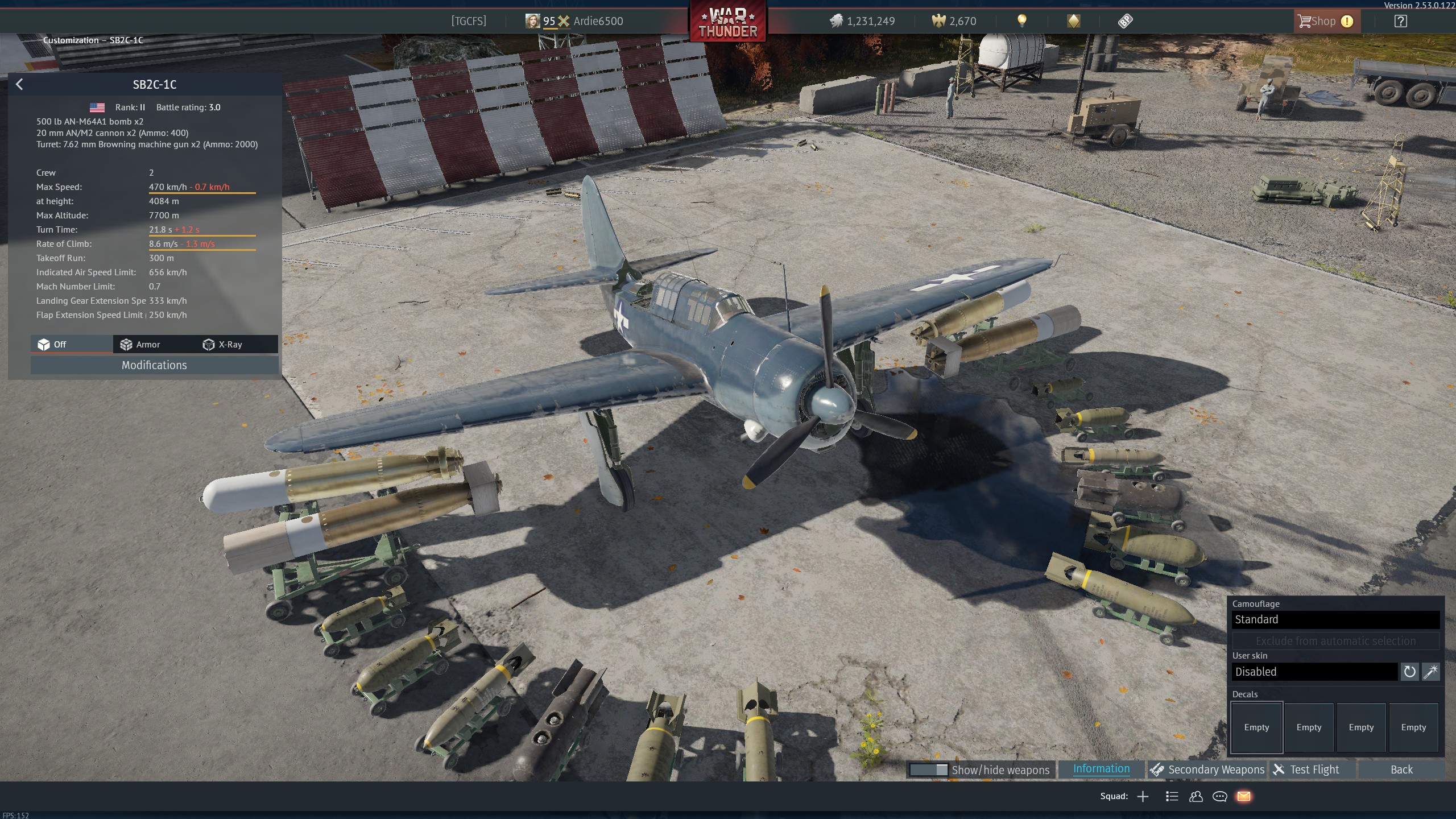
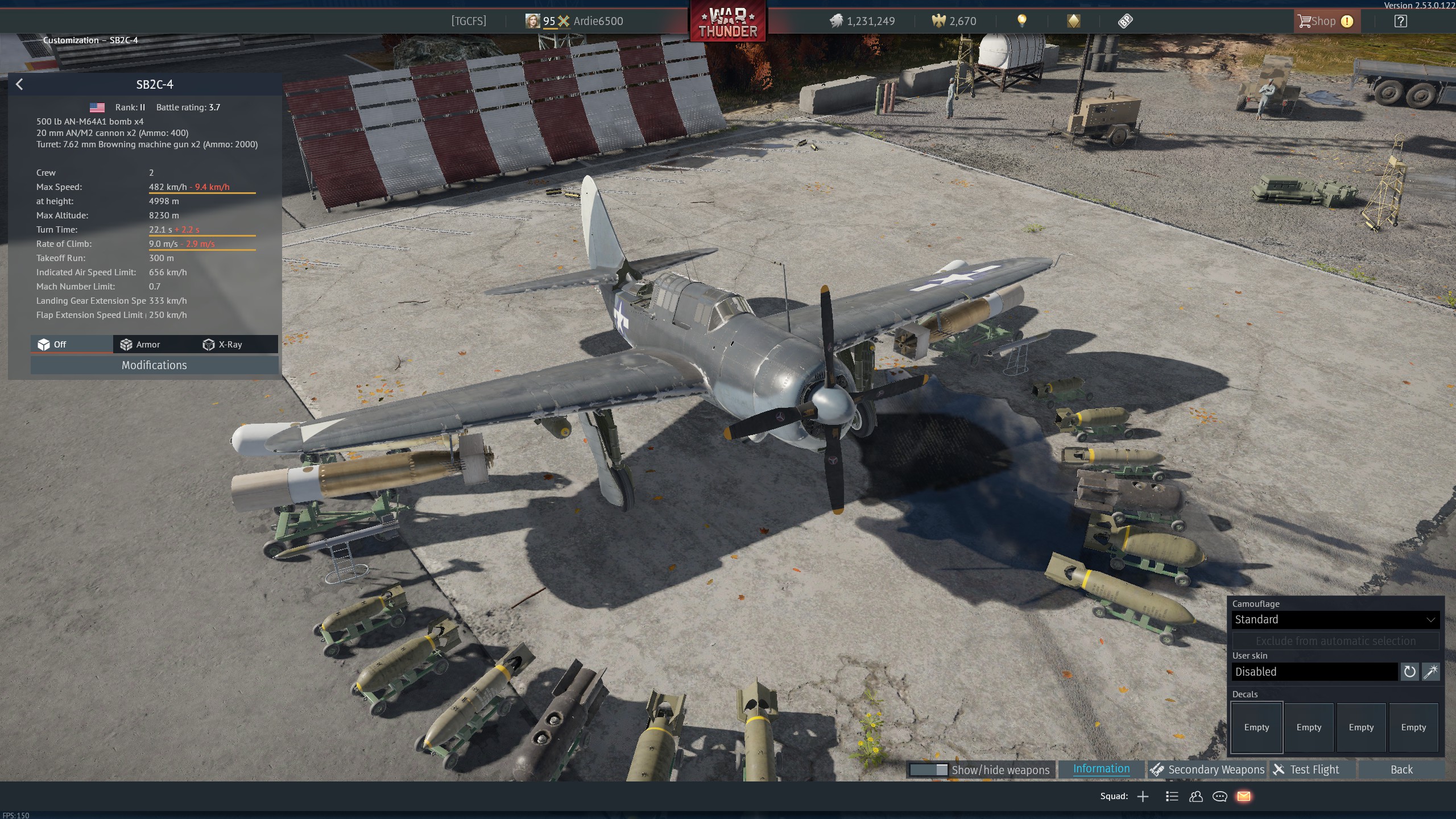 The SB2C is fairly slow, has a poor climb rate, and has only one 2x.30 cal. defensive gunner, and while it does have decent turn times, the aircraft's controls are VERY sluggish. With all of that said, the aircraft has excellent forward guns for a bomber (2x20mm) and can carry a slew of different ordinance, including our old friend the Mk.1 naval mine. Overall, its a bit of a mixed bag, but it's always a treat to turn the tables on a pursuing fighter and down them with your 20mm guns. The -4 is a direct upgrade over the -1C, with slightly better performance and slightly more options for secondary armament (including the very fun 2x.50 cal. gun pods).
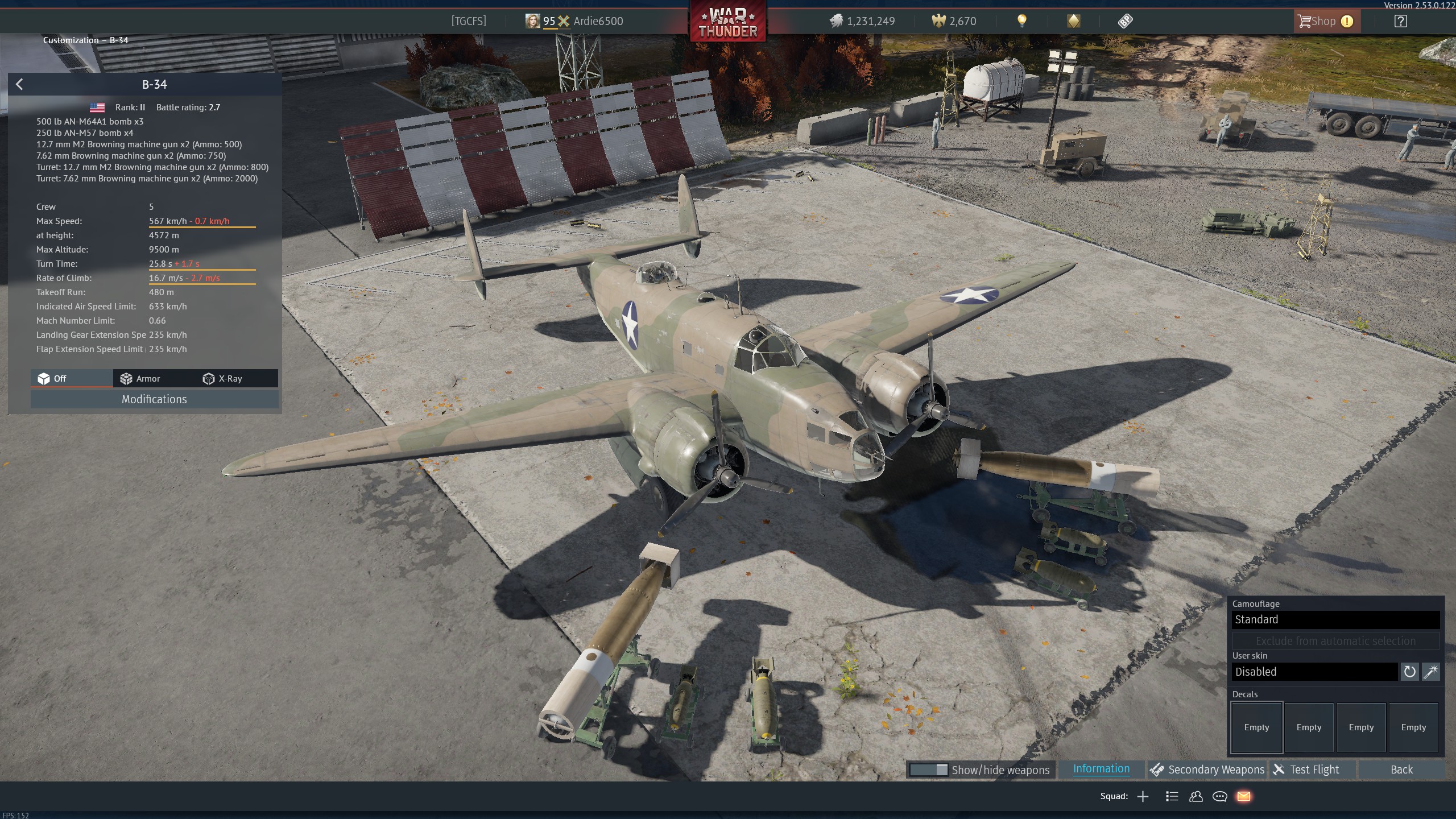 The B-34 is fast, with an excellent rate of climb and a surprisingly good turn time for a twin-engine bomber. Its bomb load is a little underwhelming, as is its overall durability, but considering that you can just climb away from most any attacker and make another pass over the bombing target, neither of these are major downsides. Forward armament is lacking, but you shouldn't need it too often.
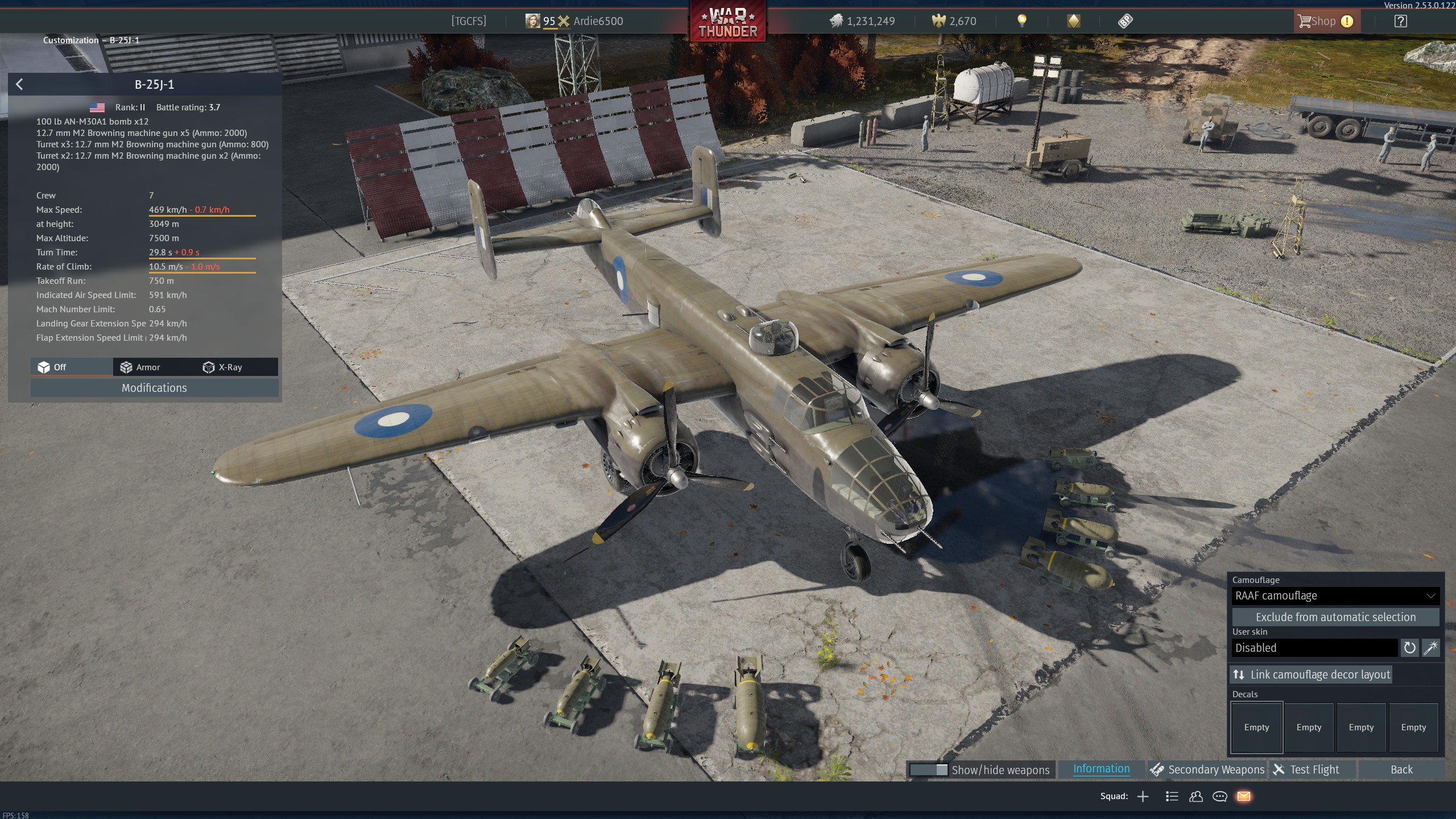
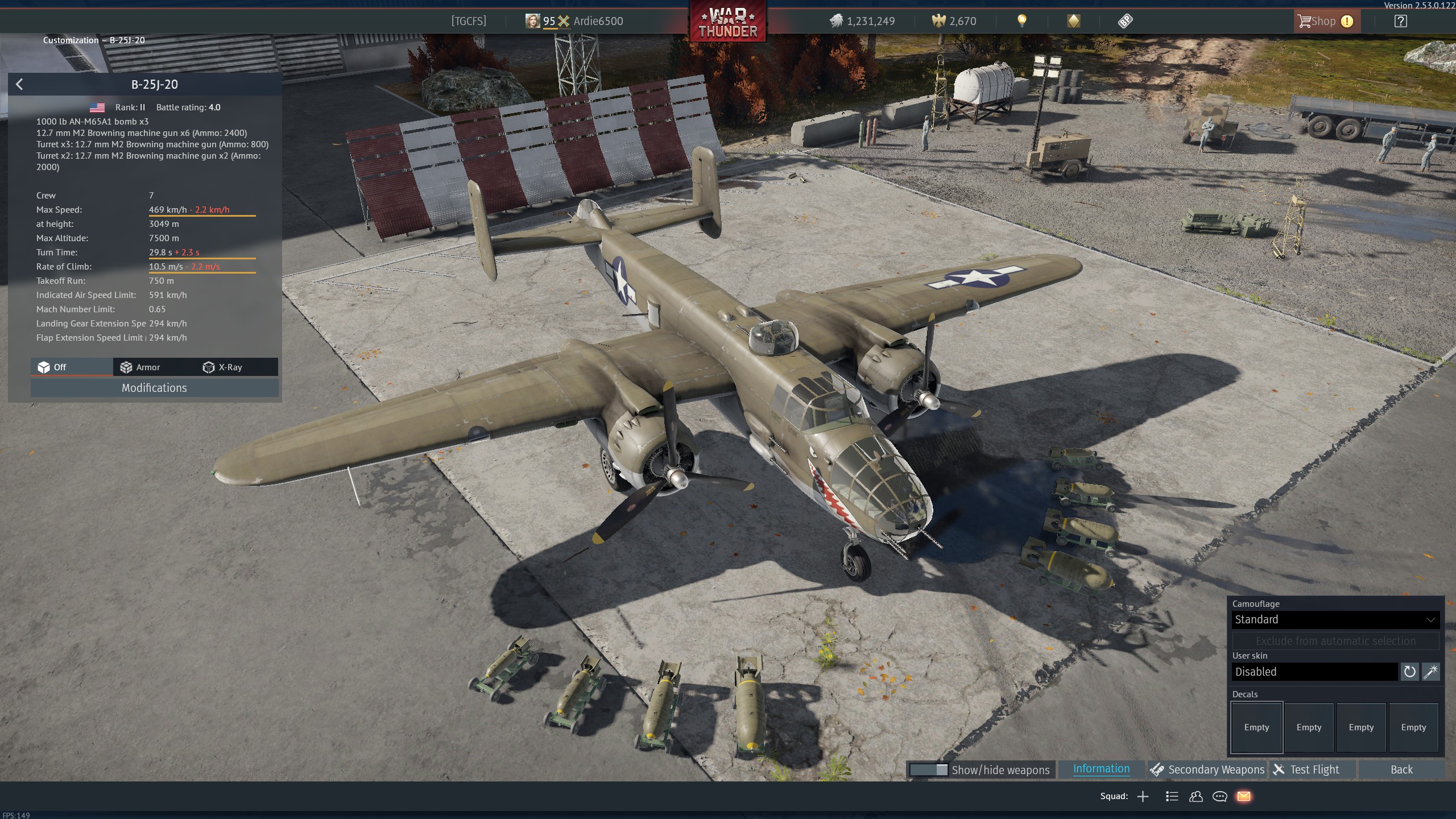 The quintessential American medium bomber, the B-25 is a near polar opposite to the preceding B-34; Where that aircraft was fast and maneuverable, but fragile and with middling bomb load and armament (offensive and defensive), the B-25 is only decently fast and is slow to turn, but has a very strong airframe, almost twice the bomb load, excellent defensive armament AND excellent offensive armament. A great ground-attack all-rounder, the B-25 is a mainstay of the American air tree. The J-20 is basically just a J-1 with an additional forward-facing .50.
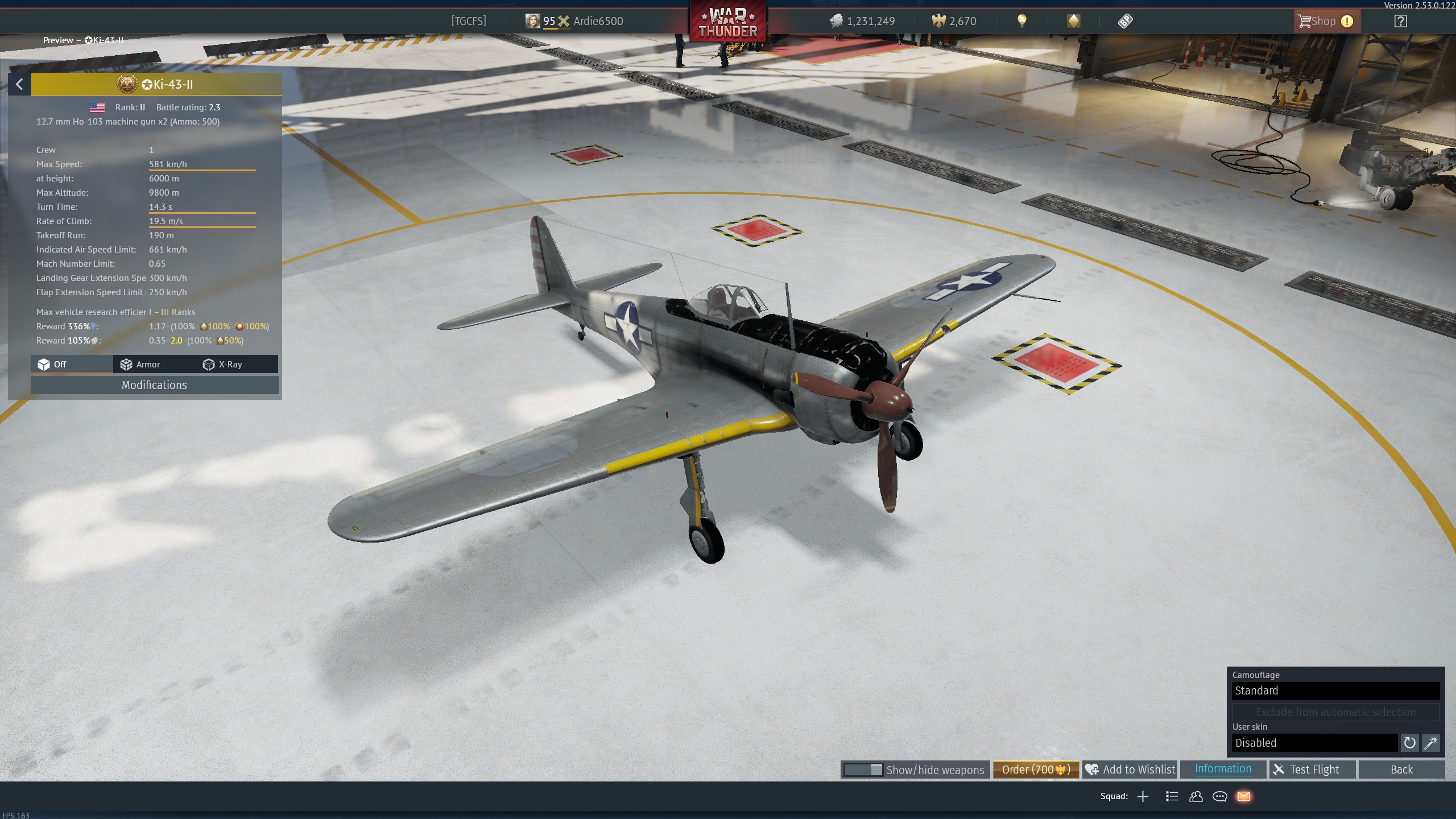 Identical to the Japanese version. But premium!
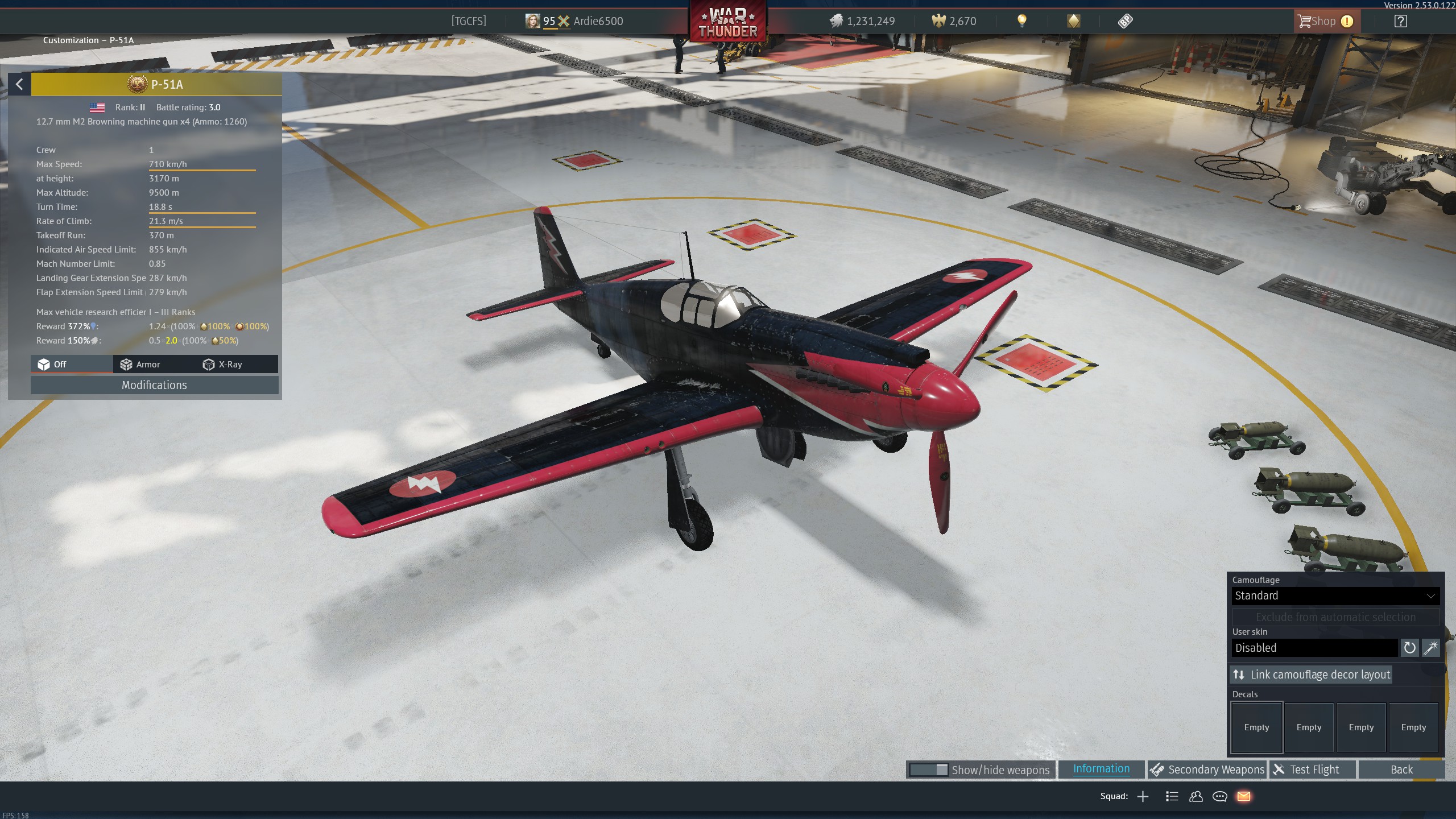 Basically an A-36 without the nose guns or dive brakes BUT with a turbocharger. Halfway between the A-36 and the P-51C in performance, the P-51A doesn't differ terribly from either of its siblings, but that's fine, as it's a plenty capable fighter. With premium bonuses!
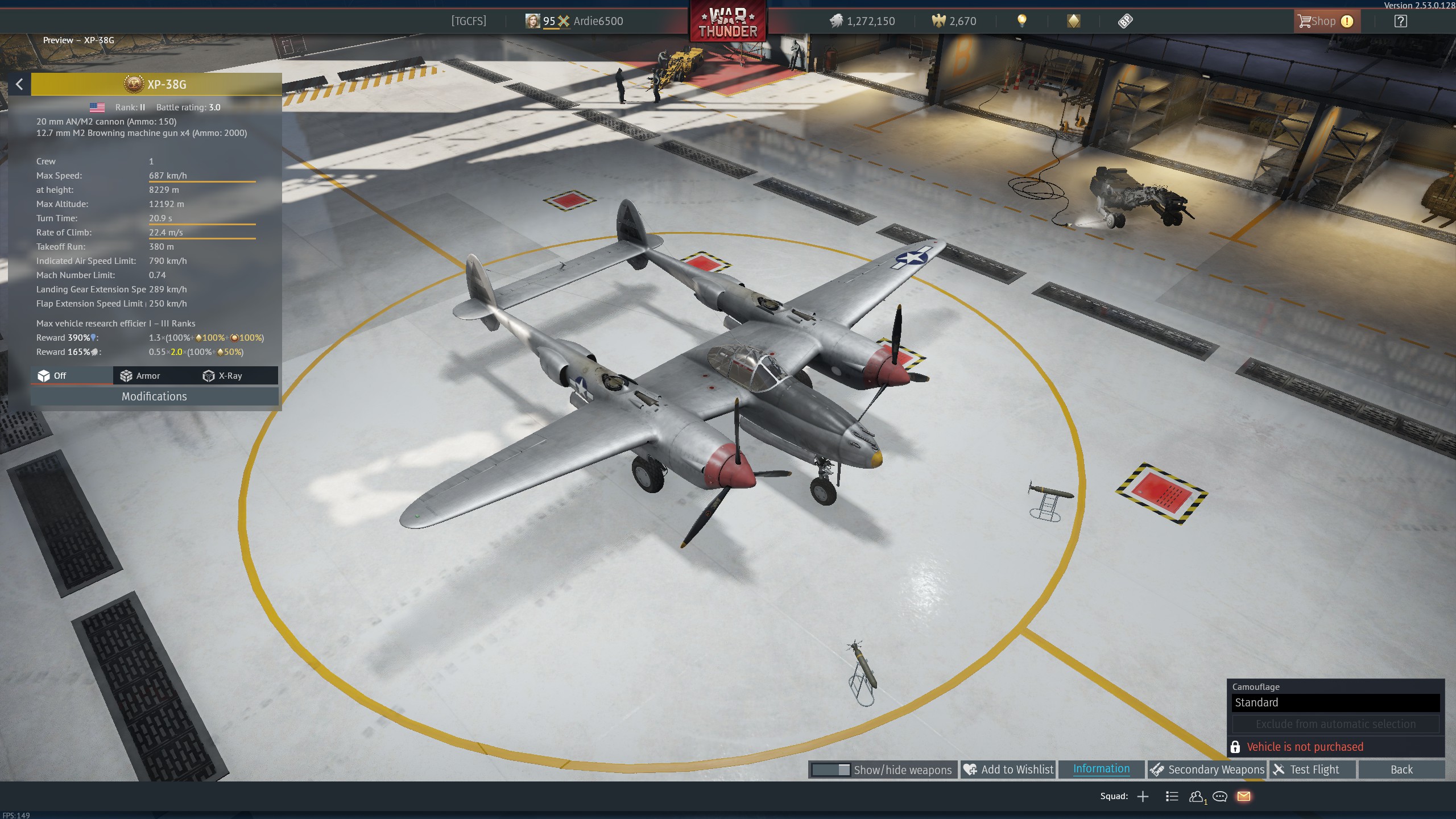 Identical to the P-38G-1. But premium!
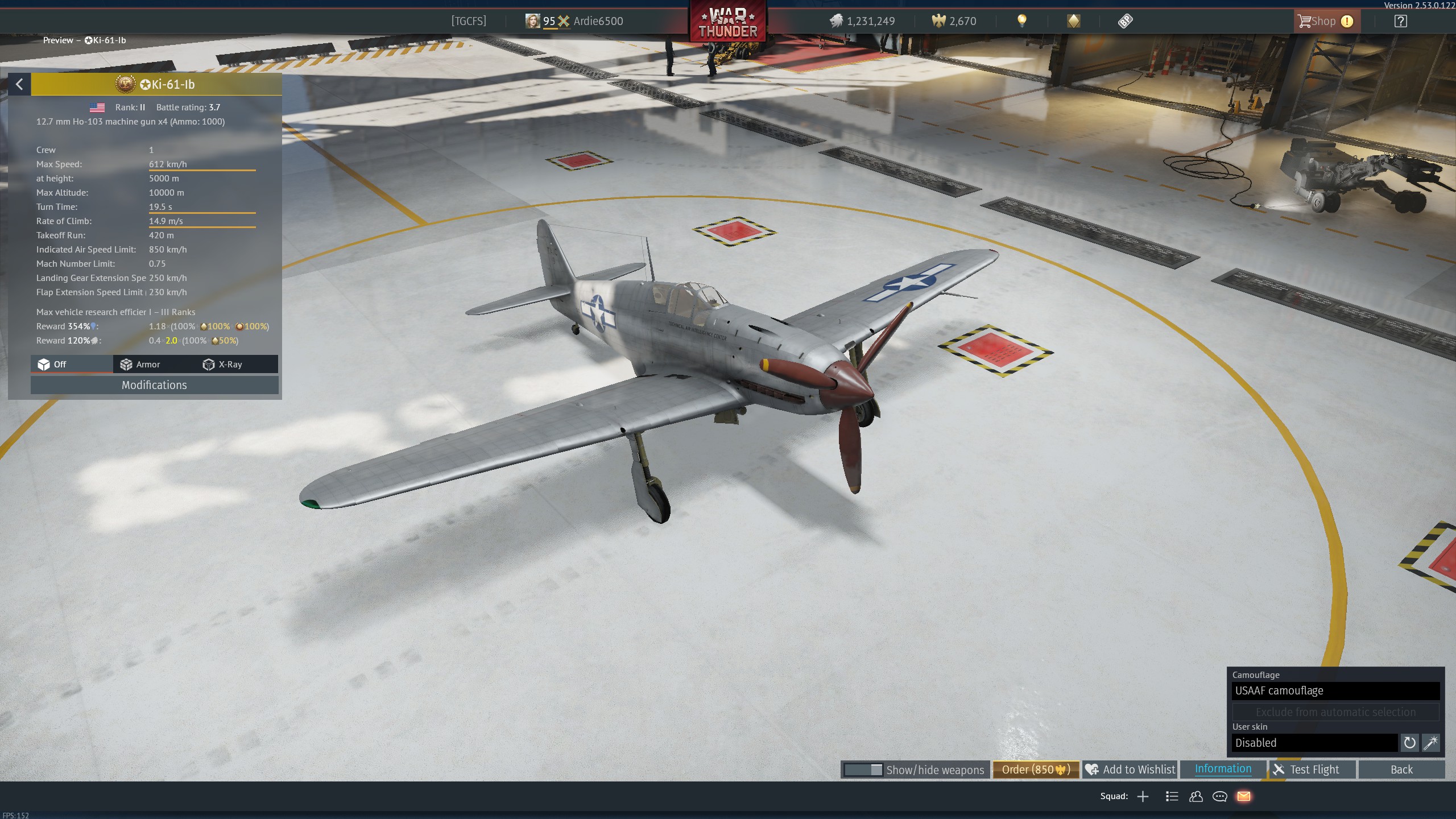 Identical to the Japanese version. But premium!
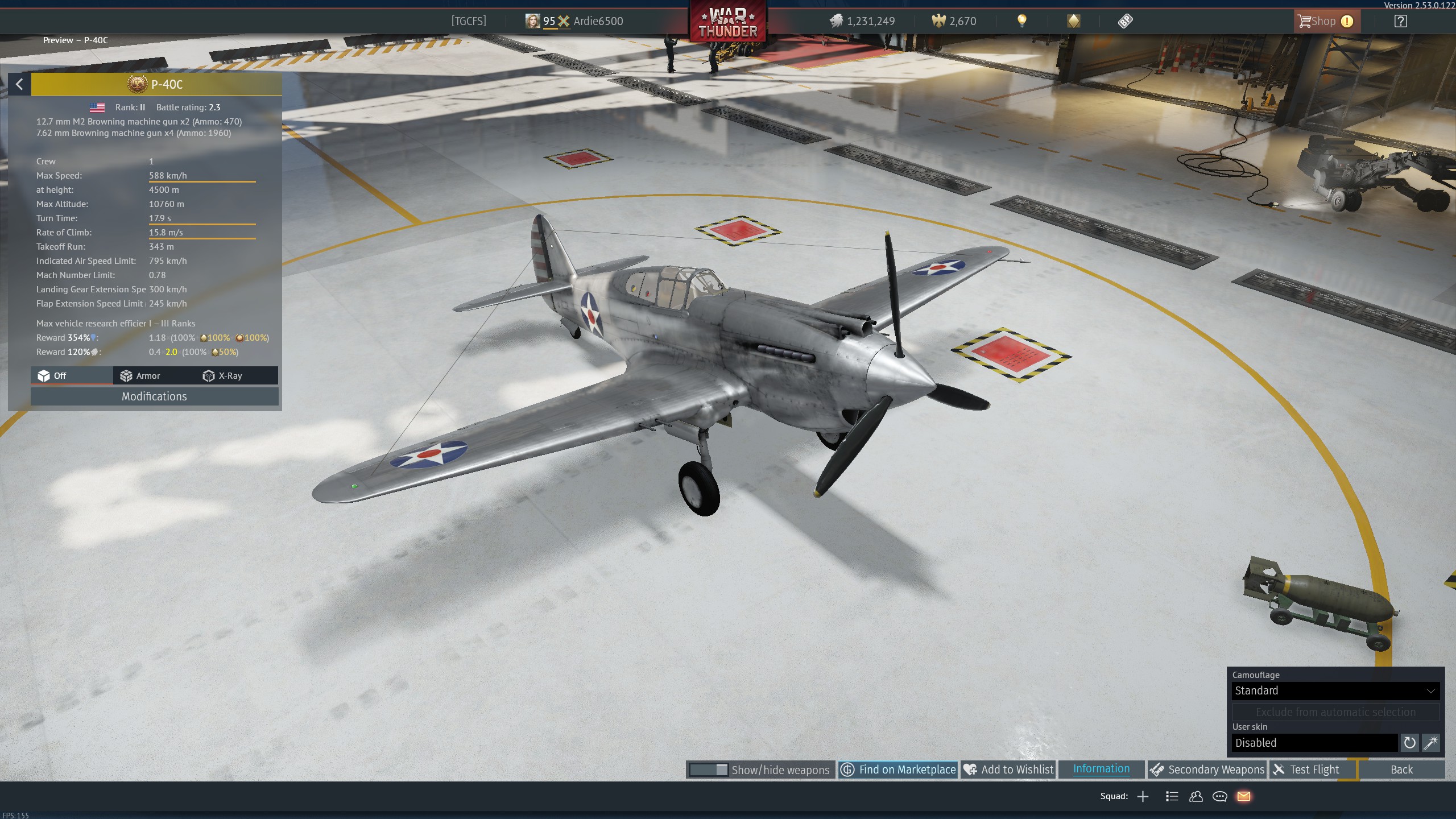 In-game, it's identical to the Chinese H81A-2. IRL, the H81A-2 could not carry bombs or drop tanks, while the P-40C could, but neither is respected in game (the former is available for both variants, and the latter is available to neither AFAIK). Just fly it as you would any other Warhawk variant.
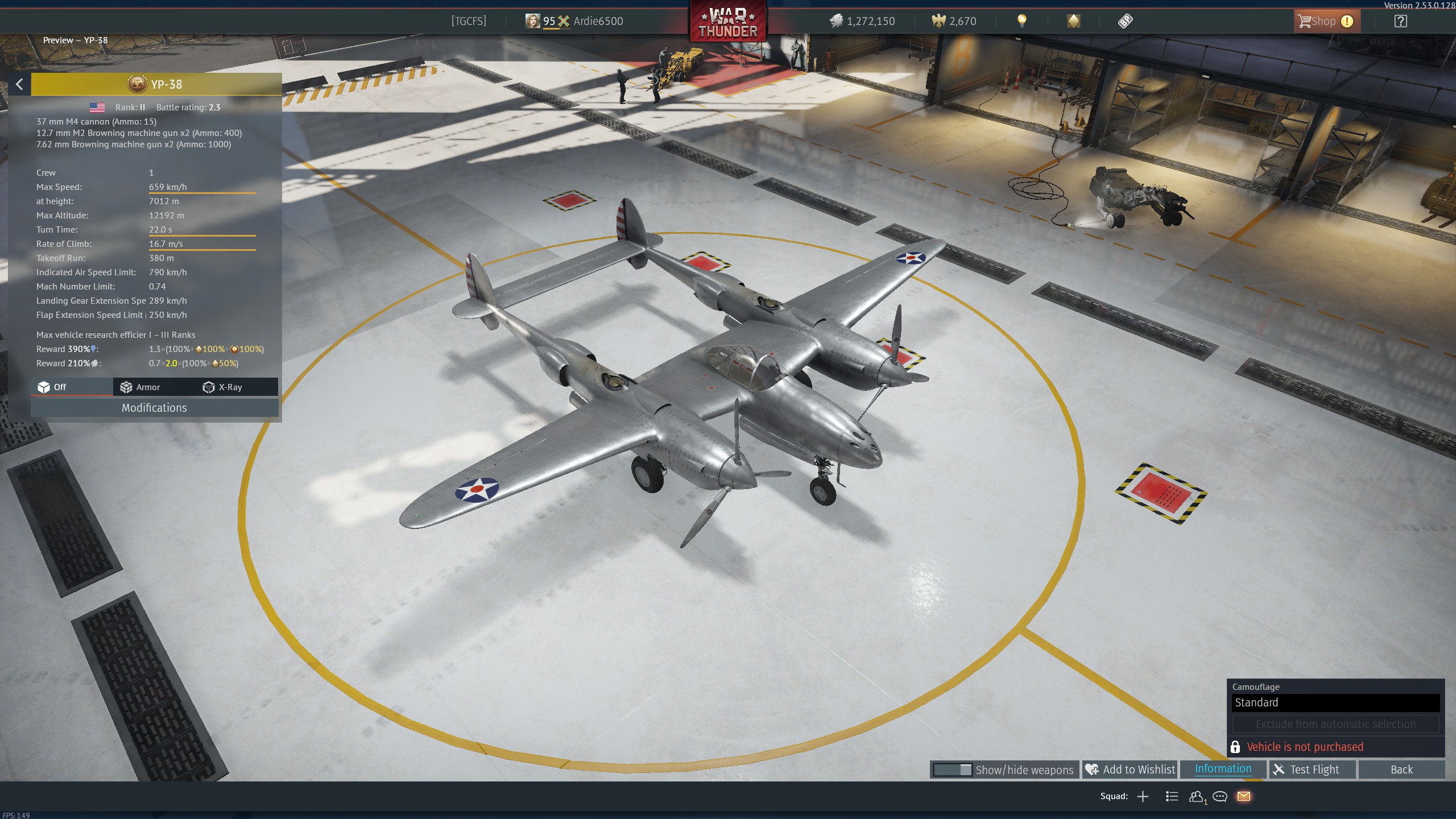 Basically a P-38E-1 with the armament of the P39N-0. But premium!
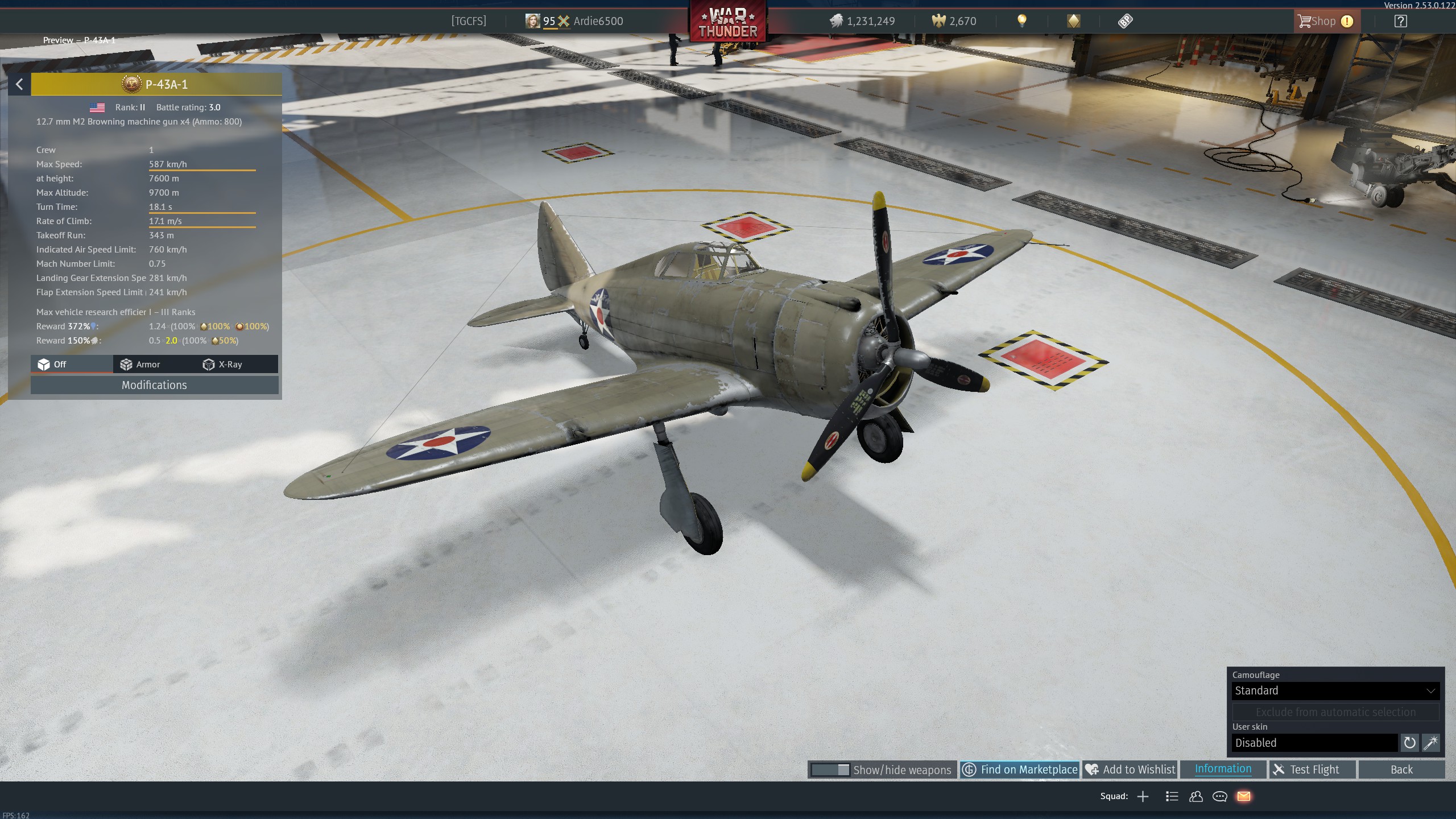 Identical to the Chinese version. But premium!
Germany Air, Rank 1, Pt 1
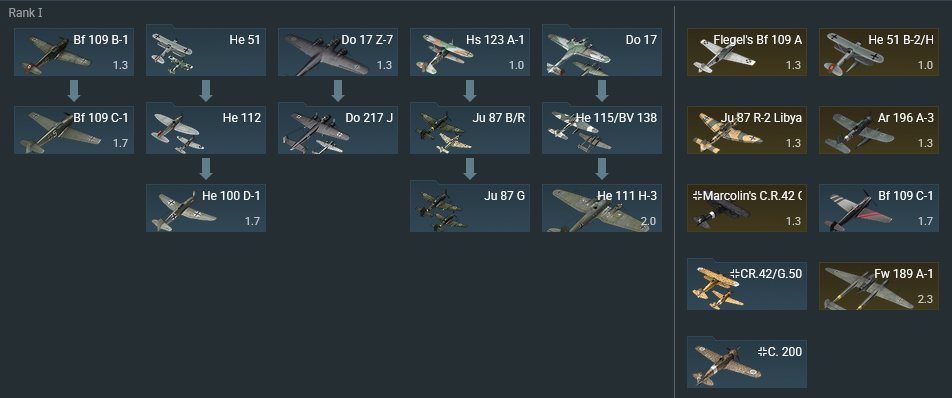 German rank 1 aircraft tend to fall into one of two extremes. Most have very good flight characteristics, but poor offensive armament - sometimes only two rifle-caliber machine guns. You will have to focus on your aim when flying these aircraft, as you'll need to get as many bullets on target as possible to do any meaningful damage. The other extreme is the night fighters - big, lumbering, well-armed bomber-turned-fighter aircraft that can kill just about anything, if only you could get your guns on target. Bombers, of course, exist as well.
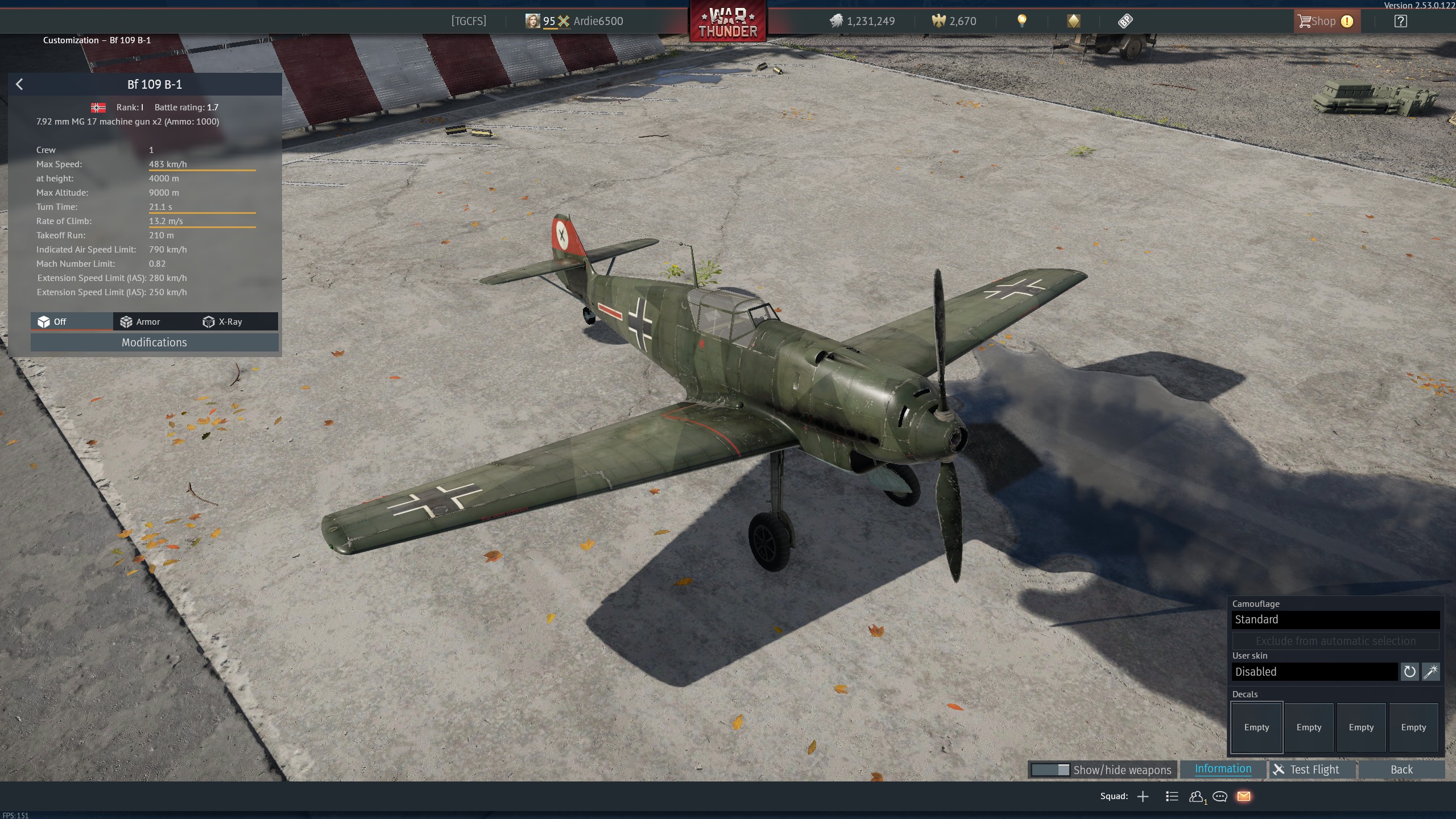
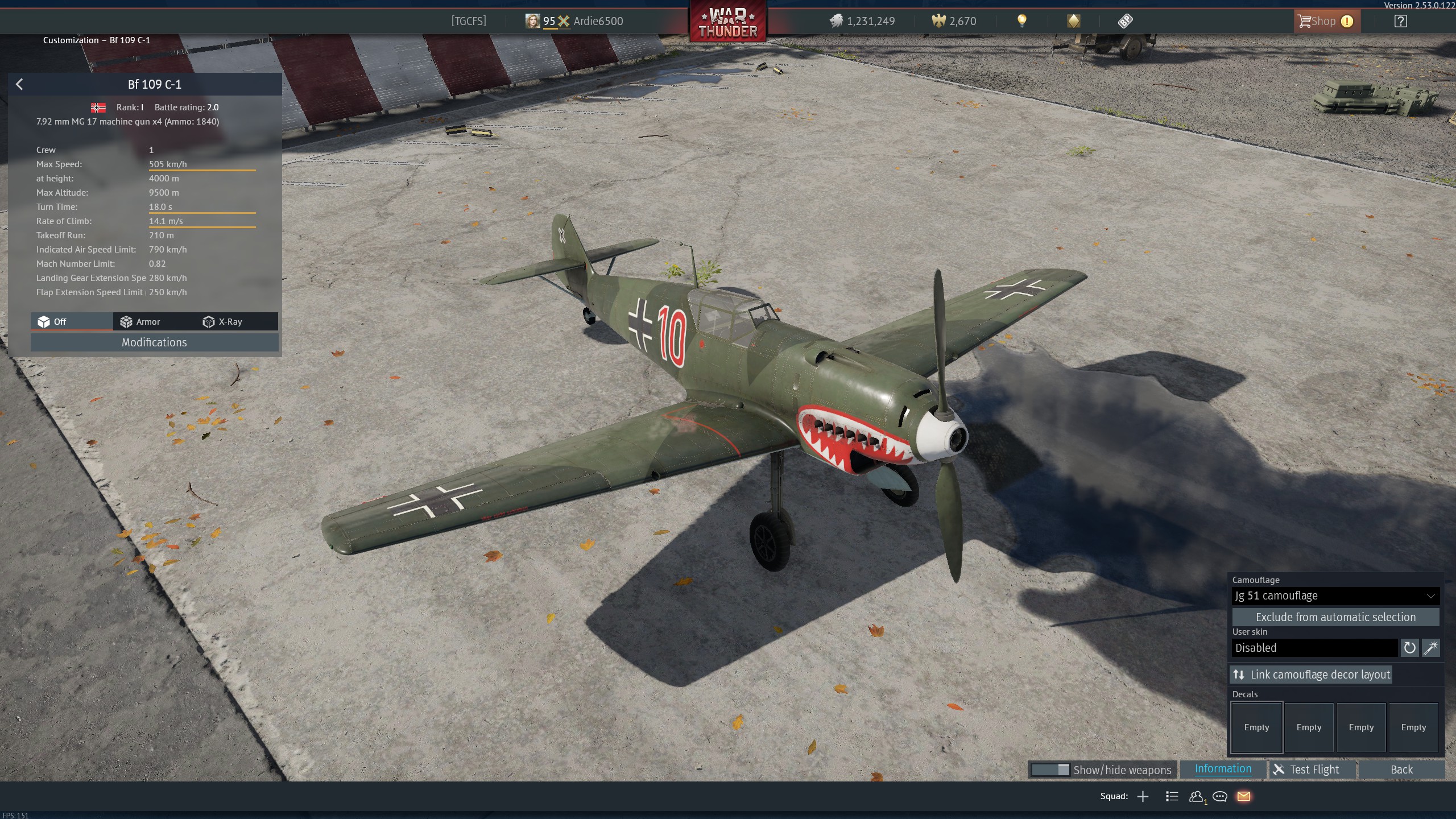
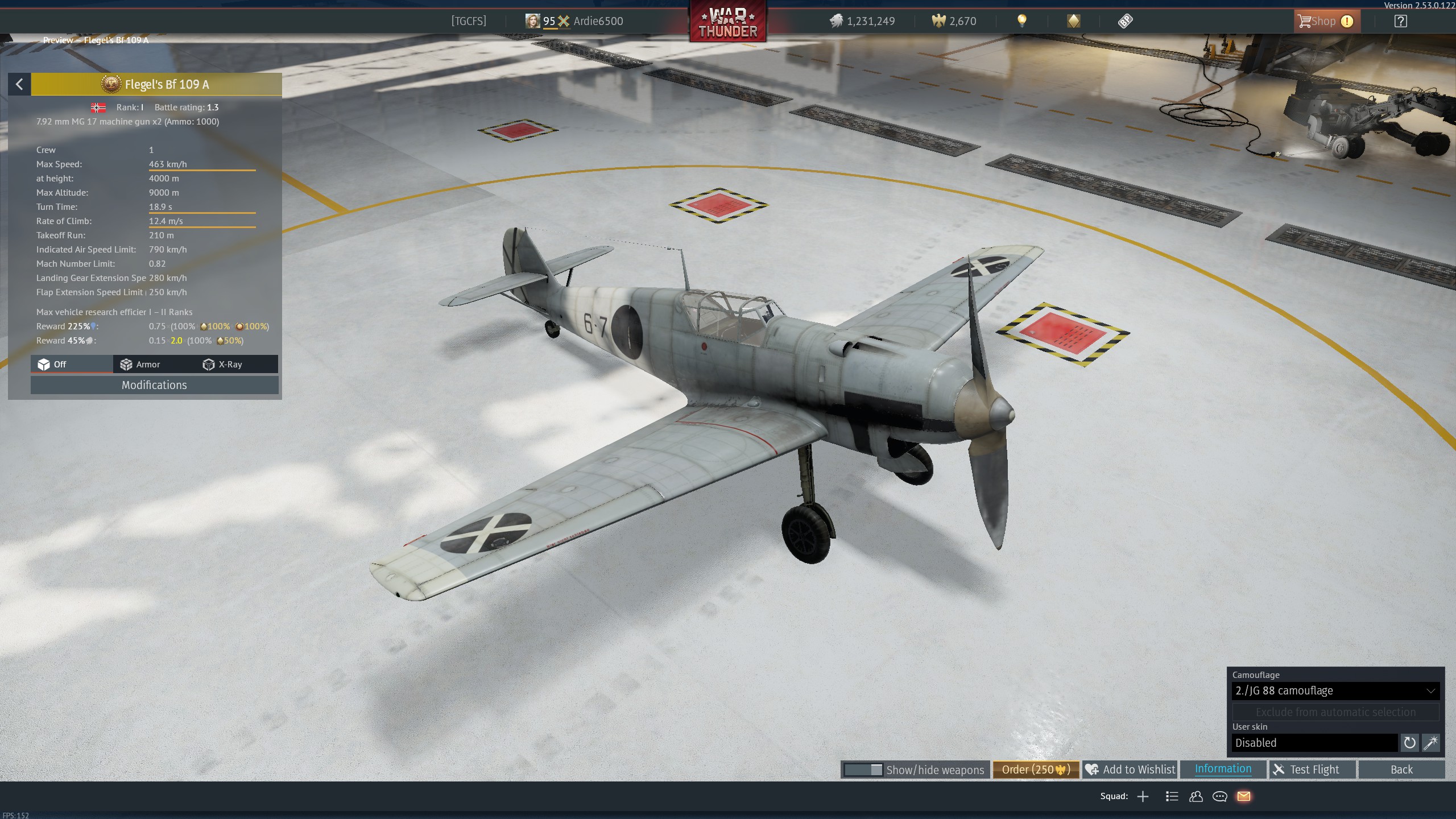
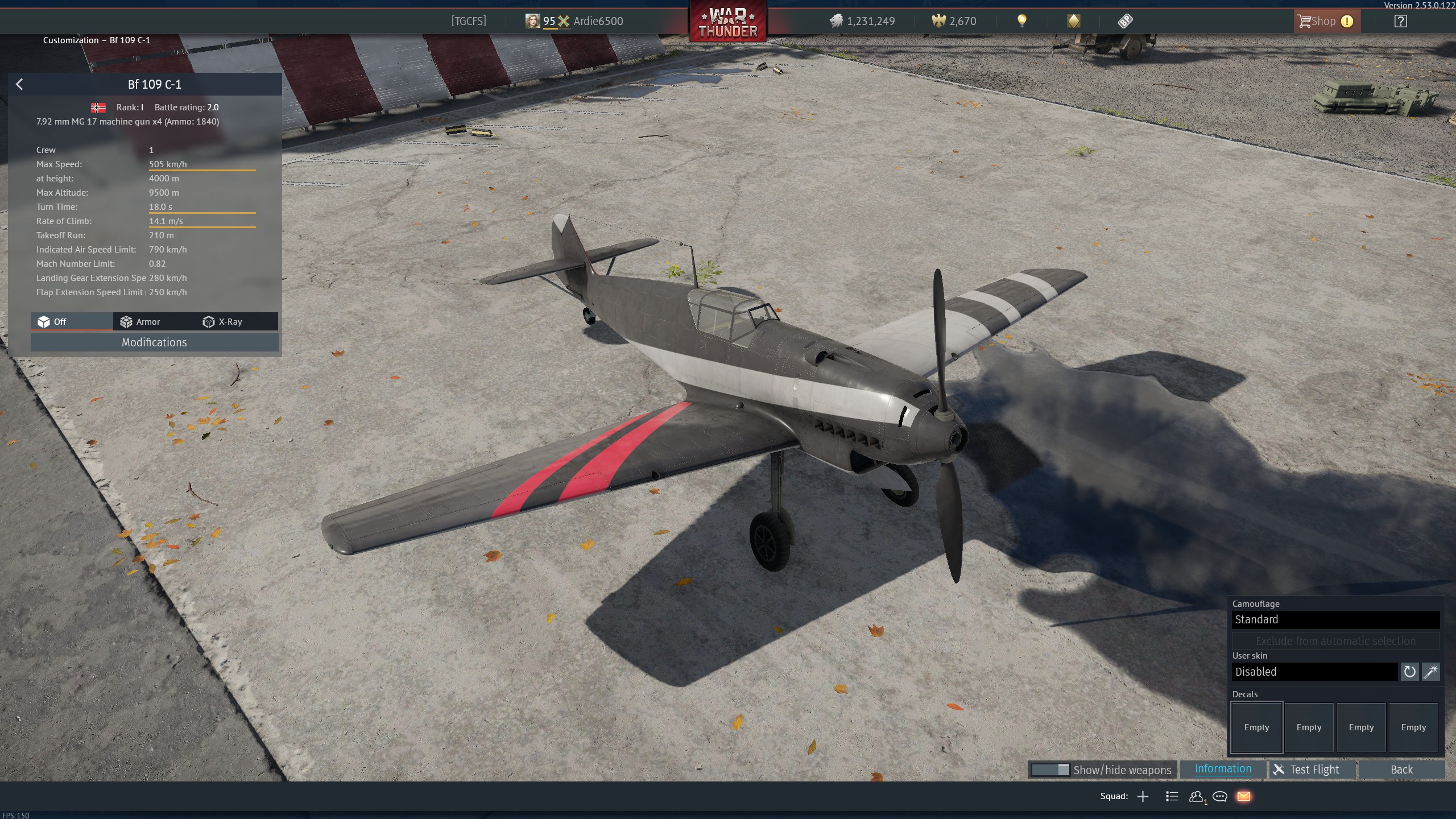 The earliest variants of the Bf 109 to see combat, the B-1 and C-1 are a far cry from the later F, G, and K series aircraft. The B-1 is slow, has a weak engine, turns slowly for a rank 1 fighter, and has mediocre armament (2x7.92mm). The C-1 has two more 7.92mm guns and a better engine, the latter giving the aircraft slightly better all-round performance over its predecessor, but even that only brings it up to about average. There are worse early monoplanes out there, but there are far more that are better.
Note that there is a War Thunder Mobile tie-in version of the C-1 (also known as the Bf 109 C-1).
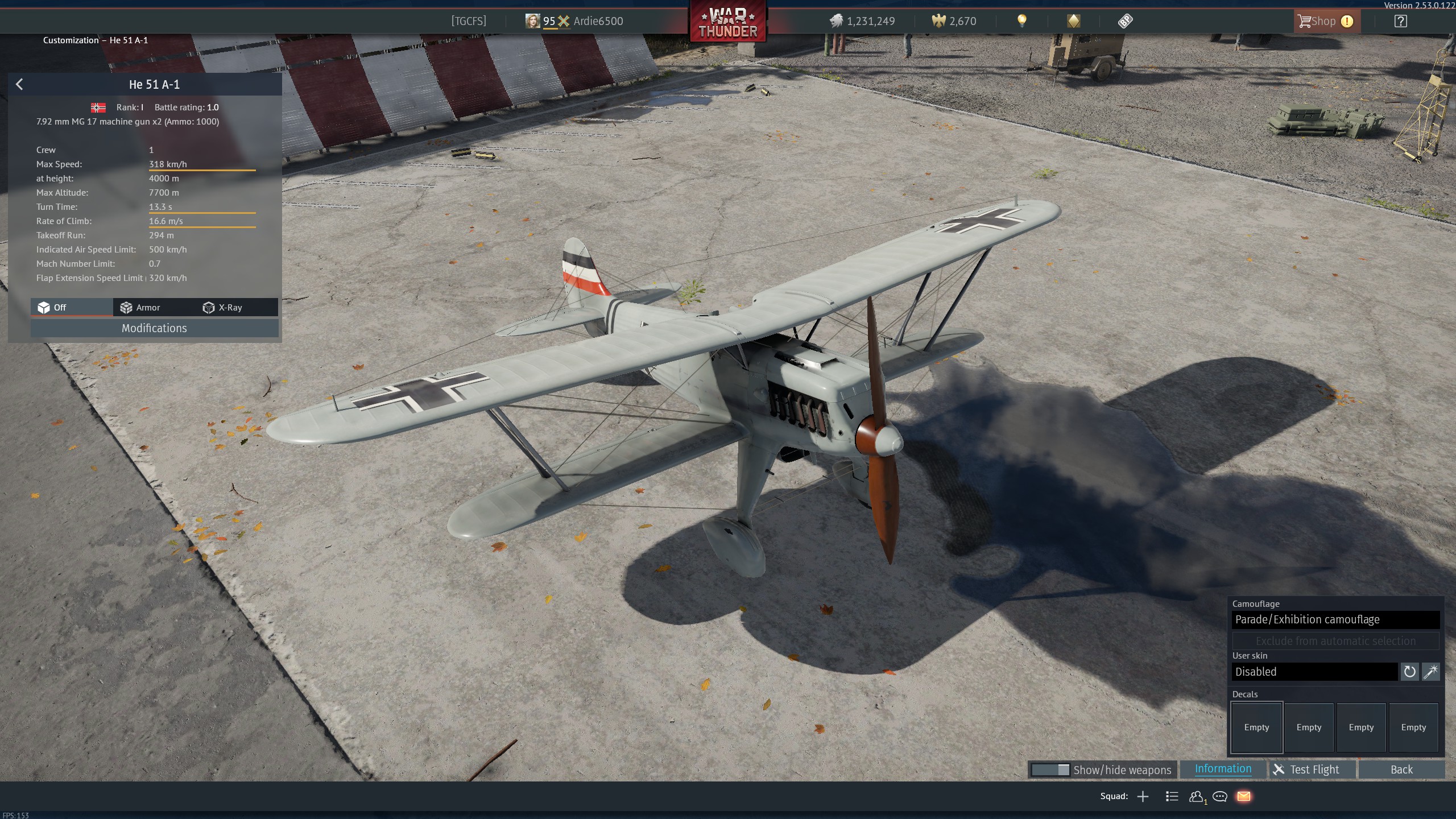
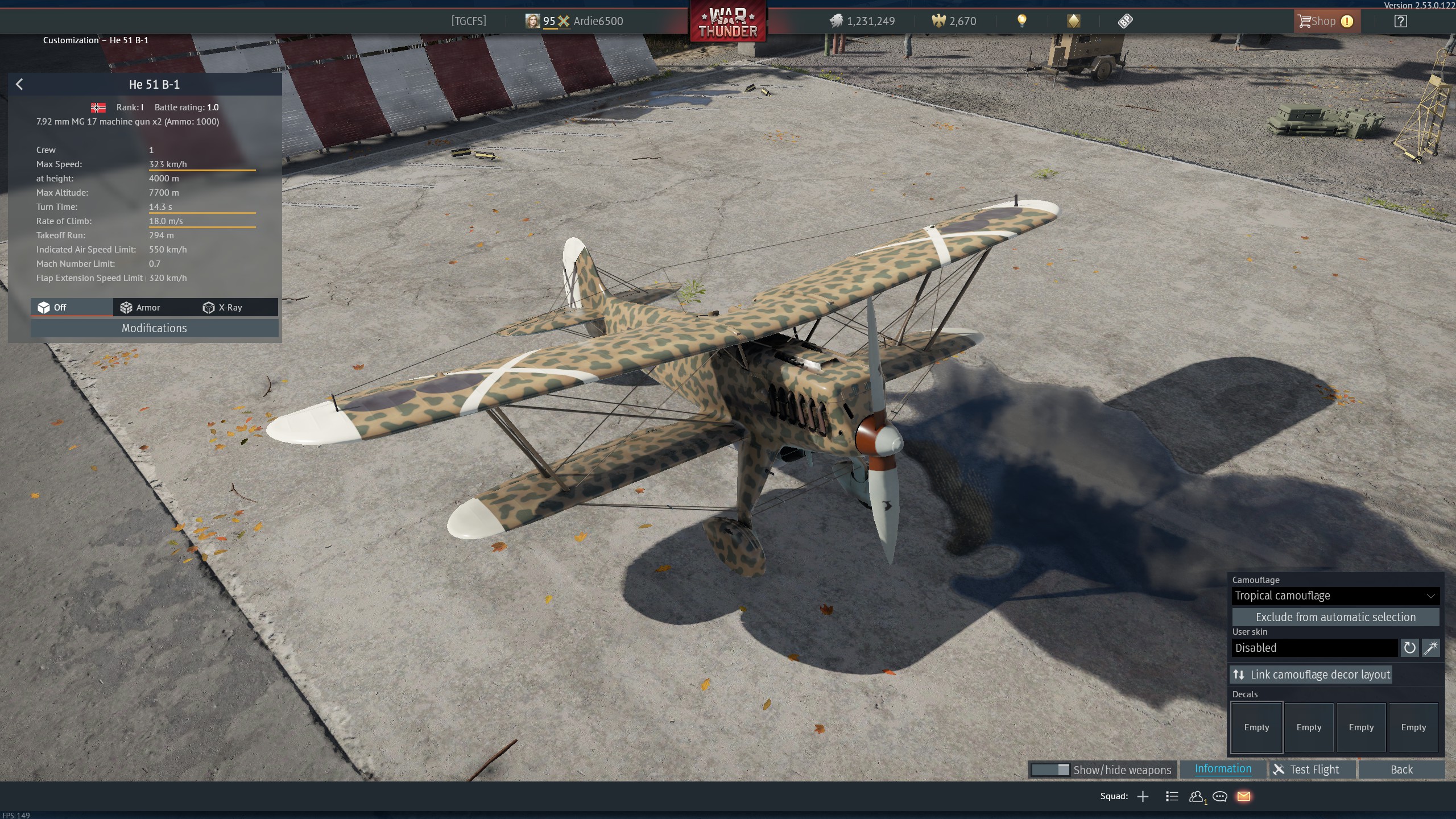
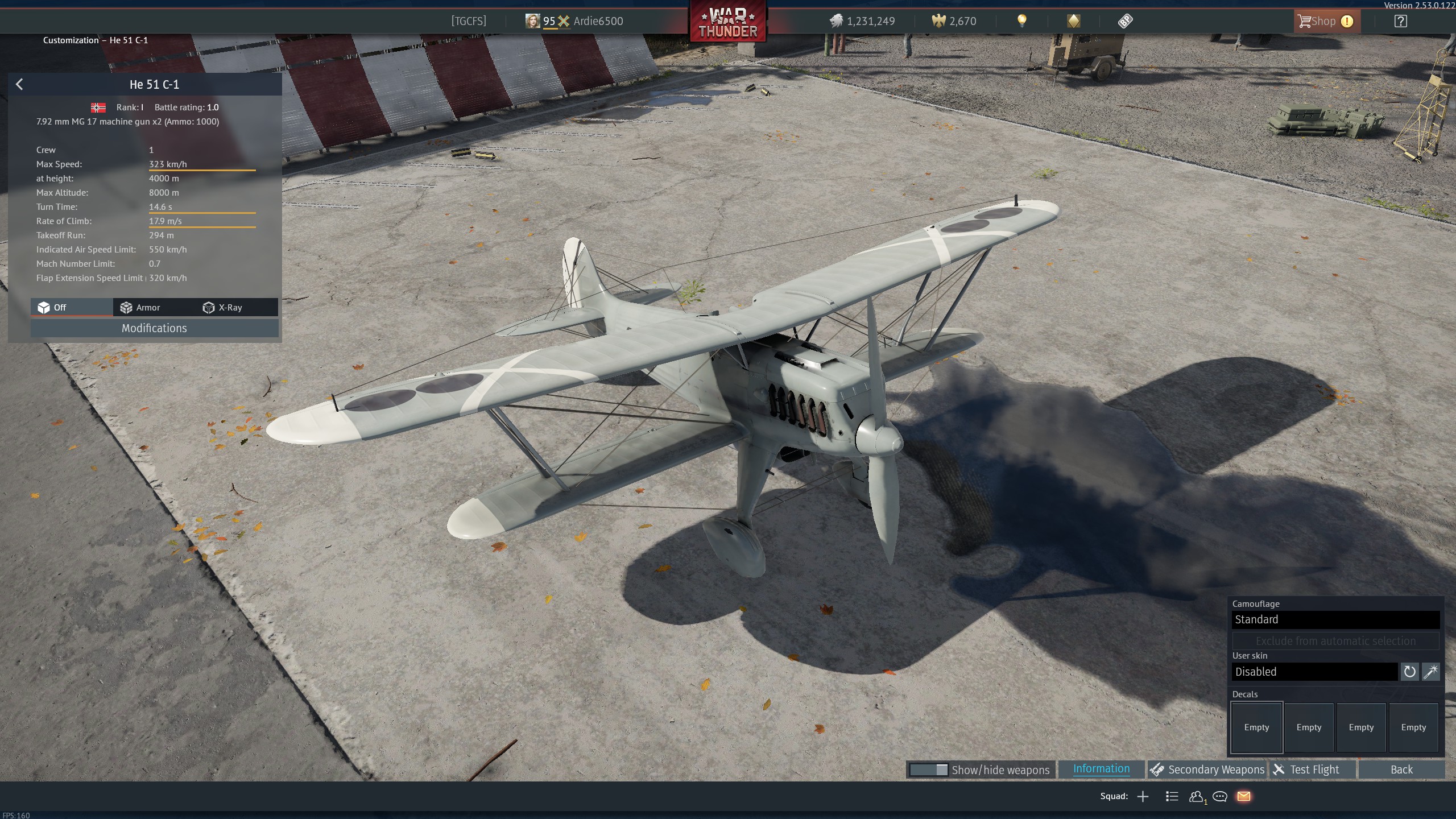
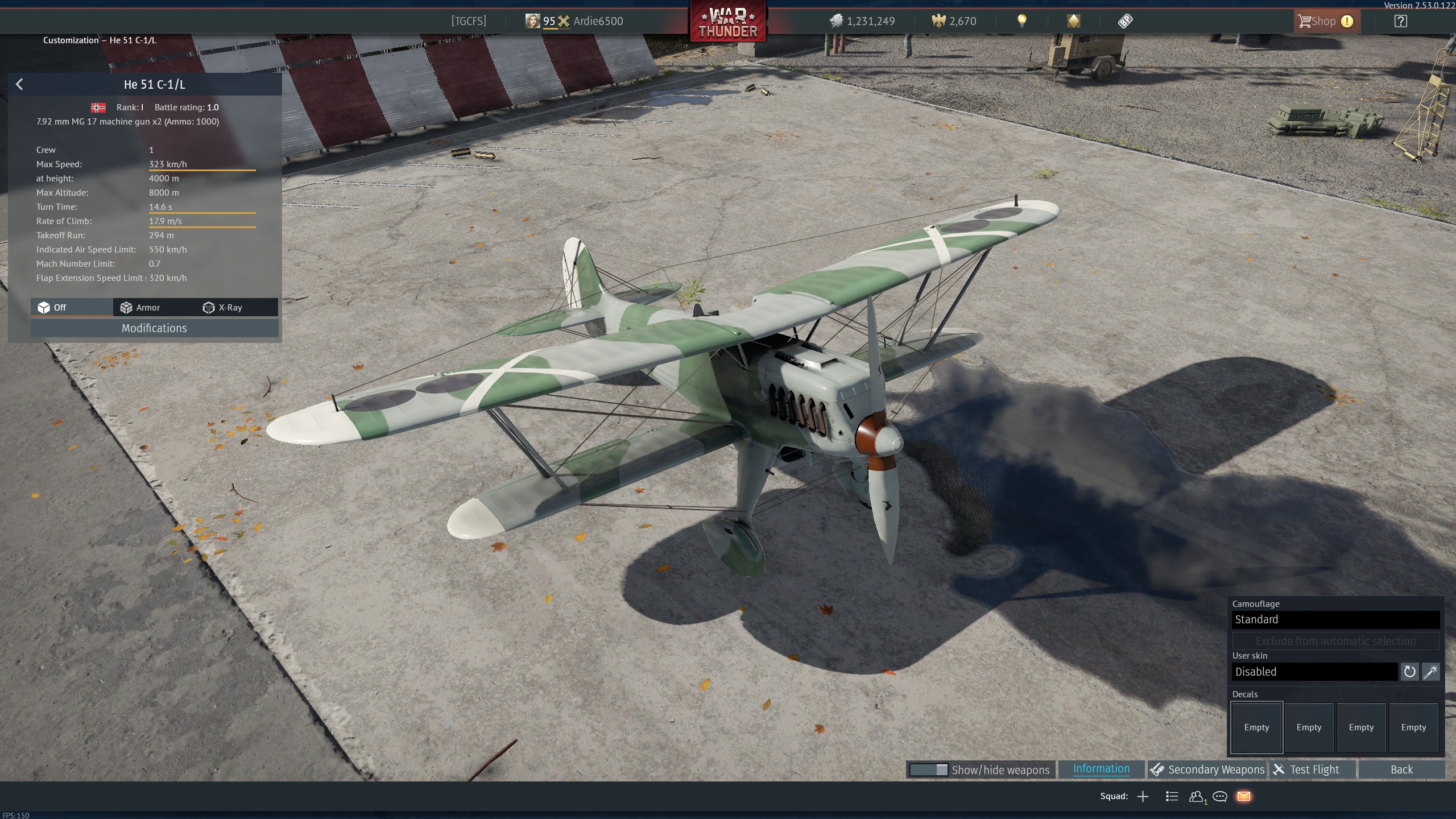 The He 51 is the slowest and the most nimble of the reserve aircraft. Use this aircraft's agility to your advantage, drawing enemies into turn fights that they inevitably lose. Just make sure to manage your speed carefully - you don't have as much that you can safely lose without stalling. All four variants are quite similar, but the B-1 has better performance than the A-1, and the C-1 and C-1L have better performance than the B-1 *and* can carry 6x50kg bombs.
There is a premium floatplane variant, the He 51 B-2/H.
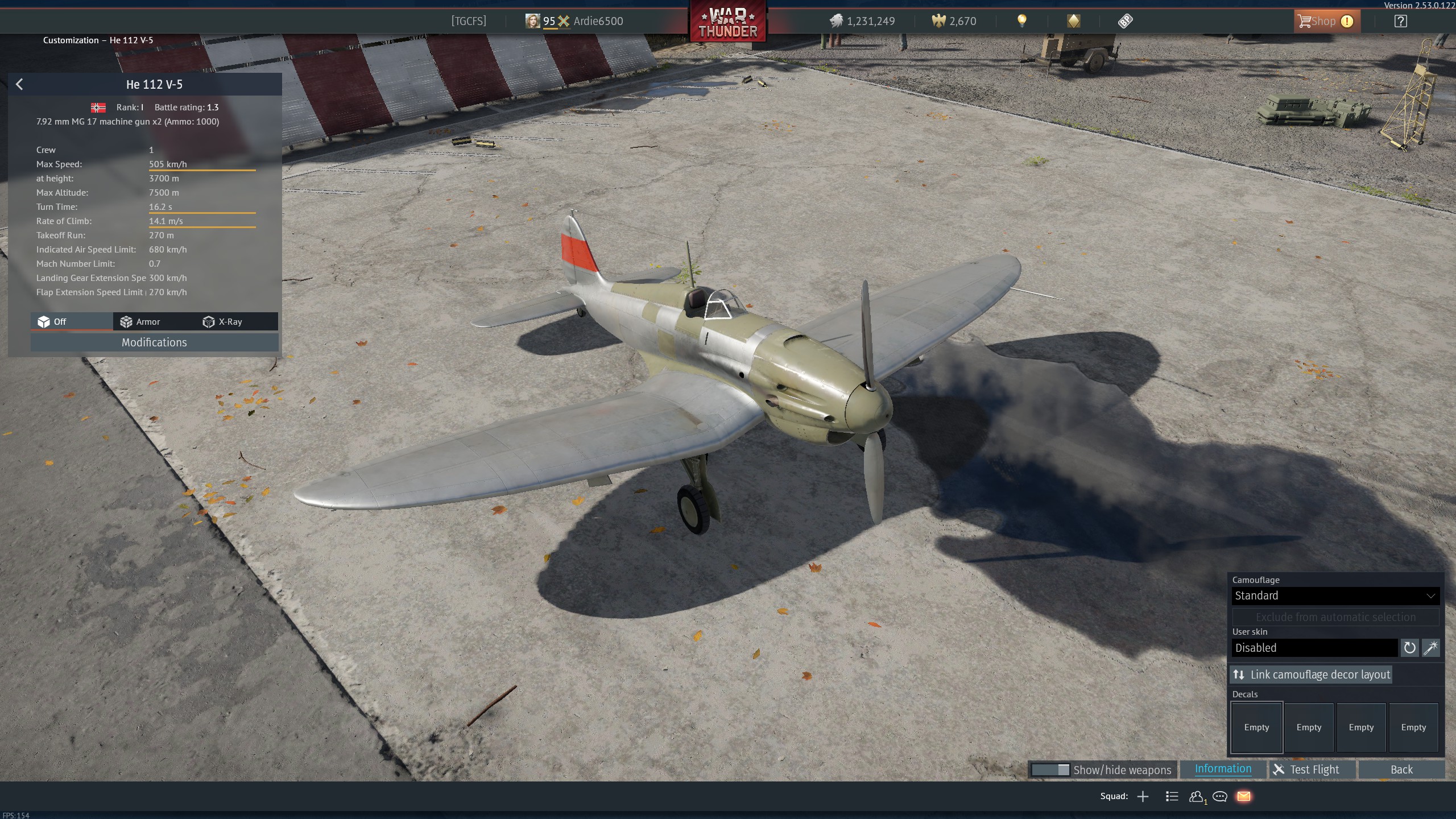
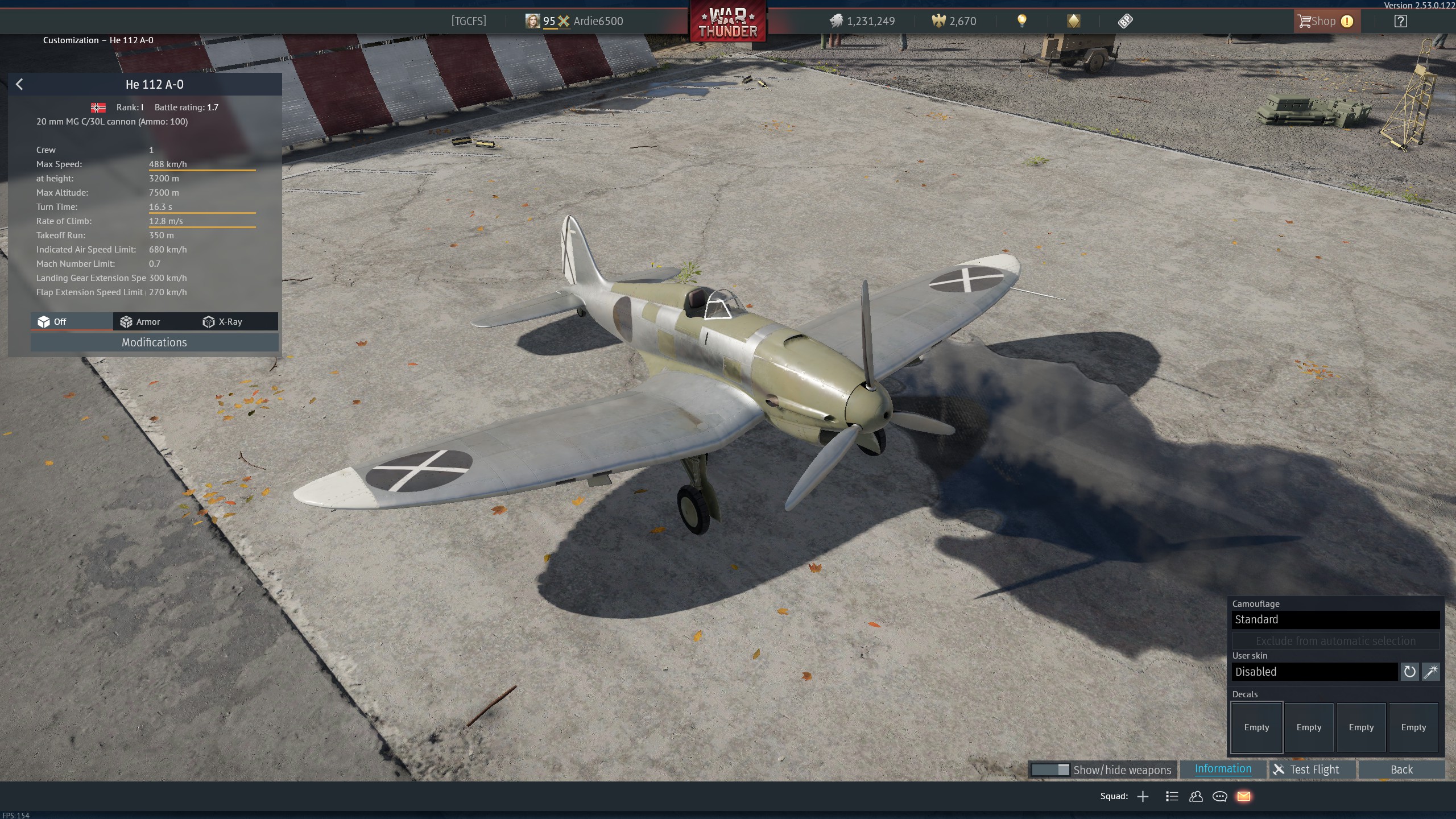 The other early German monoplane fighter, the 112 perform similarly to the 109 except that they handle even better. The 112 V-5 has better performance and flight characteristics than the 109 B-1 while using the same mediocre armament, and the 112 A-0 has similar performance to the 109 B-1 with excellent flight characteristics and a devastating 20mm cannon. Both are quite good, and quite fun to fly. However, even with their advantages over the early Bf 109s, they have the same Achilles heel - they're SLOW.
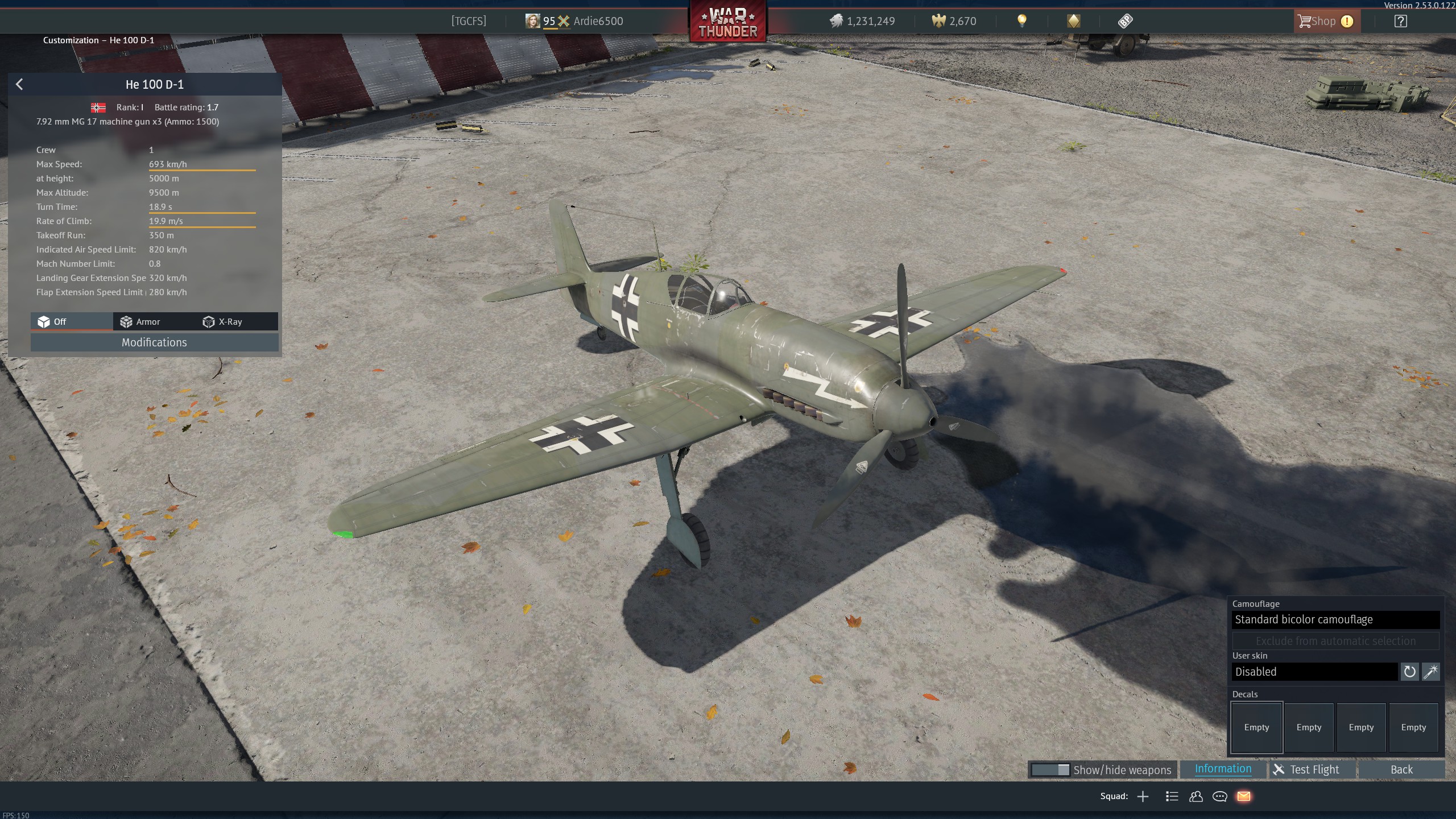 The He 100, on the other hand, is not slow. It is a rocket. With level flight topping out at nearly 700kph, this is by far the fastest plane at rank 1. Not only is it extremely fast, it has extremely good flight characteristics - it turns well, it climbs well. The aircraft has two weaknesses, however; Firstly, the armament is rather poor, with only three 7.92 guns. While this is sufficient for lighter enemies, you're gonna be doing next to nothing to any armored aircraft. The other weakness of this aircraft is that it has ZERO protection for the pilot. Get used to getting sniped in this plane, it will become a regular occurrence. These two issues combined mean that this plane should NOT attack bombers, or any other aircraft with meaningful defenses; focus on taking out lighter enemies and on evading attackers, and you'll have a lot of fun with this aircraft.
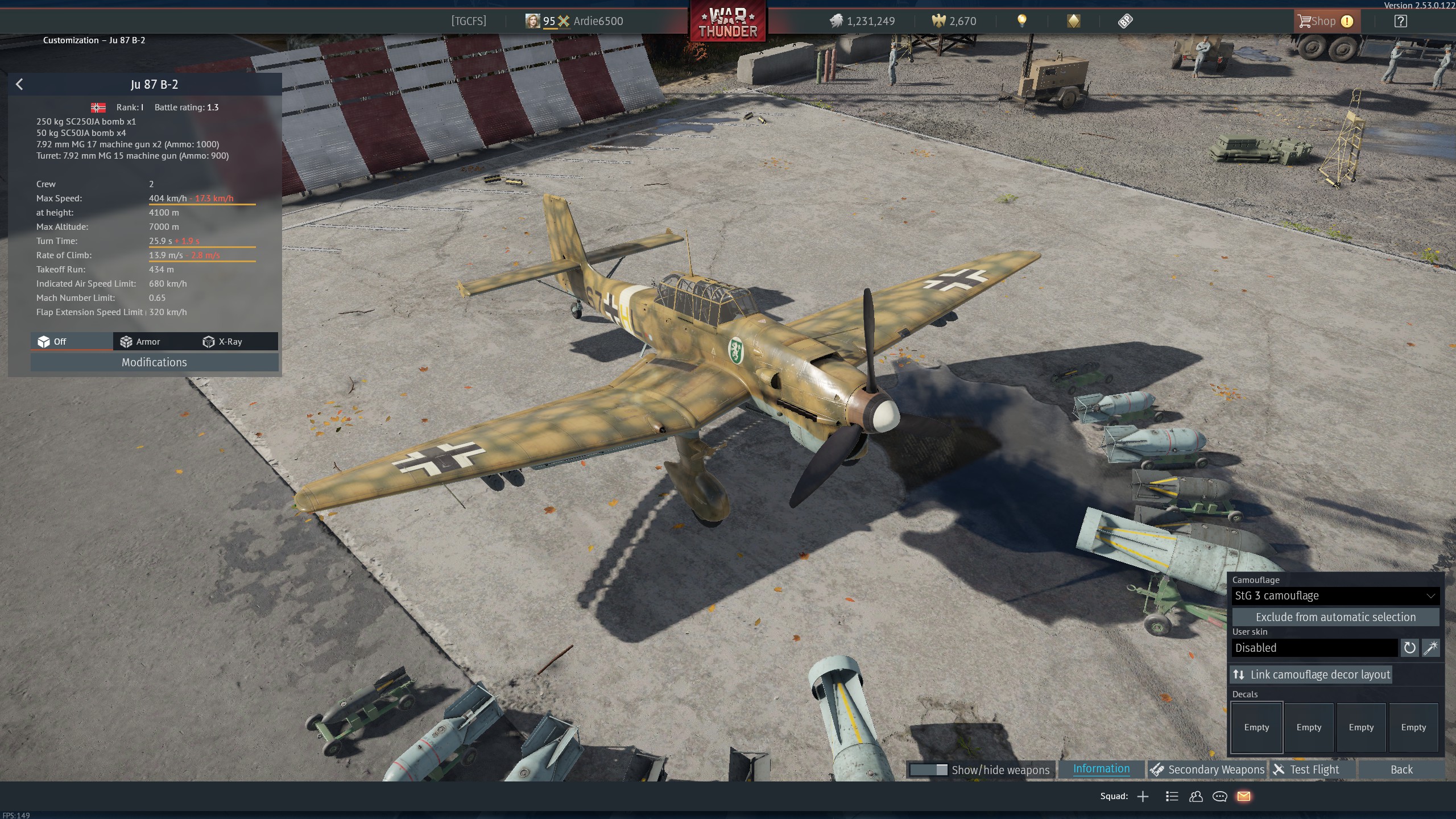
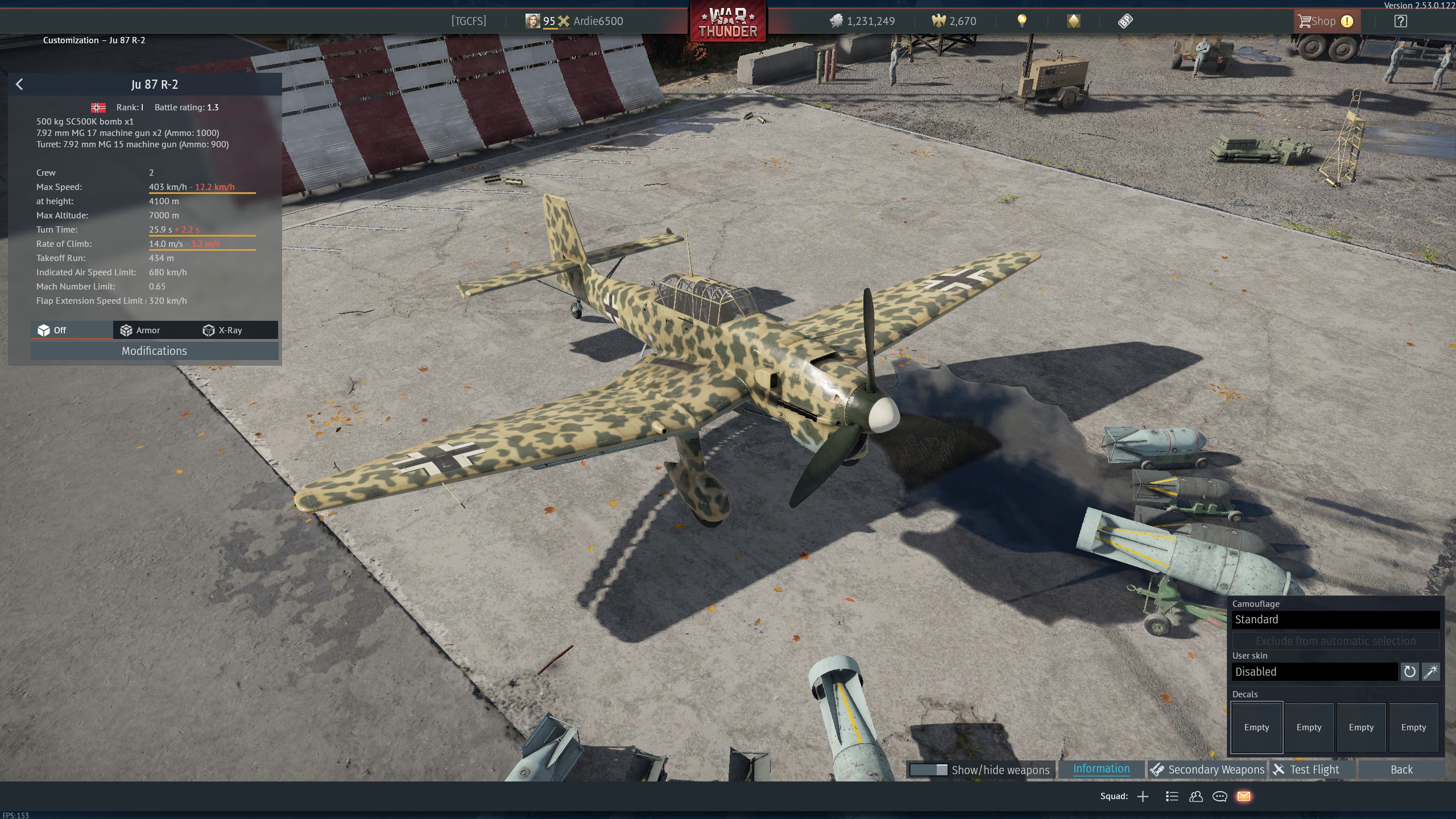
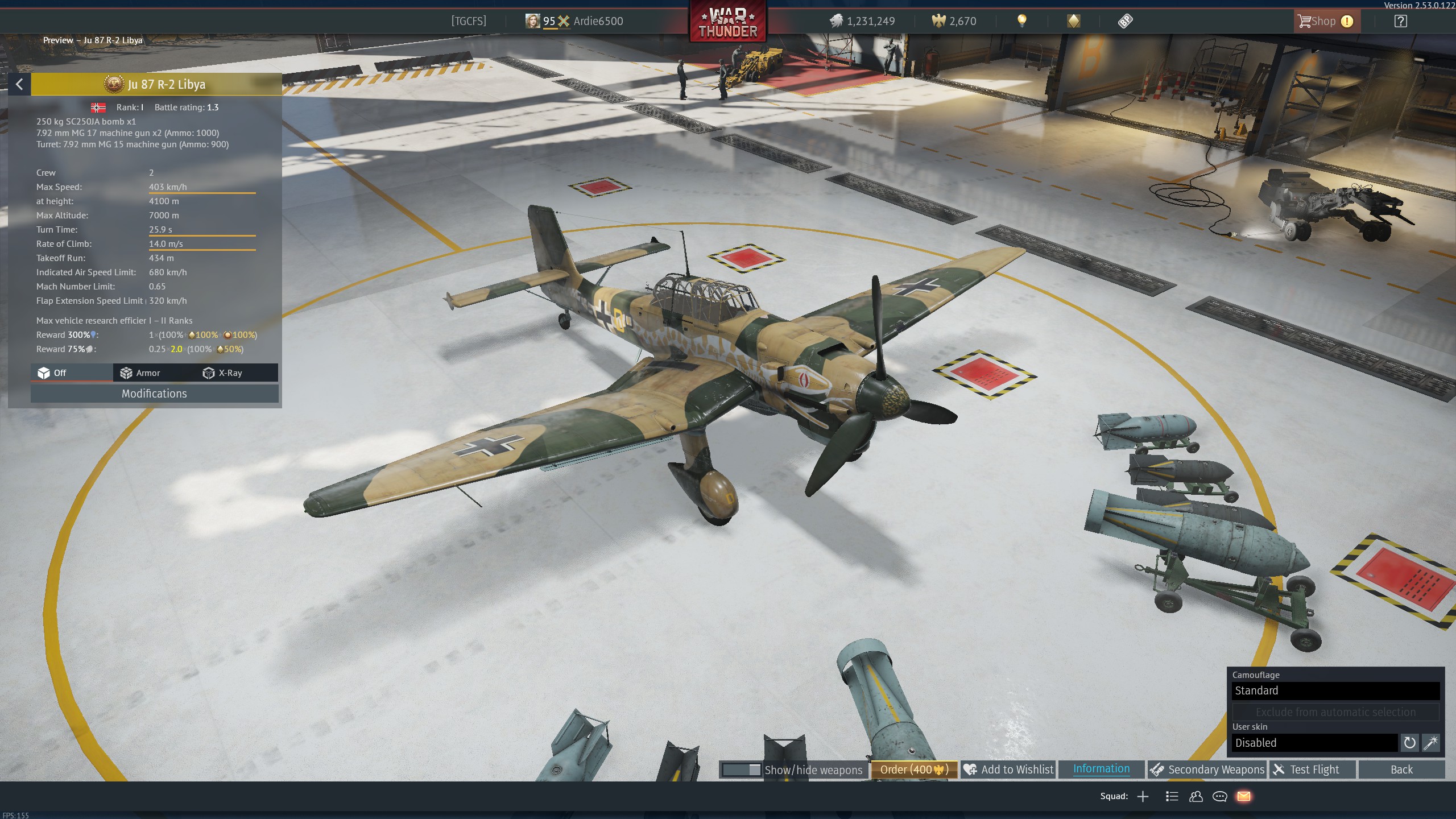 The quintessential Luftwaffe dive bombers! The Stukas are slow and have a middling climb rate and handling, but carry a pretty significant bomb load and can deliver it with extreme precision. Good fun at this tier. The R-2 trades the B-2's dive sirens and wing-mounted armaments for larger fuel tanks and stronger wings. Frankly, I prefer the B-2, but both are good.
There is a premium version of the R-2, the Ju 87 R-2 Libya.
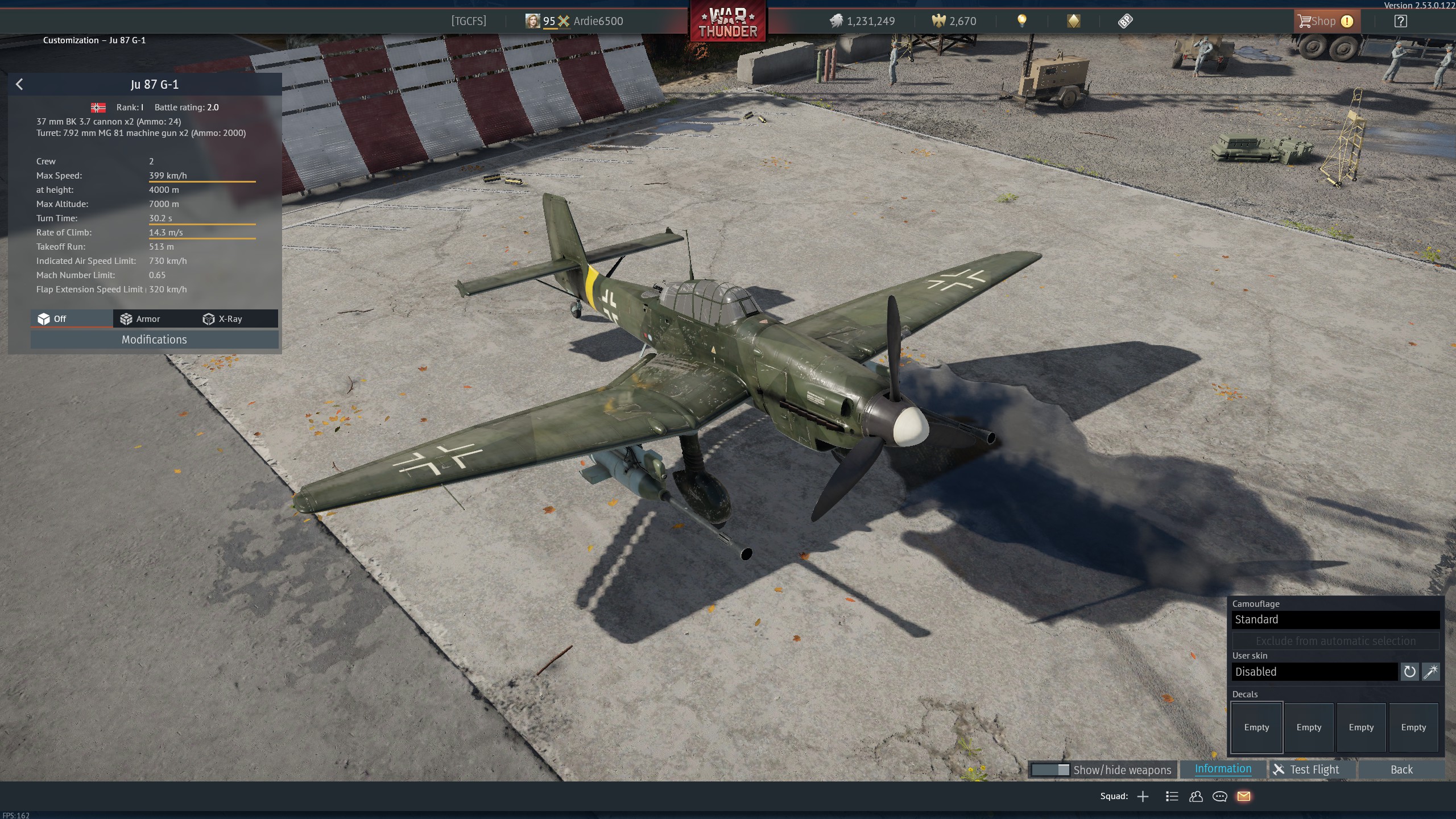
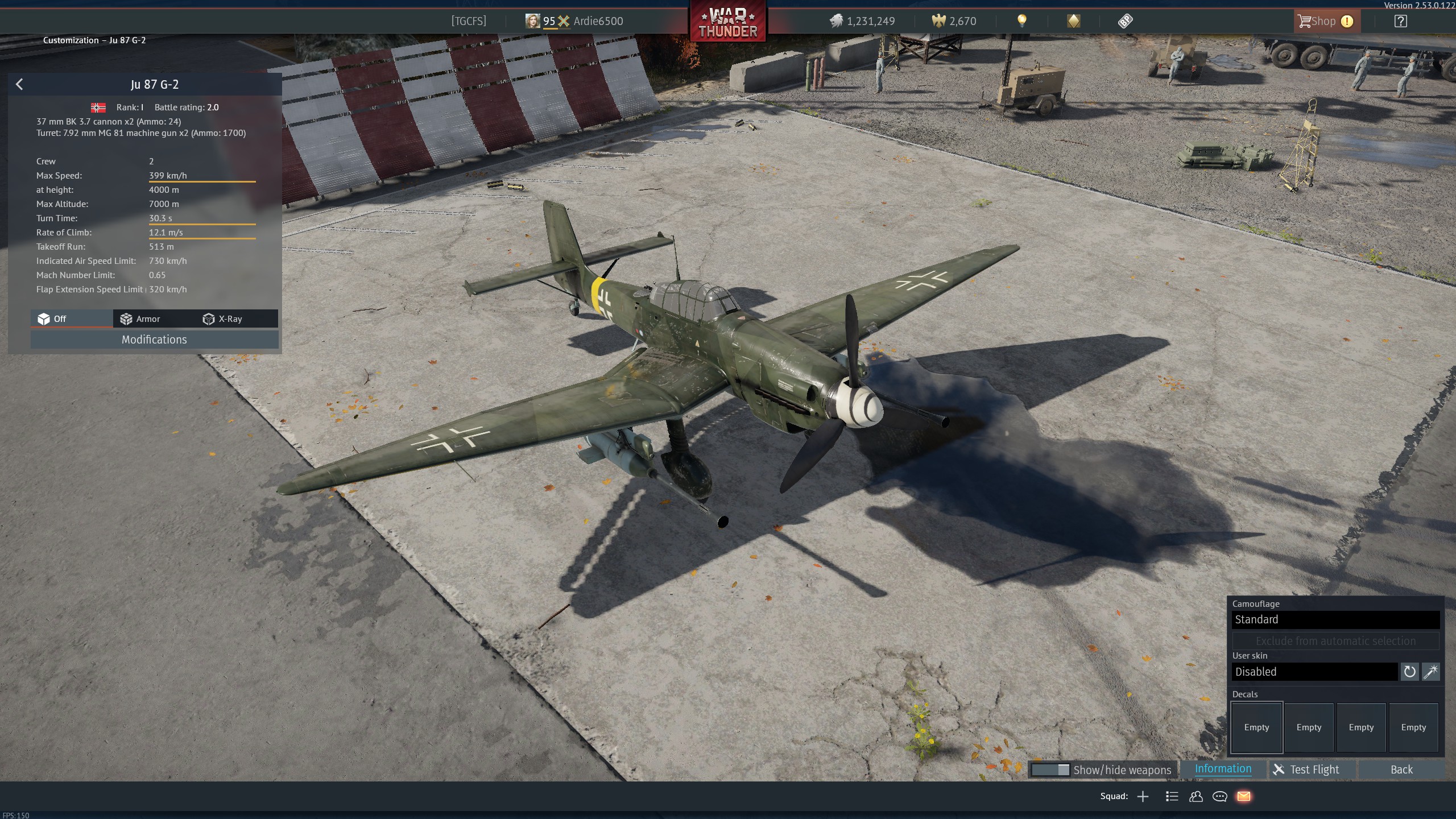 These are Stuka D-3 and D-5 (respectively) that have traded their normal armament for a pair of 37mm autocannons. The air belts are great for smacking bombers, and the ground belts do quite well against light and medium armor. The G-2 is actually a downgrade from the G-1, as the later model's longer wings have a negative impact on performance.
Germany Air, Rank 1, Pt 2
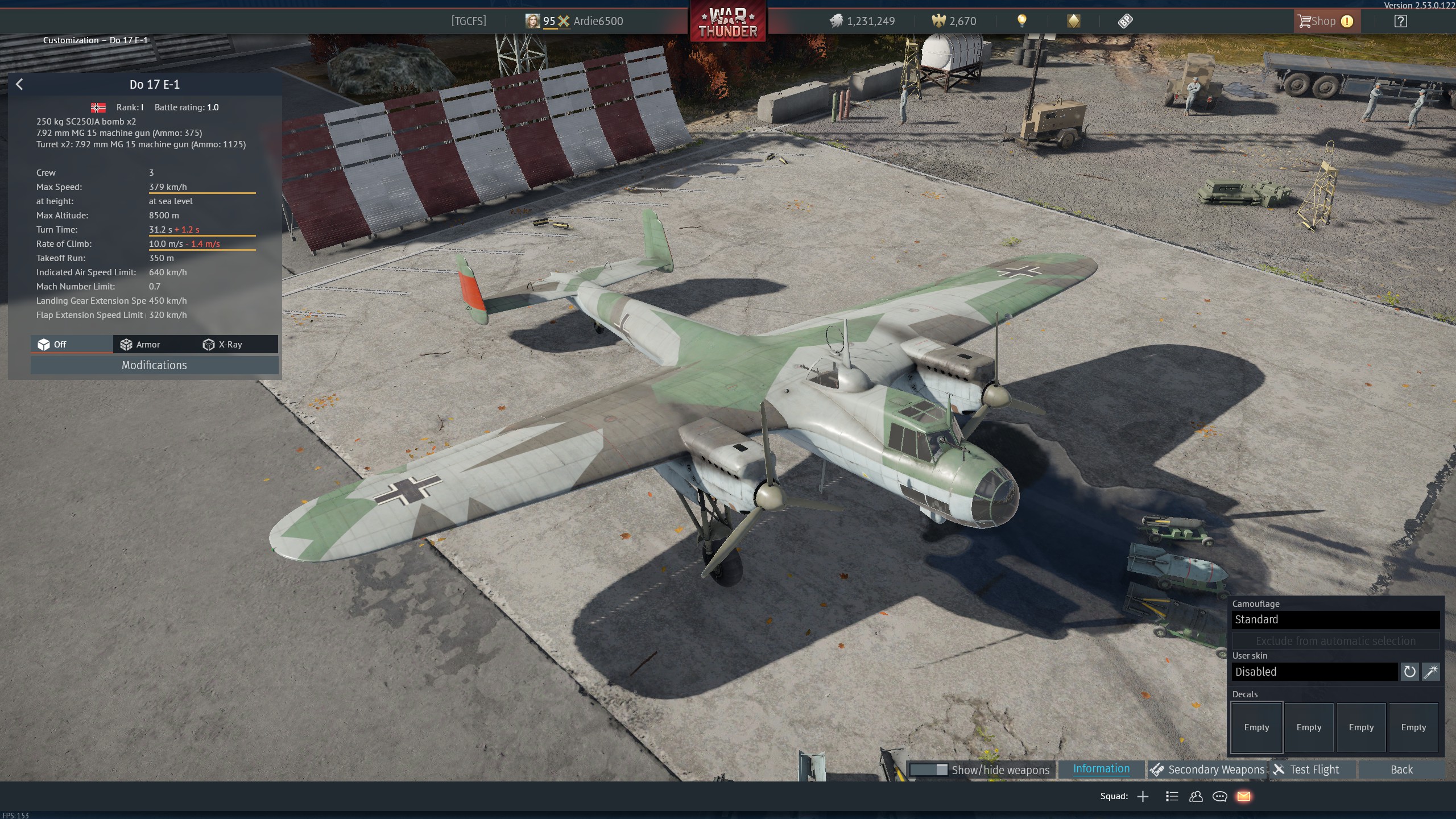
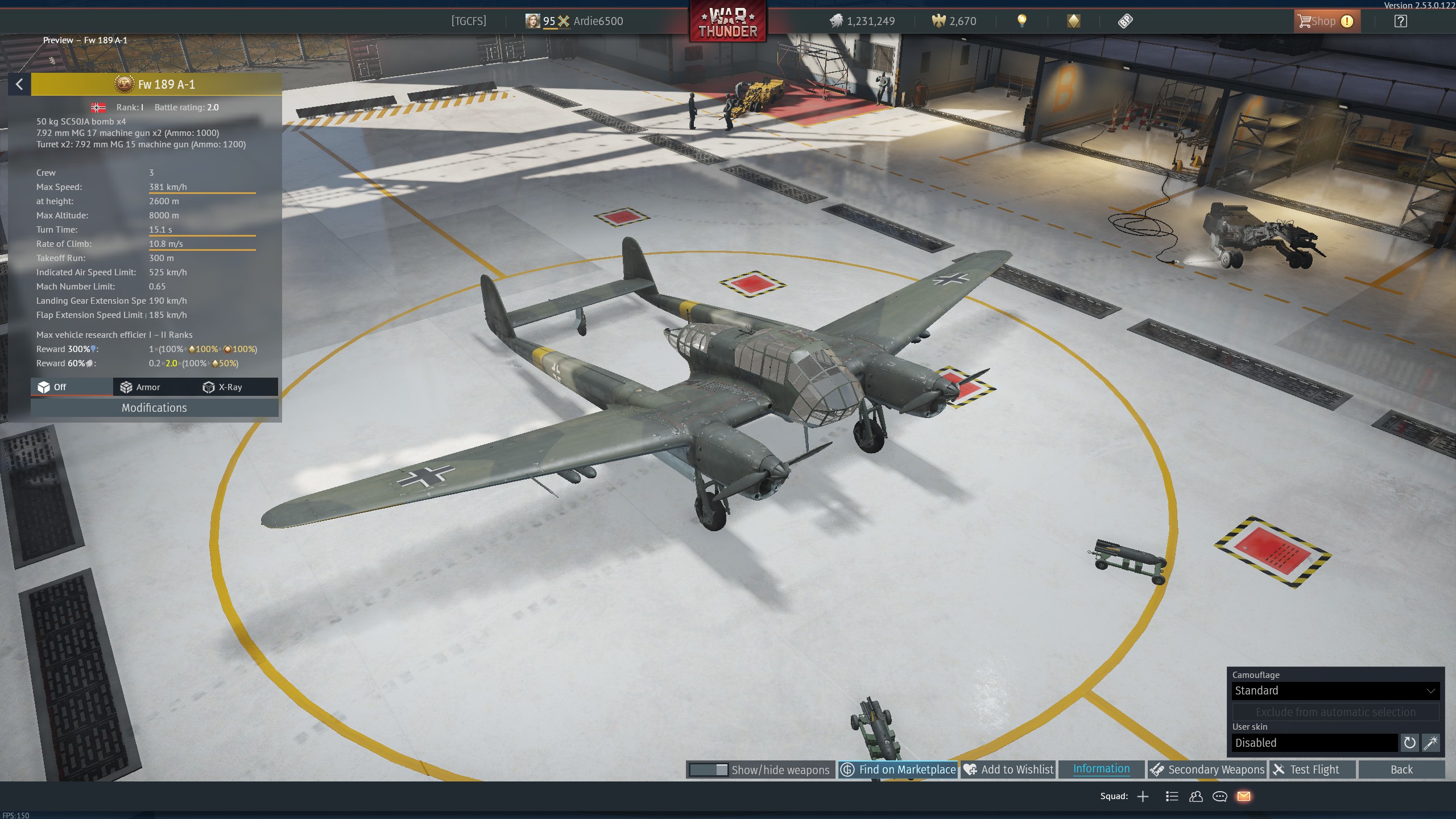
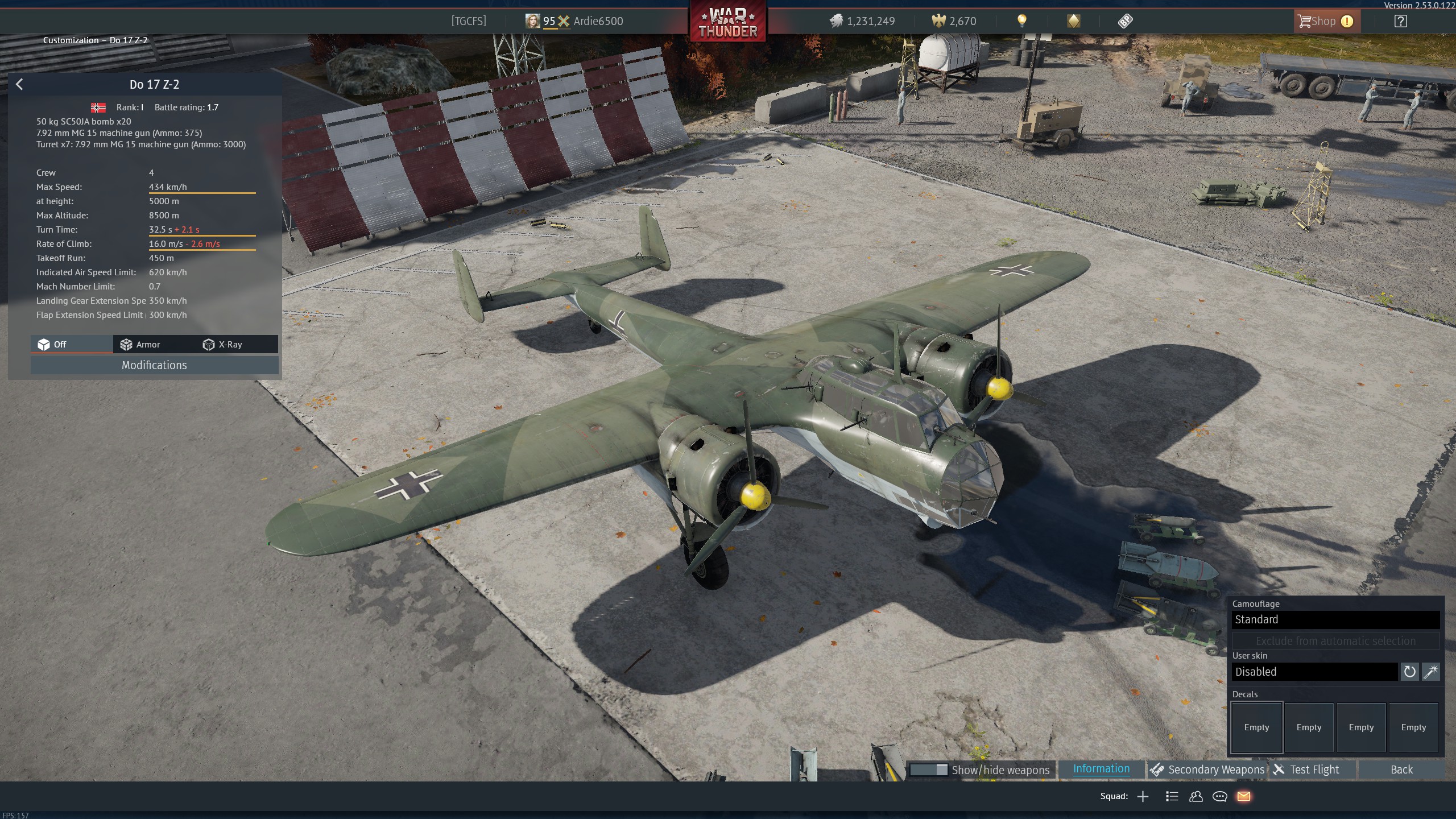 The first Luftwaffe level bombers, the Do 17s are quick for their rank, but have a fairly lackluster bomb load. The Z-2 is a significant upgrade over the E-1, with better engines and expanded ordinance capacity (most significantly, the option to carry 20x50kg bombs, as opposed to the E-1's paltry 10).
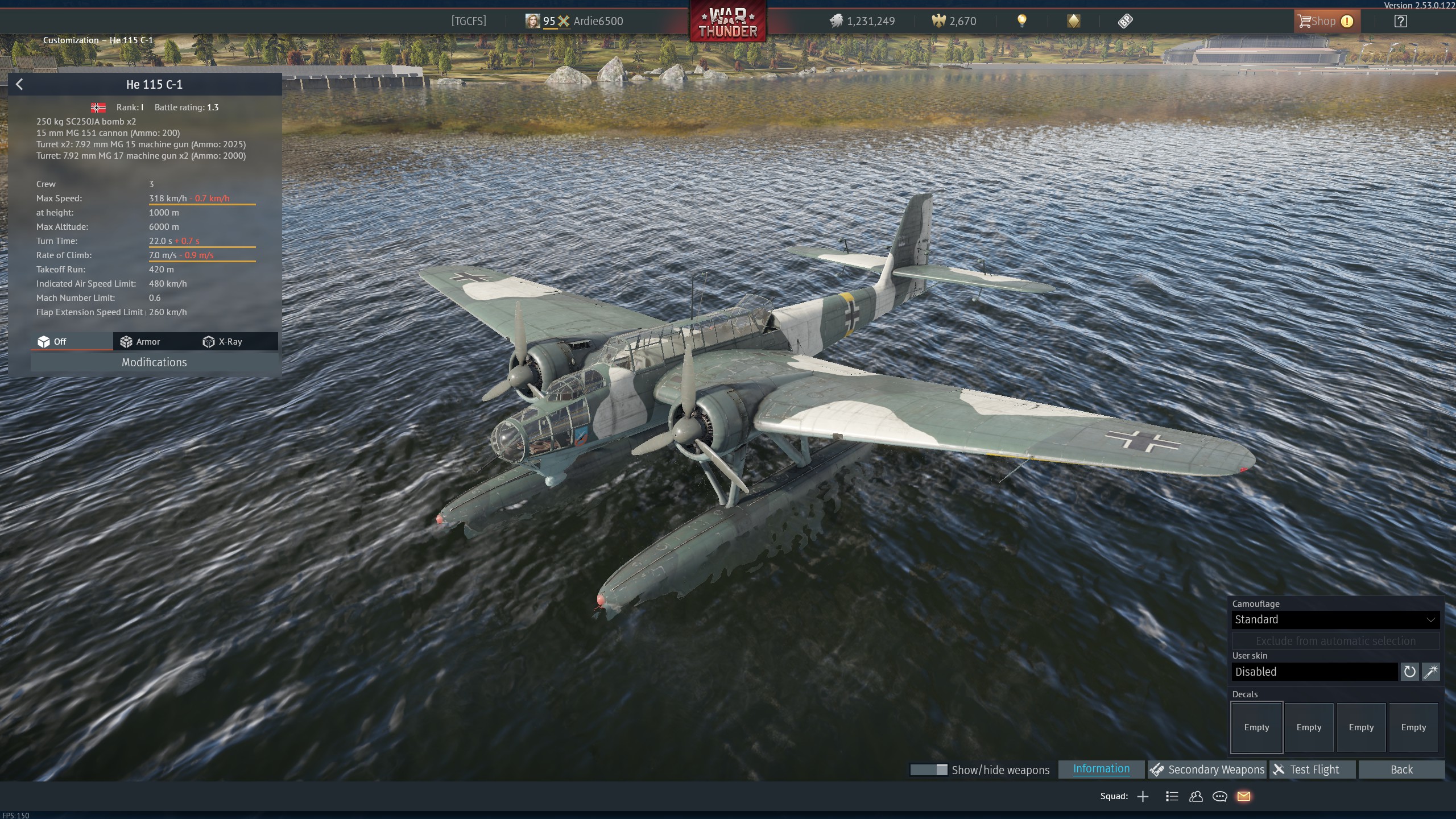 Slow and sluggish, the 115 is a chore to fly, but the offensive 15mm gun is rather nice when enemies decide to force a head-on. And, of course, it has floats. A decent change of pace from the norm, if not an entirely pleasant one.
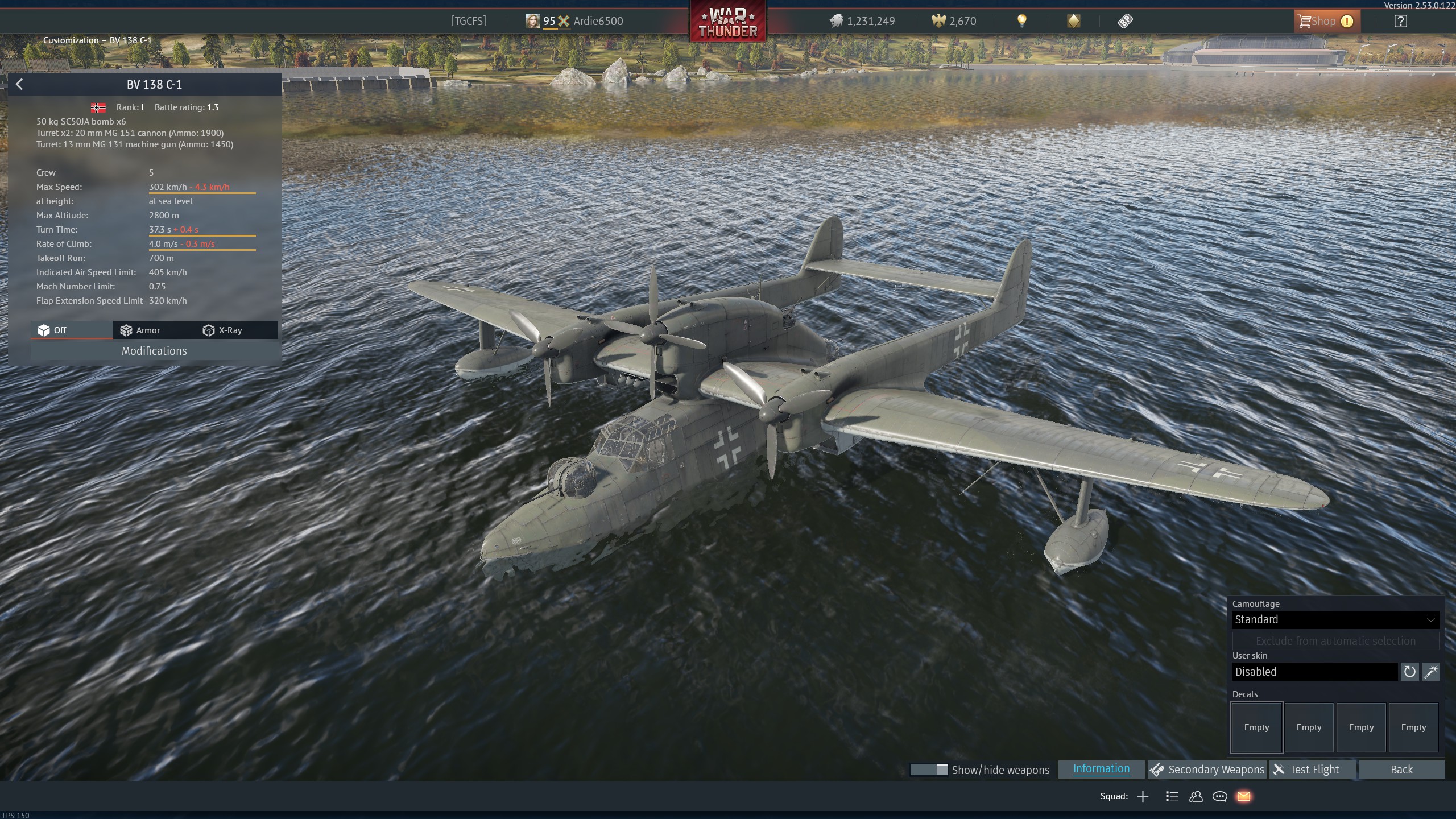 Extremely slow and unwieldy, with a pitiful bomb load for its size, the BV 138 is best played as a gunship; the significant defensive armament and decent durability are this sitting duck's only real saving graces.
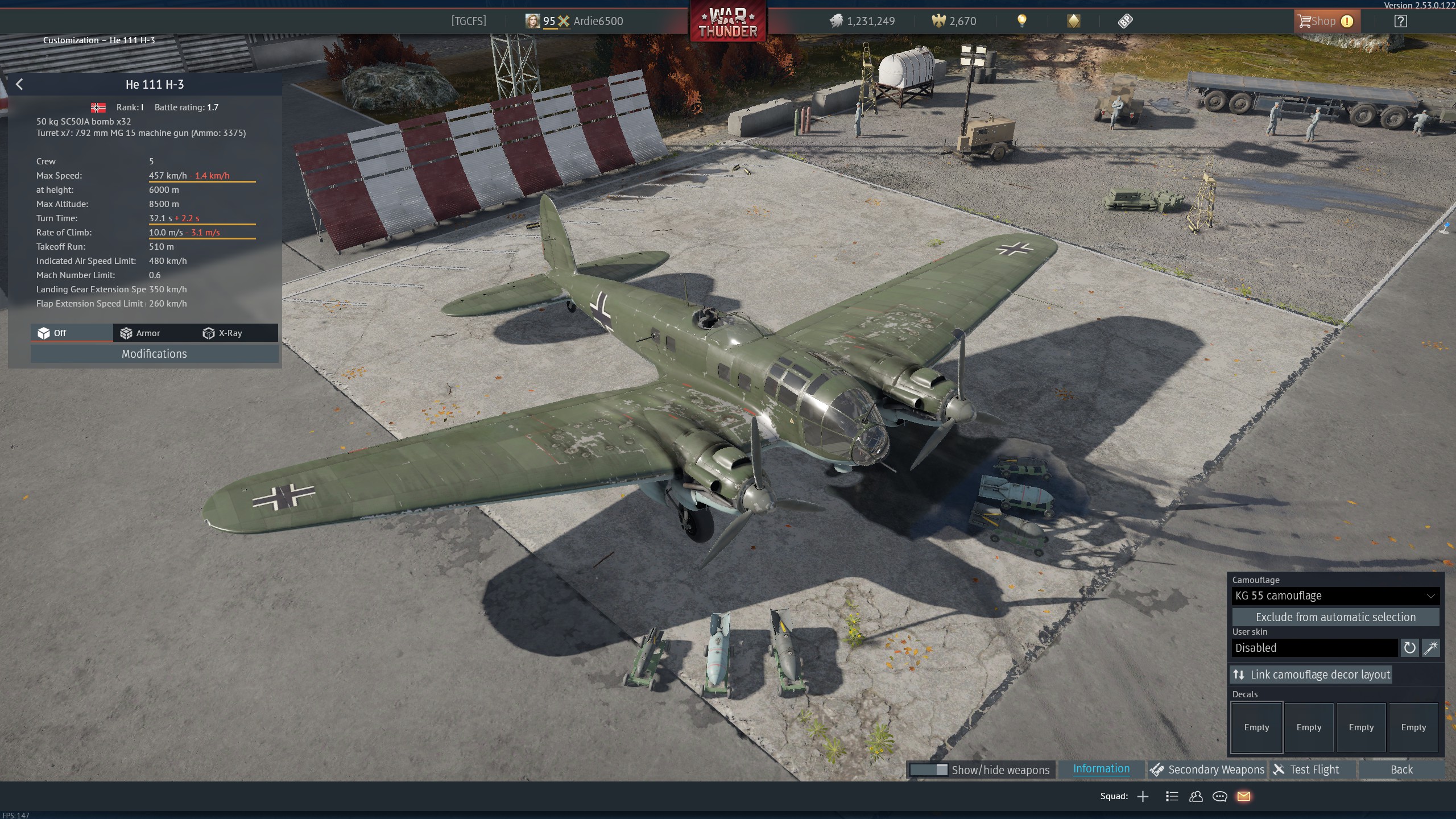 A medium bomber with acceptable performance, albeit with mediocre top speed and climb rate, but with a phenomenal bomb load. At this rank, you'll start getting matches with enemy bases to attack, and the 111's 32x50kg bomb loading can single-handedly delete two whole bases without requiring a reload. An absolute menace to any team that allows you to reach their bases.
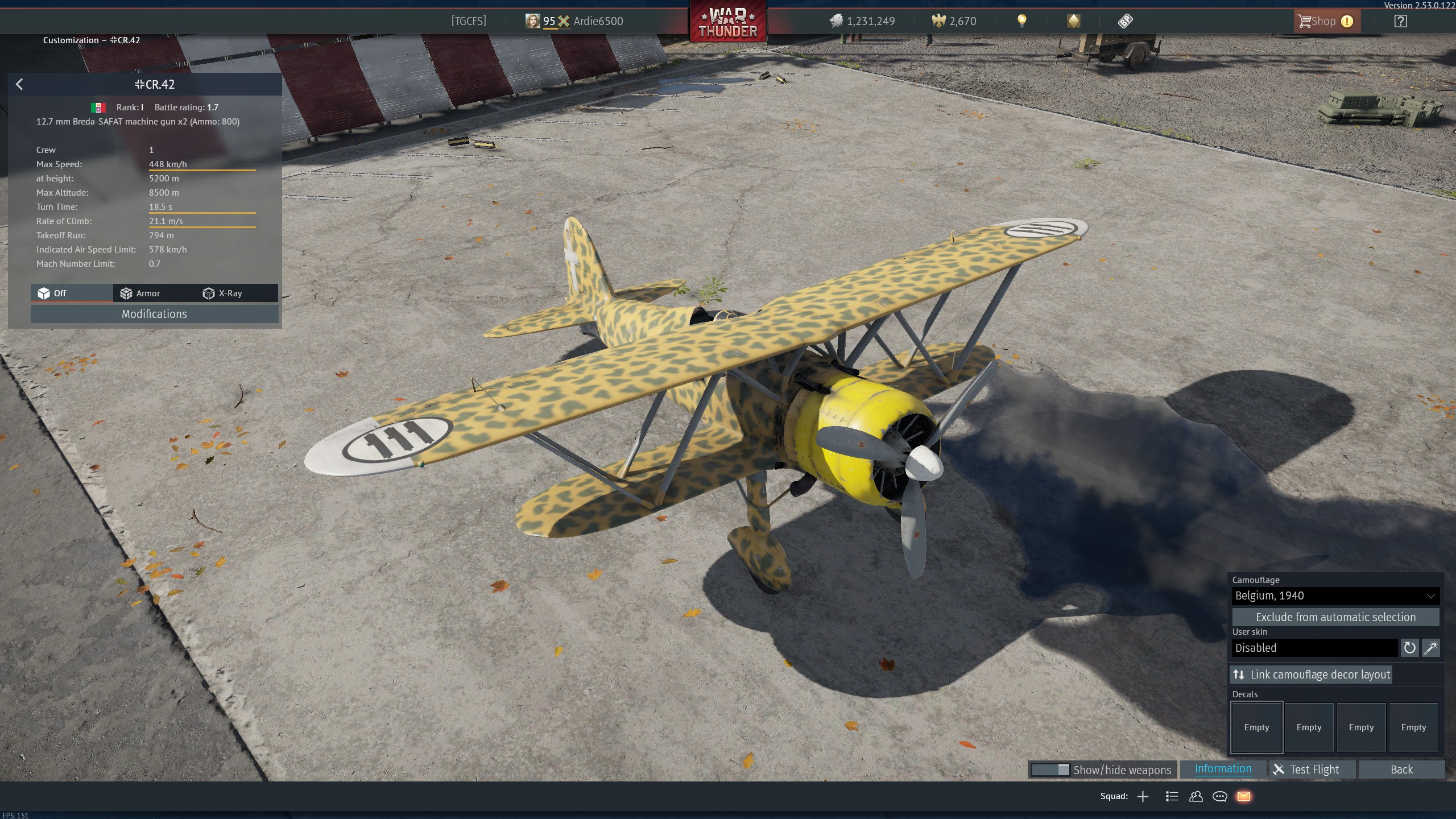
A relic from when Italian vehicles were just a branch of the German research tree. Identical to the Italian version.
There is a premium version, Marconlin's C.R.42 CN.
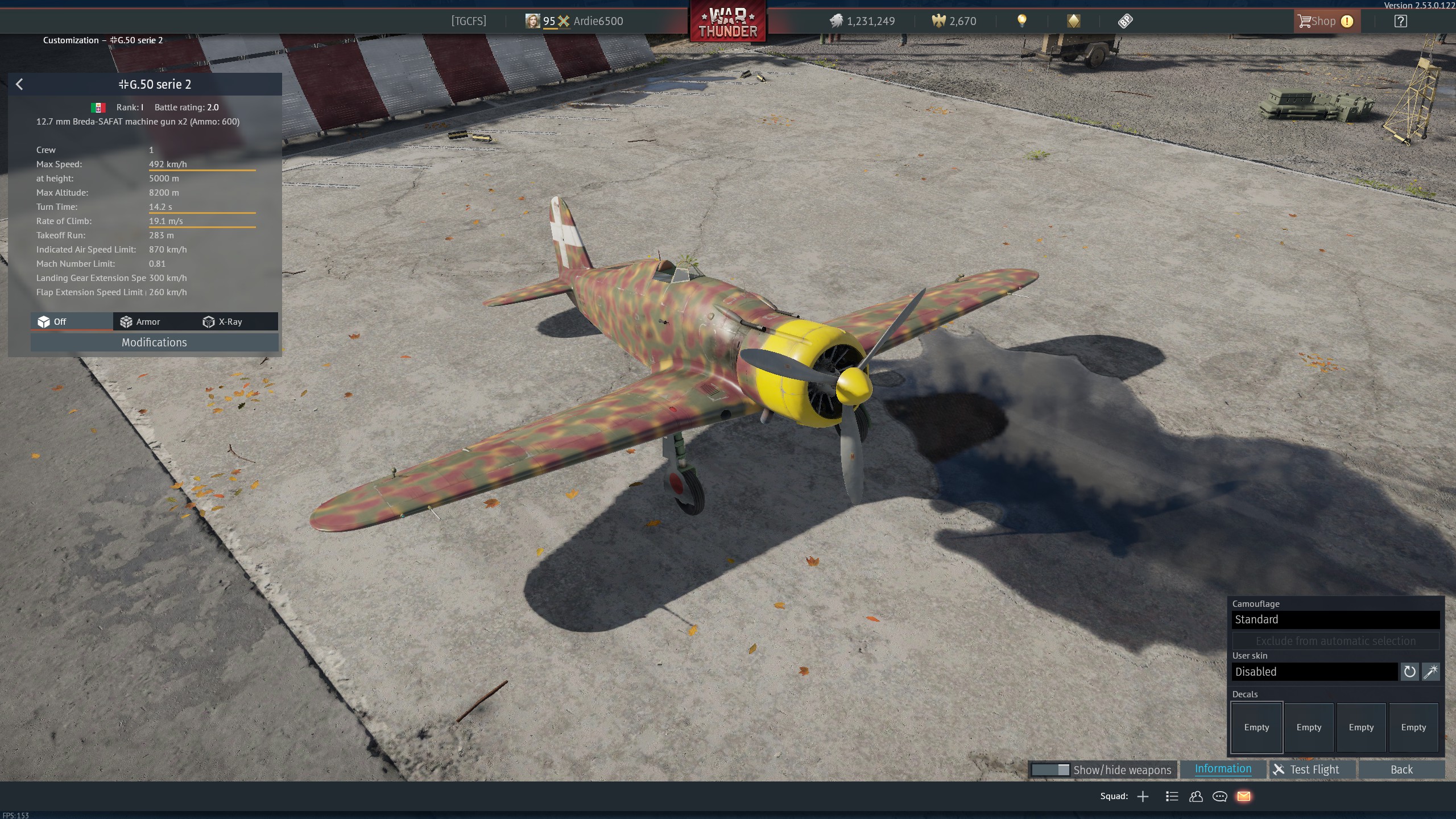
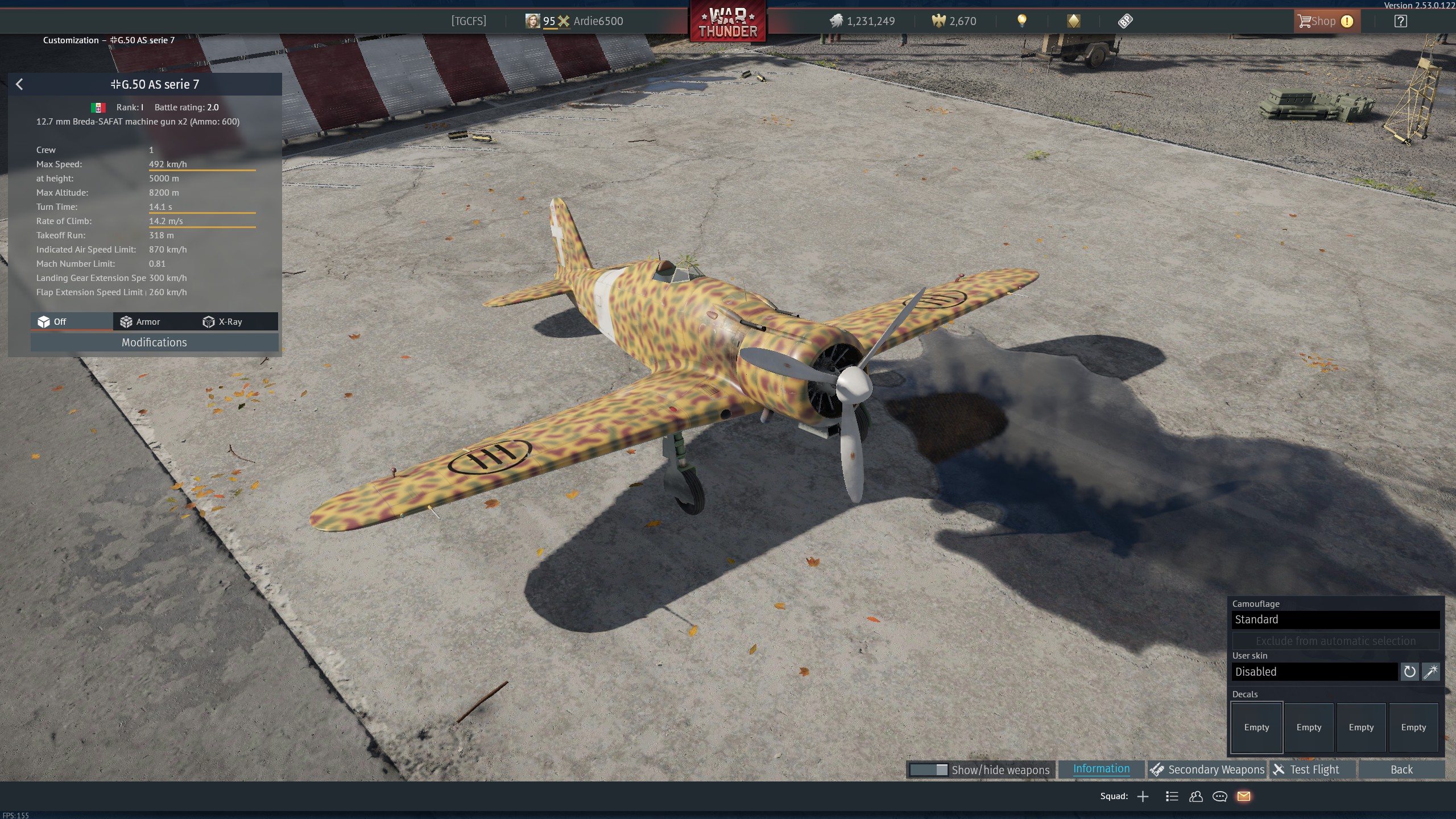 A relic from when Italian vehicles were just a branch of the German research tree. Identical to the Italian versions.
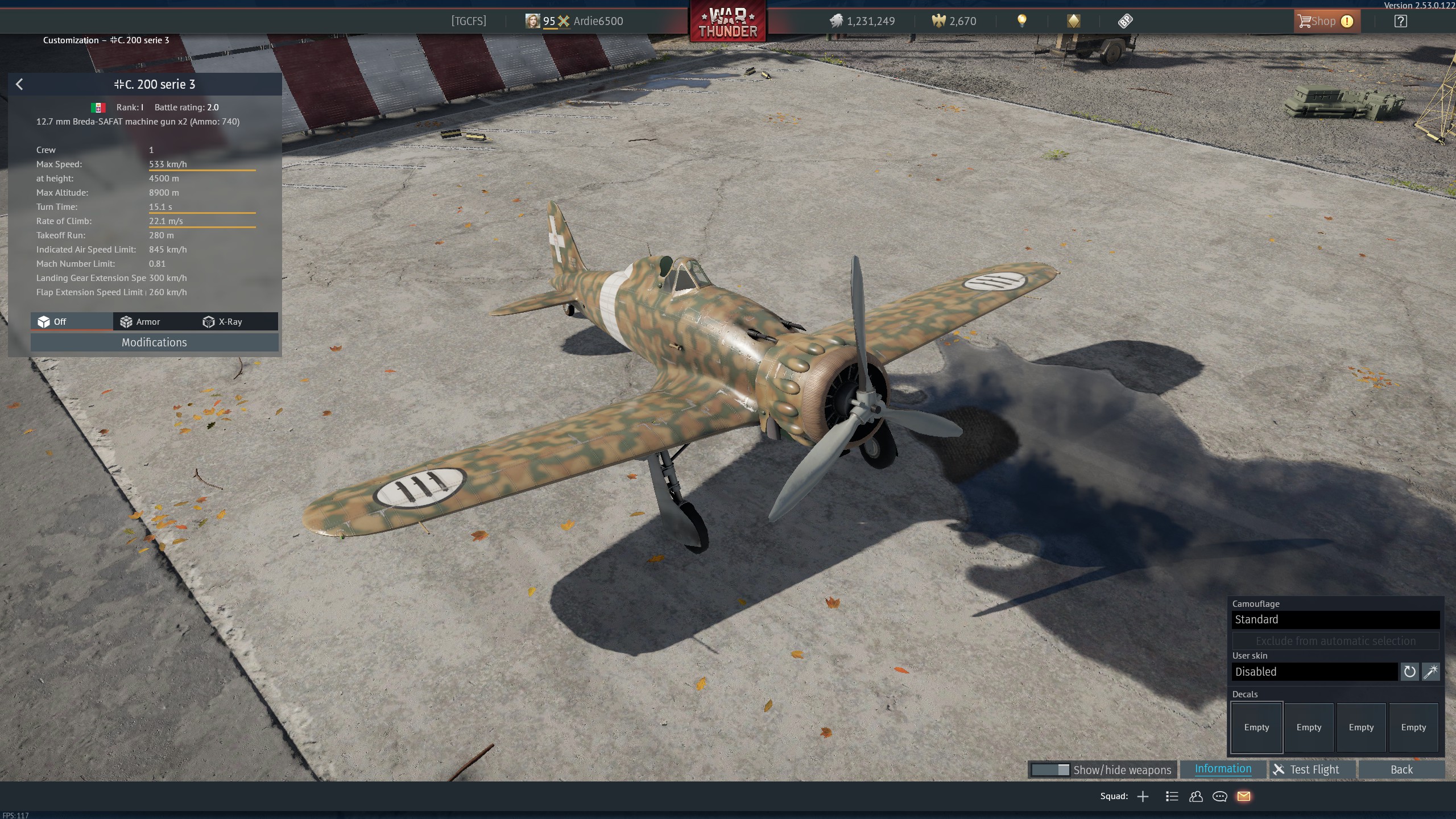
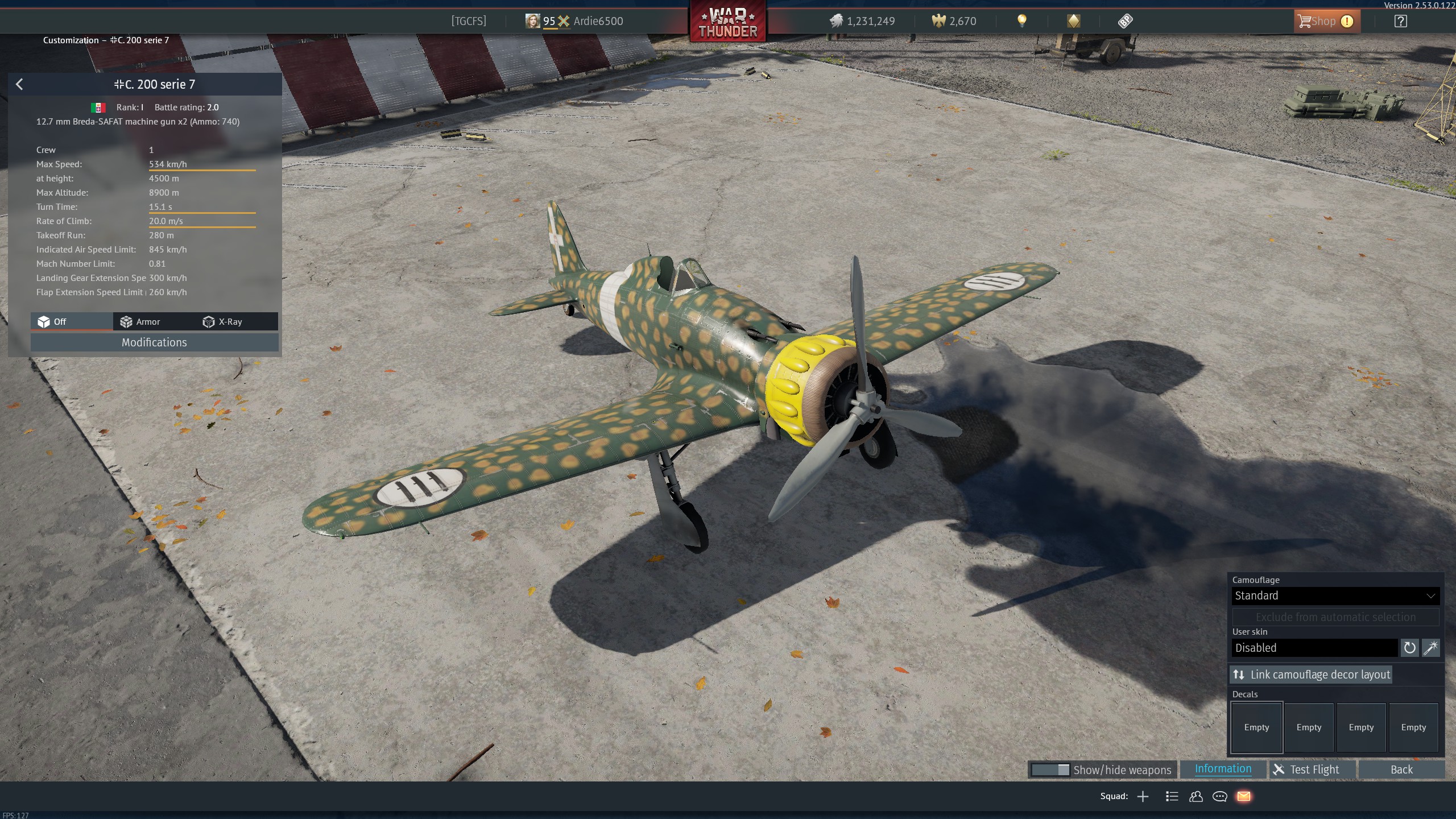 A relic from when Italian vehicles were just a branch of the German research tree. Identical to the Italian versions.
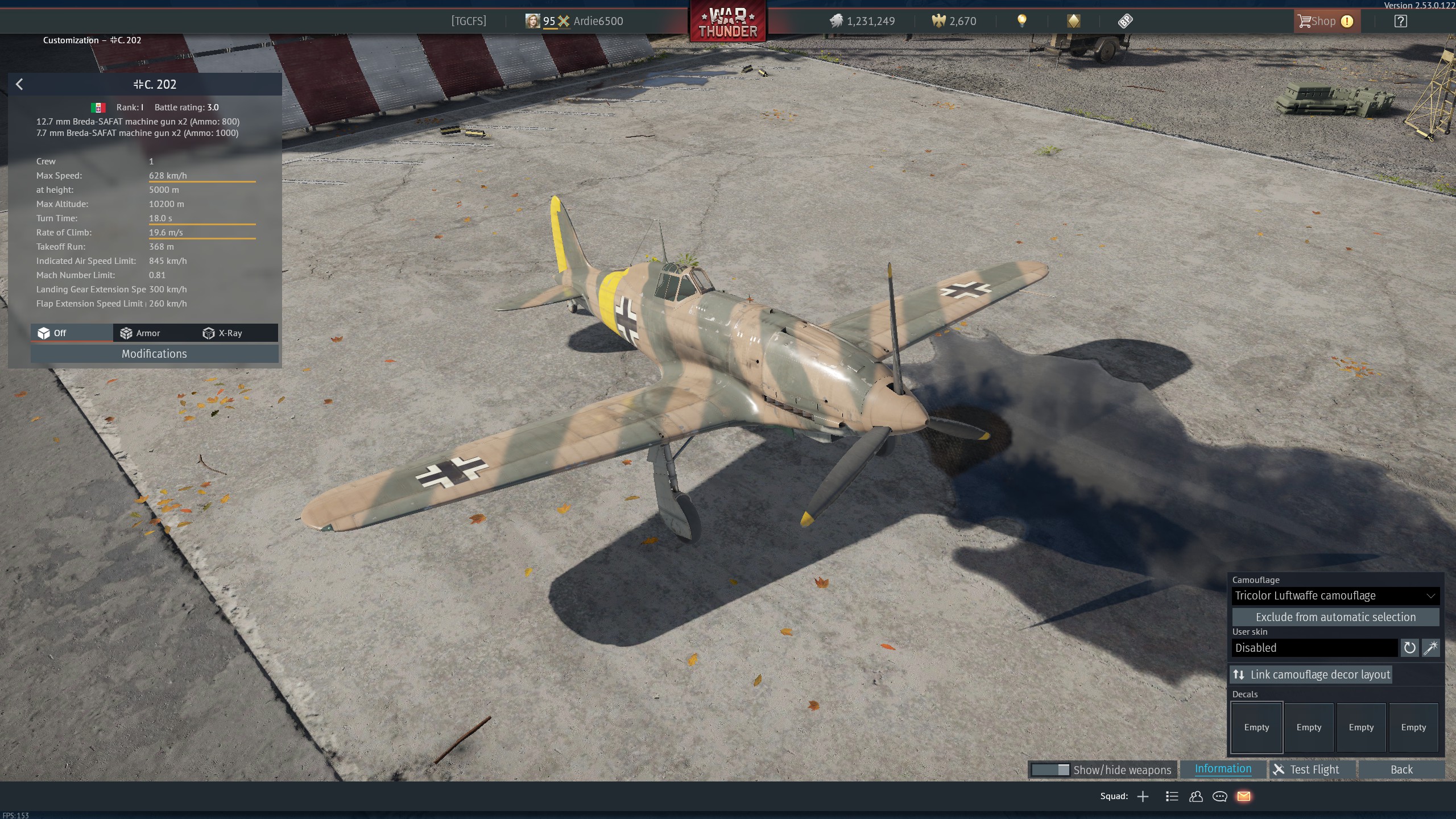 A relic from when Italian vehicles were just a branch of the German research tree. Identical to the Italian version.
- The Event and Sale Calendar★ 5 (385)75k views618 ♥7 minUpdated Jul 18
- List of Classified Document Leaks★ 5 (415)60k views579 ♥5 minUpdated Jul 5, 2025
- How to cheat in War Thunder?[FREE]★ 5 (1.7k)46k views308 ♥1 minBulgarianUpdated Mar 8, 2022
- Screenshot Competition - How to Participate★ 5 (311)40k views164 ♥1 min
- Календарь мероприятий и распродаж War thunder📅★ 4 (156)40k views311 ♥4 minRussianUpdated Feb 1
- Как получить дакимакуры в вар тандер в 2026★ 5 (191)27k views240 ♥1 minRussianUpdated Jun 4




- Upgrading to PremiumTeam Fortress 2★ 5 (20k)1441k views11k ♥6 minUpdated May 11, 2022
- No More Room in Hell Official ManualNo More Room in Hell★ 5 (2.8k)569k views2.1k ♥29 minUpdated Apr 22, 2019
- NMRiH Community Hosting GuidesNo More Room in Hell★ 5 (526)351k views653 ♥1 minUpdated Aug 10, 2022
- ULTIMATE GUIDE FOR GAME DEV TYCOONGame Dev Tycoon★ 5 (5.8k)326k views10k ♥4 minUpdated 23 Jan, 2014
- How to 'Git Gud' Soon™MORDHAU★ 5 (2k)318k views3k ♥68 minUpdated Nov 16, 2024
- Лучшие кооперативные игры SteamPAYDAY 2★ 5 (1.5k)315k views2.1k ♥56 minRussianUpdated Apr 27, 2025




This guide was created by its original author on the Steam Community. Are you the author and want it removed? Request removal.